
For forty one years I lost to the same woman.
Her name was Hollis Lundqvist, and every August, at the Cleabourne County Fair, in the long white livestock barn they cleared out and lined with folding tables for the baking competition, the blue ribbon went to her sour cherry pie and the red ribbon went to mine. Forty one years. You can set your watch by a thing like that. You can build a whole life around it without ever meaning to.
I was eighty two years old before I learned the reason I could never beat her. And the reason was not what I had told myself for four decades. The reason was a recipe card, soft as cloth from handling, that neither of us had ever seen the other side of.
Let me start at the beginning, because a thing like this does not happen all at once. It happens the way the prairie wears down a fence post, one season at a time, until one morning you look out and the post has become part of the ground.
My name is Wynne Sorrel. I was born in 1944 in the town of Halverdon, Nebraska, which sits on a flat brown patch of the middle of the country where the wind comes across the wheat with nothing to slow it down for two hundred miles. My father raised hogs and a little corn. My mother kept the house and the garden and her temper, in roughly that order. We were not poor exactly, but we were the kind of careful that looks like poor from the road. I learned to bake before I learned to read, standing on a kitchen chair with a dish towel tied around my middle, because my mother said a girl who could turn flour and lard and a little cold water into something that made grown men quiet at the table would never want for a place in this world.
She was right about that. She was right about most things, my mother, and wrong about exactly one, and it took me the better part of my life to find out which one.
Hollis came to Halverdon the summer I was twelve. Her people had bought the old Tennison place out on the county road, eighty acres of mostly nothing, and they raised dairy cows and three daughters, of which Hollis was the middle. I remember the first time I saw her. It was at the Lutheran church, at the Sunday potluck they held in the basement, where the tables groaned under hot dishes and the air smelled like coffee and wax paper and somebody’s overcooked green beans. Hollis was a tall girl, taller than me, with a long serious face and pale hair she wore in a braid down her back, and she set a cherry pie on the dessert table that made my mother stop talking mid sentence.
I want you to understand that my mother stopping mid sentence was a thing that happened maybe twice in my childhood.
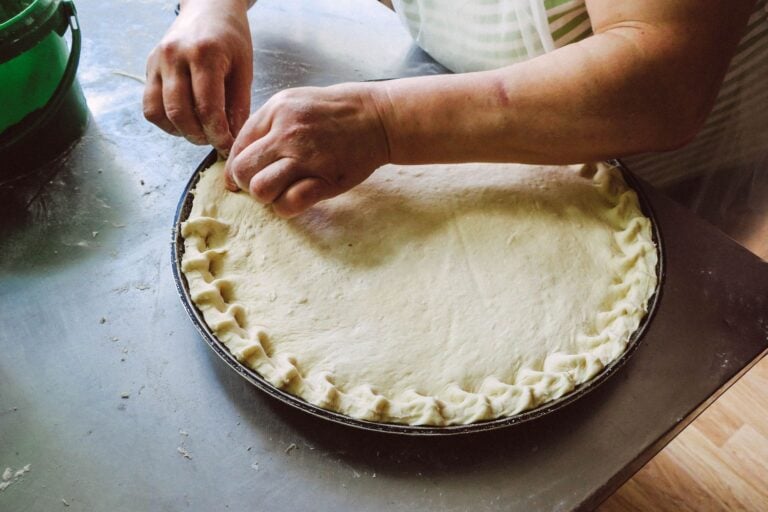
She walked over to that pie. She bent down and looked at the lattice, which was woven tight and even, each strip the same width, the whole top of it brushed with egg and sugar so it caught the basement light like something in a store window. She straightened up. She said, to no one in particular, “Well. Somebody’s been taught.”
That was the day the war started, though I did not know it yet. I was twelve. Hollis was thirteen. Neither of us could have told you what we were getting into.
We did not like each other. I will be honest about that, because if I dress it up now it cheapens what came later. We did not like each other for a long time, and it was the specific dislike of two people who are too much alike to share a small town. We both baked. We both had mothers who measured a daughter’s worth in blue ribbons. We both went to the same church and the same school and the same five hundred social occasions a year that a town like Halverdon throws to keep the loneliness off, and at every single one of them there was a dessert table, and at every single one of them, Hollis Lundqvist’s pie sat a little higher in everyone’s estimation than mine.
The county fair made it official. Cleabourne County held its fair the third week of August, when the corn was tall and the heat sat on the town like a wet wool blanket, and the baking competition was the closest thing our part of the world had to the Olympics. There were divisions for bread and cake and cookies and preserves, but the pie division was the one that mattered. The pie division was where reputations were made. And in 1961, the first year I was old enough to enter, I made a sour cherry pie that I was certain, certain in the way only a seventeen year old can be certain, would take the blue.
Get a new story in your inbox every morning.
Facebook doesn’t show you every story we post. Our free newsletter does. Join 2,500+ readers.
It took the red. Hollis took the blue.
I cried in the truck on the way home. My father, who did not have a sentimental bone in his body, looked over at me and said, “It’s a pie, Wynne.” And I said, “It is not a pie,” and he had the wisdom not to argue, because of course it was not a pie. It was never a pie. It was whether I was as good as I had decided I needed to be, and the red ribbon said no, not quite, not this year, and Hollis Lundqvist’s calm tall figure standing up at the front of the livestock barn to accept the blue said the same thing in a louder voice.
So I went home and I baked. Lord, I baked.
You have to understand what a kitchen was in our part of the world in those years. We did not have much. We had a wood stove that my father swore he would replace and never did, and a window over the sink that looked out on the hog lot and past it to a horizon so flat and so far away that you could watch a thunderstorm coming for an hour before it arrived. The radio brought us the markets and the weather and, on Saturday nights, a little music if the reception held. A woman’s life ran in a circle through that kitchen. You rose in the dark and you started the fire and you fed the men and you put up the garden and you canned in August until your back would not straighten, and the one thing in all of it that was yours, that nobody had assigned you, that you did because something in you needed to make a beautiful thing in a hard place, was the baking. My pie was the only sentence in the whole long day that I got to write myself.
So when I lost that pie, you understand, it was not vanity. It was the one place I had put myself down on a plate and handed it to the county to judge, and the county judged it second best. Year after year. There is no shame I have known since that cut as clean as walking past that dessert table and seeing my red ribbon below her blue.
I have thought a great deal, in my old age, about what would have happened to me if there had been no Hollis. I think I would have been a perfectly good baker and a perfectly forgettable one. I think I would have made the same three pies my whole life and called it a gift. It was Hollis who made me reach. Every August she beat me, and every September I went back into my kitchen like a fighter going back into the gym, and I tried things. I tried lard and butter together when everyone used one or the other. I tried a splash of almond extract in the cherry filling. I tried par baking the bottom crust so it would not go soggy under the fruit, a trick I read about in a magazine and practiced forty times before the fair. Some years I closed the gap. One year, 1974, the judges deliberated for forty minutes, which was unheard of, and a woman named Idella Frye came out and announced it was the closest pie division in the history of the Cleabourne County Fair, and then she gave the blue to Hollis.
Forty minutes. And still the blue went to Hollis.
I should tell you about the years in between, because a rivalry that lasts four decades is not made of one fair a year. It is made of all the ordinary days around them. Hollis and I were not friends, but in a town of nine hundred people you do not get to be strangers either. We saw each other at church every Sunday for fifty years. We saw each other at the feed store and the post office and the funerals, of which there were more every decade, until the funerals were the main place we saw each other at all. We were on the same side of more arguments than I would have admitted at the time, because we were both stubborn women who thought the town was being run by fools, and the fools kept being different fools, and Hollis and I kept ending up in the same back pew muttering the same things.
We even helped each other, in the grudging way of two people who would rather die than say so. When my husband Auberon passed in 1988, dropped in the south field with his hand still on the tractor key, it was Hollis who organized the funeral lunch, and she did it without being asked, and there was a sour cherry pie on the table that she had made and not entered in any competition, and I ate a piece of it standing up in the church basement with my eyes burning and I did not say thank you because I could not get the words past the thing in my throat. She knew. She nodded at me across the room. That was all. That was the most tender thing that had passed between us in thirty years and it was a nod.
I will tell you about one of those funerals, because it sits with me. Idella Frye, the woman who ran the pie division for thirty years, passed in the winter of 1996, and the church was so full that the men stood along the back wall in their good coats with their hats in their hands. Hollis and I ended up shoulder to shoulder in the line for the lunch afterward, neither of us willing to be the one who moved, and there on the table were two cherry pies, mine and hers, set down within a foot of each other the way they had been set down side by side for thirty five years. We both saw it at the same moment. And Hollis, who almost never made a joke, looked at those two pies and said, low, so only I could hear, “Even at a funeral. The woman couldn’t get away from us.” And I laughed. I laughed out loud at a funeral, the first true laugh either of us had earned from the other in our lives, and an old farmer named Thorvald Aas turned around and shushed us, and we stood there like two scolded girls with our mouths pressed shut and our shoulders shaking, and something happened in that line that I did not have a name for at the time. I have a name for it now.
When her Sigurd had his stroke, the bad one, the one that took his words and left him sitting in a chair by the window for the last four years of his life, I drove out to the Lundqvist place every Thursday with a casserole and I sat with him for two hours so Hollis could go to town and breathe. We never discussed it. I just started showing up on Thursdays. The first Thursday she opened the door and looked at me and looked at the casserole dish and her long serious face did something I had never seen it do, and she stepped back and let me in. For four years I sat with a man who could not speak and I held his hand and told him about the town, and Hollis went to town, and when she came back we did not talk about it. We were not friends. We were two women who had been pointing at the same dessert table for so long that we had become a kind of family without anyone signing off on it.
But every August, at the fair, the war came back on. We were polite about it by then. We were old. But I still wanted to beat her, and she still wanted to beat me, and the blue still went to her and the red still came to me, and I had made a peace with it that was not really peace. It was a scab I picked at once a year.
Then, three summers ago, Hollis Lundqvist died.
She was eighty four. She went in her sleep, which is the way the good ones go and almost nobody deserves, and the whole town came to the Lutheran church to bury her, and I sat in the back pew where the two of us had muttered for fifty years, and I muttered alone, and it was the loneliest sound I have ever heard. I had lost my husband and most of my friends and both my parents and a daughter, the worst loss of all, and I will tell you the truth that I am not proud of: I had grieved all of them with a clean clear grief, and when Hollis died I did not know what I was feeling, because there was no name for it. You do not have a word for the death of the person you have spent your life trying to beat. There ought to be one. There is a hole shaped exactly like them and nothing else fits in it.
I made a sour cherry pie for her funeral lunch. I entered it in no competition. I set it on the table next to the ham and the scalloped potatoes and I went and sat down, and I watched the town eat it, and I thought, well, Hollis, you will never know it but this is the best one I ever made, and I made it for you, and you are not here to lose to it. It was the cruelest victory of my life and it tasted like ashes.
I thought that was the end of the story. An old woman, a rival in the ground, forty one red ribbons in a shoebox in my closet and not one blue. I thought I would carry the not quite to my own grave.
Then Hollis’s granddaughter came to see me.
Her name is Marit Lundqvist. She is a sturdy practical young woman, a schoolteacher over in Cleabourne, and she had been the one to clean out her grandmother’s house after the funeral, the long sad job of deciding what a life comes down to. She knocked on my door on a gray October afternoon and stood on my porch holding a wooden recipe box, the kind with a hinged lid, painted once and worn down to bare wood at the corners, and she said, “Mrs. Sorrel, I found something in Grandma’s kitchen and I think it belongs to you. Or. I don’t know whose it belongs to. But I think you’re the one who needs to see it.”
I made her coffee. We sat at my kitchen table, the same table where I had rolled out forty one years of losing pie, and she opened the box and took out a recipe card.
I knew that card.
I want to be careful here, because this is the part I have told almost no one, and I am telling it now because Hollis is gone and Marit said I should, and because I have come to believe that some secrets are only doing harm by staying secret.
That card was my mother’s.
It was her sour cherry pie recipe, in her cramped slanted hand, the one I had grown up watching her write grocery lists in, and it was soft and furred at the edges the way paper gets when it has been handled ten thousand times, and there was a thumbprint of old shortening in the corner that I would have known anywhere. My mother had died in 1979. I had her recipe box. I had thought I had all of it. And here was a card from it, the most important card, the cherry pie, sitting in Hollis Lundqvist’s kitchen for who knows how many years.
I turned it over.
On the back, in my mother’s same hand, was writing I had never seen. Because I had never turned the card over. Why would you turn over a recipe you have made a thousand times. The front was the recipe. The back, I had always assumed, was blank.
It was not blank.
On the back my mother had written: “For Hollis. You have the hands for it. Wynne has the heart but she pushes, she always pushes, she will roll the dough too thin trying to be better than you. You let it rest. That is the whole secret and she will never hear it from me because she is mine and a mother cannot tell her own daughter to stop trying so hard. So I am telling you. Take care of her. She will not know how to let anyone.”
I read it four times. The kitchen was very quiet. Marit was watching me with her grandmother’s long serious face and I understood, slowly, the way you understand a thing that rearranges your whole life, what I was holding.
My mother had given my rival the recipe. My own recipe. The cherry pie I had been trying to perfect for forty one years was my mother’s, and my mother had handed it across to the Lundqvist place, to the tall serious girl with the tight lattice, and she had written on the back of it the thing she could never say to me. She had told Hollis the secret. Not the secret of the pie. The secret of me. Let it rest. Stop pushing. She will roll the dough too thin trying to be better than you.
And Hollis had kept it. For more than fifty years she had kept my mother’s card and my mother’s instruction, and every August she had let her dough rest and I had pushed mine too thin trying to beat her, exactly as my mother predicted, and the blue had gone to Hollis and the red had come to me, and I had never once known that the woman beating me was, in the strangest way in the world, doing what my own mother asked her to do.
Take care of her. She will not know how to let anyone.
I thought of the funeral lunch in 1988, the pie she made without being asked. I thought of the nod across the church basement. I thought of four years of Thursdays sitting with a man who could not speak, the casserole dish handed back washed at the door, and how it had been Hollis who started letting me in, who stepped back from the doorway that first Thursday and let me do the one thing I knew how to do for grief, which was to feed it and sit with it. I had thought I was taking care of her. The whole time she had been taking care of me, the way she was asked to, by a woman fifty years dead, and she had never once let on.
She let me lose to her for forty one years and she let me think it was about the pie.
Marit said her grandmother had told her about the card just once, near the end, in the hospital. She said Hollis had laughed, the dry laugh of a woman who has carried something a long time and is about to set it down. She said Hollis told her, “I should have given Wynne that blue ribbon thirty years ago. But she would have wanted to know why she won, and then she’d have read the back, and then she’d have known her mother thought she pushed too hard, and it would have broken something in her. So I just kept winning. It was easier on her to lose to me than to find out the truth about herself. And by the time it wouldn’t have hurt her, we were old, and old women don’t change the story they’ve been telling for fifty years. Tell her after. Tell her when I’m gone and it can’t hurt anymore. Tell her she was the better baker. I only ever had a head start.”
I sat at my kitchen table and I cried the way I had not cried at the funeral, because at the funeral I had not had a name for what I was feeling and now I did. The name was love. It had been love the whole time, dressed up as a rivalry, because my mother knew her daughter could not accept love handed to her plainly, and so she handed it to me sideways, through a tall serious girl across a county road, disguised as a blue ribbon I would chase for the rest of my life.
I have made that pie since then with the dough resting. I let it sit the way my mother said. And I will tell you something that you may not believe and that I have made my peace with not being believed about: it is better. The crust is better when you let it rest. My mother was right and Hollis was right and I was wrong for forty one years, and I would give every red ribbon in that shoebox to lose to her one more August.
But here is the part I did not expect, the part that makes me tell this story to anyone who will sit still long enough.
It did not end in grief. I thought it would. I thought Marit would hand me the card and I would carry this new sorrow on top of all the old ones and that would be that, an old woman alone with a recipe and a revelation that came too late.
Instead, Marit kept coming back.
She came the next Thursday with a question about the par baking, because she had decided, she said, that her grandmother’s pie should not die with her grandmother, and she did not know how to make it, and the only person on this earth who knew that recipe as well as Hollis had was me. So I taught her. We stood in my kitchen, my mother’s card propped against the sugar canister, and I showed Hollis’s granddaughter how to make the pie that my mother gave to Hollis, the pie that had divided us and, I came to see, had bound us, and Marit’s hands turned out to have the same gift her grandmother had, the patience to let a thing rest.
She comes every week now. We have been doing it three years. She calls me Wynne, after I told her to stop with the Mrs. Sorrel, and she brings her two little ones sometimes, a boy and a girl, who stand on chairs in my kitchen with dish towels tied around their middles, exactly as I once stood in my mother’s kitchen, and I teach them that flour and lard and a little cold water can make grown people quiet at a table.
The little girl is named Thora, and she is six, and she is the kind of serious that runs in that family, the kind that bends down close to the lattice and lines each strip up with a frown of concentration that is so much her great grandmother’s that the first time I saw her do it I had to turn to the window and look out at nothing for a minute. The boy, Orrin, is four, and he is no help at all in a kitchen, which I tell him, and he thinks that is the funniest thing anyone has ever said, and he sits under the table eating cherries out of the bowl when he thinks I cannot see him, which I always can. On the cold afternoons we make the dough and let it rest on the counter under a clean dish towel, and while it rests we drink cocoa and Thora asks me to tell her about her grandmother, and I do. I tell her Hollis was the best baker in Cleabourne County. I tell her Hollis beat me forty one times. I do not tell her yet about the back of the card. She is too small to hold it. But I am keeping it for her, the way Hollis kept it for me, to give her when she is grown and it cannot do anything but heal. The Lundqvist line and the Sorrel line, braided together at last over a cherry pie, fifty years too late and right on time.
We entered the fair together last August. Not against each other. Together. Marit and I made one pie, my mother’s pie, the dough rested, the lattice tight and even, and we put both our names on the entry card, and we sat in the long white livestock barn in the August heat and we waited.
It took the blue.
Idella Frye’s granddaughter, who runs the pie division now, the women in this county have been running this thing for four generations, called out the names, and Marit gripped my hand, and we walked up to the front of the barn together, the old woman and the young one, and we accepted the blue ribbon for a pie that belonged to four generations of women who mostly never got to be in the same kitchen at the same time.
I have it on my refrigerator. My first blue ribbon, at eighty two years old, won with my dead rival’s granddaughter, for my dead mother’s recipe, the back of which I finally turned over.
Hollis, you were wrong about one thing. You said old women don’t change the story they’ve been telling for fifty years.
I changed mine. The story was never a war. It was a relay, and you ran your leg of it carrying something heavy you never set down, and you handed it off to your granddaughter and she handed it to me, and now I am running the last leg with the little ones beside me, and the recipe rests, and the pie is better than either of us ever made it alone.
I lost to you for forty one years, Hollis Lundqvist, and it was the luckiest losing streak of my life.
I miss you every single August. I will miss you in the place that is shaped exactly like you and that nothing else fits in, for as long as I have left.
But I am not muttering alone in the back pew anymore. Marit sits beside me now. And after church we go to my kitchen and we let the dough rest, and we talk about you, and we laugh, and somewhere I have to believe my mother and you are sitting at a table somewhere quiet, the way grown people get quiet over something good, finally able to tell each other out loud the things you both spent your lives saying sideways.
The blue ribbon is on the refrigerator. There is room on there for more.
We are going back this August. All of us. And the dough is going to rest.
This story is a dramatization. Names, characters, and details are invented, and any resemblance to real people or events is coincidental.