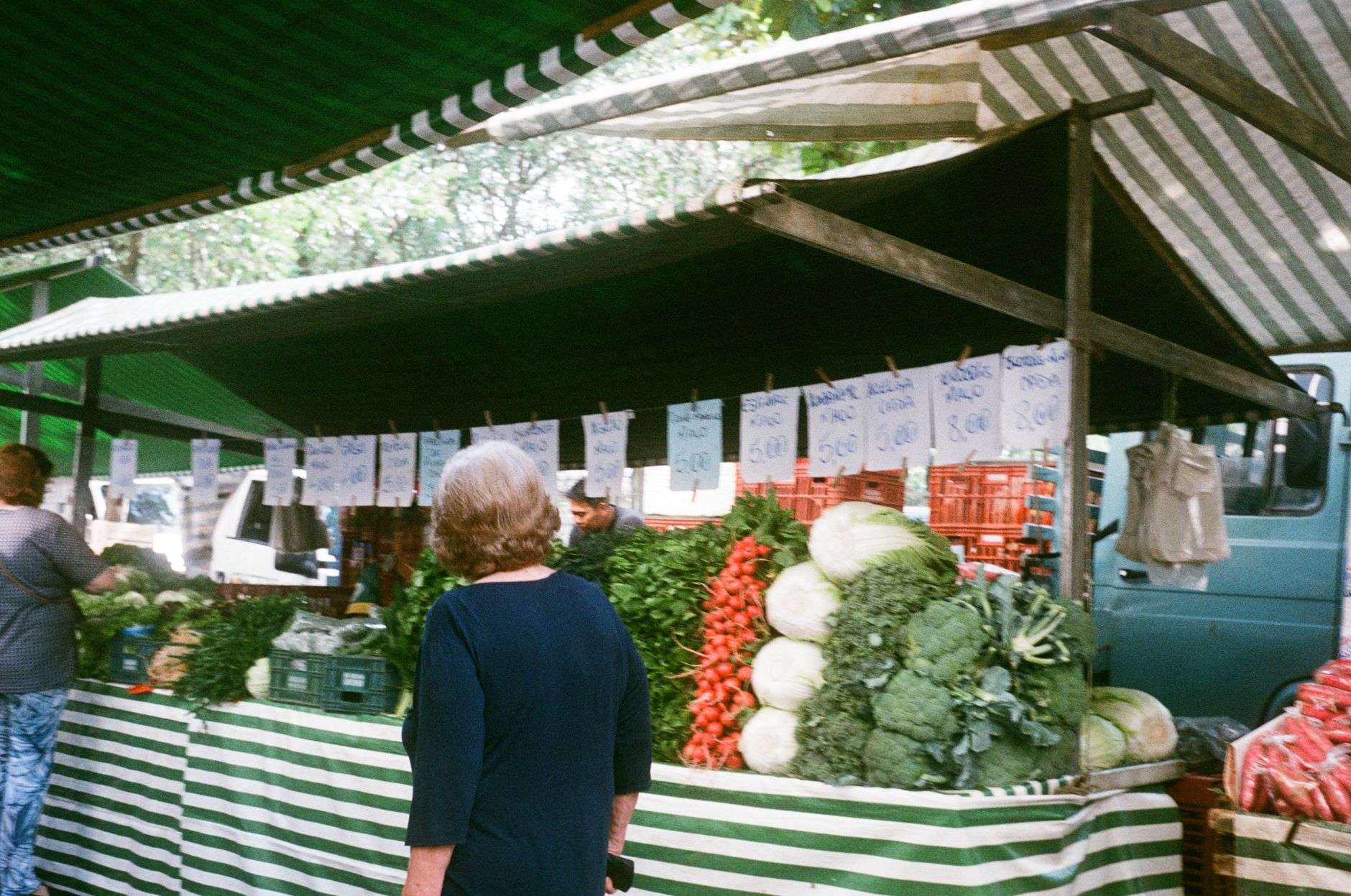
The Zucchini War of Maple Street
The first shot of the war was fired over a chain-link fence on Maple Street in August of the year my husband died, when my new neighbor Fern Prewitt looked down at the zucchini I had babied all summer, the one I was carrying to the Harmon County Fair in a bath towel like a newborn, and said, “Twyla, honey, I have seen bigger pickles in a gas station jar.”
I was sixty-five years old. I had buried Dell in March. I had spent that whole first summer alone, talking to a garden because it was the only thing on the property that couldn’t leave me. And this woman, this small flat-voiced woman in a men’s fishing hat who had moved in next door in April and had not said forty words to me since, chose that moment, that exact moment, to insult my vegetable.
I want to tell you I said something gracious. I did not. I looked at her over the fence, and I looked at the zucchini in her own arms, which I will admit was the size of a canoe paddle, and I said, “Well. At least mine wasn’t grown in whatever you’ve got buried back there.”
Fern blinked once, slow, like a lizard on a warm rock. “Sixty years of chicken manure and spite,” she said. “Same as me.”
Then she got in her truck and drove to the fairgrounds, and she beat me by half an inch, and she put the blue ribbon in her kitchen window facing my house, and that, right there, was the beginning of the nine-year Zucchini War of Maple Street, which I am now going to confess in full, because Fern says if I leave anything out she will tell her version, and nobody wants that.
The rules of engagement
You have to understand what a county fair means in a town like ours. Bell Fork has one stoplight, two churches, a feed store, a diner where the coffee has been the same temperature since 1981, and the Harmon County Fair, which for one week every August is Rome. The giant vegetable table sits in the ag barn between the pie case and the 4-H rabbits, and the names on those entry cards matter more than the names on the water tower. Dell used to say you could get away with robbing the bank in Bell Fork easier than you could get away with buying a store tomato and entering it as your own.
Dell was the gardener, originally. Forty-one years of marriage, and for most of them I was the canner and he was the grower. He kept a half-acre plot behind the house in rows so straight you could have taught geometry off them, and every August he entered the giant zucchini class at the fair, and every August he lost to a man from out by the grain elevator, and every August he came home and said, “Next year, Twyla,” like a Cubs fan.
Dell never won. He died in March, in his chair, with a seed catalog open on his lap, and when I found the courage to look at that catalog a week after the funeral, he had circled a zucchini variety called Black Beauty and written in the margin, in his terrible handwriting, “THIS IS THE YEAR.”
So I planted his zucchini. I didn’t know what I was doing. I overwatered, then I panicked and underwatered, then I read three library books that disagreed with each other and split the difference. I talked to those plants like they were church friends. I told them things I hadn’t told my own son. And what came up that first August was, I can now admit, a modest vegetable. A sincere vegetable. A vegetable that was doing its best under difficult management.
And Fern Prewitt called it a gas station pickle, and I declared war.
The rules were never written down, but we both knew them by the second summer, the way you know the rules of a staring contest:
One. You never, ever touch the other woman’s plants. The war was fought with vegetables, never against them. A woman who would sabotage a squash plant would steal a collection plate.
Two. Insults were delivered over the fence, in a flat voice, with no smiling. Smiling was surrender.
Three. The winner kept the blue ribbon in her kitchen window, facing the loser’s house, for one full year. This rule was Fern’s invention, and it was diabolical, because my kitchen sink faces her kitchen sink, and there is no way to wash a supper dish in November without that ribbon looking back at you.
Four. Nobody outside the fence needed to know it was a war. At church, at the diner, at the funeral dinners we both worked in the fellowship hall, we were civil as senators. The war was ours.
The early campaigns
Year two, I won. I am not going to pretend I was graceful about it. I had found Dell’s compost notes in his shed that spring, three spiral notebooks of them going back to the Ford administration, and I followed them like scripture, and the zucchini I carried into the ag barn that August needed its own seat in the truck. When the judge, Marlene Kowalczyk, who has judged the vegetable classes at the Harmon County Fair for thirty years and has a face that gives away exactly nothing, put the blue ribbon on my entry card, I looked straight at Fern across the barn and I did not blink.
Fern examined my zucchini for a long moment. “Irrigation doping,” she said, to no one in particular, and walked off toward the rabbit barn.
I put the ribbon in my kitchen window. I may have installed a small light over it. Dell would have laughed himself sick.
Year three was the year of the Great Decoy, and I want it on the record that this was the moment I understood I was not fighting an ordinary woman. Around the Fourth of July, a zucchini appeared in Fern’s kitchen window. It was the size of a golden retriever. I could see it from my sink, sitting there on her sill, insolent, enormous, impossible. I lost my mind a little. I doubled my watering. I bought a fish emulsion product from the extension office that smelled like the end of the world. I fed that plant like a rodeo bull, and two weeks before the fair my best zucchini split down the middle from all that water, just cracked open like a dropped watermelon, and I stood in the garden and said words I had not said since Dell backed the truck over my roses.
Fern’s actual fair entry that August was a perfectly ordinary zucchini. The monster in her window, I found out three years later, was papier-mâché. She had built it in June, painted it with craft paint from the drugstore, and set it on the sill specifically so I would panic and drown my crop. She won that year by default, and when Marlene handed her the ribbon, Fern said, loud enough for me to hear, “Some years the vegetables just cooperate.”
I did not speak to her until Thanksgiving. And here is the thing I have to explain, the thing that makes the rest of this story make sense: not speaking to Fern was worse than losing to her. The silence over that fence those three months was the loneliest sound on Maple Street. When I finally broke down in late November and hollered over that her gutters were sagging, and she hollered back that my downspout had been an eyesore since Easter, I went inside lighter than I’d felt since August, and I did not ask myself why. I should have asked myself why.
What the war was actually for
I figured out Fern’s story in pieces, over the fence, the way you learn anything from a woman like that. Widowed eleven years. One daughter, Bonnie, down in Tulsa, married to a man who sold above-ground pools. Fern had farmed with her husband for four decades on a place out past the co-op that she sold after he passed because, as she put it, “a half section is a lot of dirt to be sad on.” She bought the little house next to mine because it had a south-facing garden plot and, I suspect, because it was close enough to the cemetery to walk.
Two old widows on a dead-end street, is what we were. Bonnie called Fern on Sundays. My son calls me on Sundays too, from Spokane, and I love him, and a Sunday phone call is a paper cup of water in a long dry week, and anybody who has lived alone in their seventies knows exactly what I mean by that.
But here is what I had, all those years, that the other widows at church did not have. I had a reason to get up at five thirty. I had a reason to walk out to the garden before the dew burned off, because Fern would already be out in hers, in that fishing hat, and she would look at my rows and say something like, “Your beans look tired, Twyla. Did they have a hard night?” and I would say, “They’re resting up to embarrass yours,” and we would both go back to our weeding with our hearts beating like girls at a dance.
I had somebody watching my window to see if the light was on.
I did not understand that this was the whole point of the war. I thought the point was zucchini. I am seventy-four years old, and it took me nine years and one terrible spring to understand what that woman had actually been growing over there.
The escalation years
Year four was the zucchini bread arms race, which spilled the war into public for the first and only time. It started when Fern brought two loaves of zucchini bread to the church potluck and someone, I believe it was the organist, said it was the best she’d ever had. The following Sunday I brought four loaves. Fern came back with six loaves and a zucchini chocolate cake. I answered with zucchini bread, zucchini muffins, zucchini fritters, and a relish. By late September the fellowship hall looked like a farmers market, and Pastor Loomis, a gentle man who once took twenty minutes to decide between two hymns, was cornered at coffee hour and asked to declare whose bread was better. He looked at me, and he looked at Fern, and he said, “The Lord has blessed this congregation with abundance,” and fled to his office. Fern and I declared the bread front a stalemate over the fence that evening, both of us out of flour and pride. Rule five was added: the war stays in the dirt.
Year five, Fern won by a quarter inch and hummed while she gardened until the first frost. Year six, I won by less than that, and Marlene measured three times with the whole ag barn leaning in and her reading glasses down on the end of her nose, and when she finally called it for me, Fern shook my hand for the first time in the entire war. Her hand was small and hard as a fence post. “Enjoy the window,” she said, and I did, all winter, wickedly.
Year six was also the raccoon summer, which I need to tell about, because it was the closest we came to peace before everything happened. Something was raiding both our gardens in the dark, taking one bite out of every promising squash like a critic and moving on. Fern blamed my birdfeeder for drawing wildlife. I blamed her habit of composting sweet corn. Finally one night in July I took a lawn chair, a thermos, and Dell’s big flashlight out to the garden at midnight to catch the thing in the act, and I had no sooner settled in than a voice came from the other side of the fence, flat as ever: “If you’re planning to shoot it, aim away from my tomatoes.”
She was already out there. Had been, she admitted, for three nights, in her own lawn chair, with her own thermos.
We sat there in the dark, ten feet apart with a fence between us, from midnight until nearly four. The raccoon never showed. We didn’t talk about husbands, exactly, and we didn’t talk about the war at all. We talked about the county, and about a teacher we’d both had, forty years apart apparently, and about whether the fair board was going to move the vegetable judging to Thursday, which we both opposed with our whole souls, and somewhere around three in the morning Fern told a story about her husband trying to teach a heifer to lead with a bag of marshmallows, and I laughed so hard I dropped the flashlight and scared off what was probably, finally, the raccoon arriving.
“Well,” Fern said in the dark. “Now we’ll never catch him. This is why I don’t have friends, Twyla. They’re loud.”
That word sat out there between the lawn chairs. Neither of us picked it up. But I carried it into the house at four in the morning, and I thought about it while I watched her kitchen light come on across the way, because she couldn’t sleep either, and I stood at my dark window like a teenager and thought: that is the most contrary, flint-hearted, fishing-hatted friend I have ever had.
Years seven and eight, we traded ribbons again, and the scoreboard after eight years stood even, four apiece. Year nine was to be the tiebreaker, and we both knew it all winter. In January she left a seed catalog in my mailbox with a sticky note on the zucchini page that said, “Pick something real this year.” In February I shoveled her walk before she got up, purely so she’d have to owe me, and she retaliated by shoveling mine the next three snows, and if you do not think two widows can turn snow removal into an insult contest, you have not lived on Maple Street. In March I started my seeds in the sunroom.
And I noticed, the way you notice a sound stopping, that Fern’s kitchen light wasn’t coming on at five thirty anymore.
The spring the light stayed off
It was Bonnie’s car in the driveway that told me something first, three weekends in a row, with Tulsa plates and a pool company magnet on the door. Then it was Fern missing church twice, which had not happened in nine years. Then it was the garden. April came, and Fern’s plot, which by rights should have been tilled and staked and organized like an invasion by the middle of the month, just lay there under its winter weeds.
I met Bonnie at the mailboxes on a Tuesday. She had her mother’s flat voice but none of the iron under it, and when I asked after Fern, she looked at the mailbox and said, “Ovarian. They found it in February. She starts chemo at County General next week, and she made me swear not to make it everybody’s business, so please don’t tell her I told you, Mrs. Hopson. She’ll skin us both.”
I said I understood. I went inside and I sat at my kitchen table, and I looked out my window at her window, where her blue ribbon from the year before sat facing me the way it had sat facing me all winter, and I did something I had not done since Dell’s funeral. I put my head down on my own kitchen table like it was a school desk, and I cried.
Then I got up, because I am my mother’s daughter, and I made a hot dish, and I carried it across the property line for the first time in nine years, straight up her front steps, and knocked.
It took her a long time to come to the door. When she opened it, she looked small, which Fern had never looked, not once, not for one minute of nine years. She looked at me, and she looked at the casserole, and she said, “So Bonnie talked.”
“Bonnie didn’t say a word,” I said. “Your weeds did. No woman alive lets henbit get that tall unless something’s wrong with her.”
Fern stood there in the doorway. Behind her the house was too dark for two in the afternoon. And then she said the thing that I understand now was the whitest flag she was capable of waving: “You may as well come in. If you stand out there, the whole street will think we like each other.”
The secret garden
She told me the shape of it over coffee at her kitchen table, under her own ribbon. Surgery had come first, then the chemo, eighteen weeks of it, Tuesdays, an hour and forty minutes each way with Bonnie driving up when she could. The doctors said words like “responding well” and “cautiously optimistic,” which Fern translated for me as, “They don’t know either, but I’m paying them like they do.”
“The garden’s done for this year,” she said, flat as a skillet, looking out the back window at her plot. And that was the only moment her voice went anywhere at all. Just a hair. Just the sound of a hairline crack in a china cup. “First year since I was six years old I won’t grow anything.”
“Well,” I said, “that’s a forfeit, and I’d get the tiebreaker for free, and I’m not having nine years of war settled by a doctor’s note.”
Fern looked at me for a long moment. “You wouldn’t know what to do with my dirt.”
“Your dirt could grow a zucchini in a coffee can, you’ve bragged on it enough. Even I can’t ruin it.”
“You’d water wrong.”
“Certainly. Every day. Wrongly and faithfully.”
And that flinty little woman, thin as a rake handle under a kerchief her daughter had bought her, God love her, looked at me across her own kitchen table and negotiated. She would allow me to keep her garden, on conditions. I would plant her saved seed, from the coffee tins in her mudroom, some of which came down from her mother. I would follow her instructions to the letter. I would take half the vegetables home, because she was no charity case. And I would enter her best zucchini at the fair under her name, because there was a tiebreaker to settle, sick or not.
“And Twyla.” She said my name like a judge reading a sentence. “This changes nothing. Come August I will beat you from a lawn chair.”
“Come August,” I said, “you’ll lose from one, and I’ll finally get to hear what that sounds like.”
She stuck out that little fence-post hand, and we shook on it, and I walked home across the property line, and I want to tell you the truth about that walk: I cried the whole thirty feet, and then I stood in my sunroom among my seed trays and said out loud, to Dell, the way I still sometimes do, “You will not believe what I just signed up for.”
That summer I kept two gardens. I am not going to pretend it was easy, because I was seventy-four with a hip that predicts rain, and June was a pot roast and July was a brick kiln. I was in Fern’s plot at first light and mine at last light, and I wore Dell’s old straw hat and drank enough iced tea to float the church bus. And every single morning, Tuesdays excepted, Fern supervised from a lawn chair in the shade of her back porch, wrapped in a quilt in July, issuing corrections in that flat voice like a foreman saddled with the worst crew of her career.
“You’re watering the leaves. Water the dirt. The leaves aren’t thirsty.”
“You’re welcome, Fern.”
“Don’t thank me. Thank the tomatoes. They’re the ones suffering.”
Chemo Tuesdays, Bonnie drove her, and I rode along in the back seat about half the time, whenever Bonnie’s pool man couldn’t mind their kids. Fern slept most of the ride home with her head against the window, and the first time it happened I didn’t know where to look, because you are not supposed to see a woman like Fern asleep in daylight. Somewhere around week ten, she stopped pretending Tuesdays were nothing. Somewhere around week twelve, on the ride home, half asleep, she said, “Dell used to lose this fair every single year to Chester Byrd, you know,” and I said I knew, and she said, “He’d have liked you out there in my rows. That man waved at me every morning for two years like the fence wasn’t there.” And I drove the rest of the way home with my eyes swimming, learning at seventy-four that my husband used to wave at her, all those mornings while I was inside with the radio on.
The zucchini grew. Lord, did they grow. Her plot and mine both had the best year either garden ever had, and don’t let anybody tell you vegetables don’t know things. In her rows, from her mother’s seed, one fruit outpaced all the rest, long and dark and arrogant, and Fern named it Judgment and monitored it from her chair like a stockman at a sale barn. And in my rows, from the Black Beauty line I had planted every year since Dell circled it in that catalog, came the zucchini of my life. The one Dell had written toward. THIS IS THE YEAR. I put a rain gauge beside it and a marigold border around it, and I am not ashamed to say I sang to it, hymns mostly, and by the second week of August it was the biggest thing I had ever grown, and it was not close, and Fern would squint at it over the fence from her chair and say, “That thing is a federal crime,” which from her was a standing ovation.
Her last chemo was August the ninth. The fair opened the twentieth.
Fair day
Entry morning in the ag barn smells like straw and floor wax and cinnamon from the pie table, and it sounds like every conversation in the county happening at once. Bonnie wheeled Fern in about nine, in the chair Fern hated and had agreed to for one day only, with the kerchief traded for a straw hat, and half of Bell Fork came by to say hello and pretend they weren’t surprised to see her, and Fern received them all like a queen at a border crossing.
I carried in both entries myself, one trip apiece. Hers first: Judgment, on a bath towel, laid on the giant vegetable table with her card. FERN PREWITT, MAPLE STREET. It was a magnificent thing, the best of her nine years, and I would know. I had measured every one of them with my own bitter eyes.
Then mine. And I will tell you what happened in that barn when I brought mine in, because it is the only bragging I get to do in this whole story: conversations stopped. A man from the grain elevator took his hat off, I assume to think better. Marlene Kowalczyk, thirty years of judging, with all the giving-away of a courthouse portrait, looked down at it and then over her reading glasses at me and said, “Twyla Hopson. What in the world have you been feeding this.”
“Grief and chicken manure,” I said. “Same as everything.”
The judging of the giant classes is at two o’clock, and by two the barn was as full as Easter service. This is what I meant when I said the fair is Rome. Fern in her chair at the front, Bonnie behind her, the 4-H kids up on the rails, Pastor Loomis with a lemonade, everybody who had watched nine years of ribbons migrate back and forth across a chain-link fence on Maple Street and never once heard either of us admit it was a war.
Marlene measured. She measured everything on that table, the pumpkins first, then the watermelons, working down the line to the zucchini, taking her time the way she does, and I stood beside Fern’s chair with my heart going like a sewing machine, because I had known for two weeks what I was going to do, and I had not told a soul. Not Bonnie. Not the pastor. Not even Dell, out loud, in the sunroom.
She measured Judgment, and the barn murmured. She measured mine, and the barn went quiet.
There was no drama in the numbers. Mine had it by better than two inches. Marlene wrote on her clipboard, straightened up, reached for the blue ribbon, and got as far as “First place, giant zucchini, Twyla Hop…” when I stepped forward and did the thing this whole story has been driving at.
I picked my zucchini up off the judging table, in front of God and the county, both arms under it like a christening, and I carried it the four steps to Fern’s wheelchair, and I laid it in her lap.
“Marlene,” I said, and my voice carried further than I meant it to, because the barn had gone that still, “the card is wrong, and I need it corrected before you pin anything.”
Fern was staring up at me from under the straw hat with both hands on my zucchini like it was a live animal.
“This entry was grown on Maple Street,” I said, “from seed my Dell circled in a catalog the winter he passed, in dirt fed for nine years on advice hollered over a chain-link fence by the orneriest gardener in this county. It was watered all summer by a woman who was supervised the whole time from a lawn chair, between chemotherapy Tuesdays, by that same gardener. I did not grow this vegetable alone any more than I got through this year alone, or the last nine either, and I am not standing up here taking a ribbon alone. The card should say Hopson and Prewitt. Both names, or no ribbon.”
You could hear the rabbits breathing.
Marlene Kowalczyk looked at me for a long moment over those reading glasses. Thirty years of judging, and the rulebook says one exhibitor per entry, and everybody in that barn knew she knew it. She looked at Fern, in the chair, in the hat, with fourteen pounds of zucchini in her lap. Then she took the pen from behind her ear, crossed out my name standing alone on the card, wrote it in again alongside Fern’s, and said, in that flat judge’s voice that gives nothing away, “First place, giant zucchini. Hopson and Prewitt. First joint champions in the history of the Harmon County Fair, and if anybody wants to appeal it, the complaint box is that trash barrel by the door.”
The barn came apart. I have been to weddings quieter than that barn. The 4-H kids were pounding the rails, Bonnie was crying into her fair program, Pastor Loomis raised his lemonade like a toast, and somewhere in all of it Marlene pinned the blue ribbon to our shared card, over both our names.
And Fern. Fern looked down at the ribbon, and up at the crowd, and made them wait for it, because she is Fern, and then said, perfectly flat, perfectly loud: “It’s crooked, Marlene.”
And then, under all the laughing, so quiet that nobody in that barn heard it but me, she reached up, took hold of my wrist with that little fence-post hand, pulled me down level with the straw hat, and said the thing I will hear on the day I die.
“You looked like you needed a war, Twyla. That first August. Standing out in that garden every morning like a lost dog. Nobody insults a stranger’s zucchini by accident.”
I stood up slow, in the middle of the Harmon County Fair, with my mouth open, doing nine years of arithmetic all at once. The pickle line, three days after she’d watched me spend a whole summer talking to plants. The window ribbon, rule three, her invention, built to make sure I looked at her house every single day of my widowhood. The papier-mâché monster, constructed for an audience of one. The catalog in the mailbox. Nine years of five-thirty mornings when I got out of bed with somewhere to be and someone to beat, the loneliest years of my life, except they weren’t, they never were, because a flint-hearted woman in a fishing hat had looked over a fence at a brand-new widow and decided, on the spot, without one soft word, what I needed, and then spent nine years being it.
“You mean to tell me,” I finally managed, “that you started this whole thing on purpose. As a kindness.”
Fern adjusted the straw hat. “I’d never,” she said. “Your zucchini was pitiful. It was a public service.”
Every year since
That was three years ago this August. You want the accounting, and you deserve it, because I hate a story that ends in fog.
Fern finished her treatment that fall. The scans came back the way we prayed they would, and then again the next spring, and then again, and at some point the doctors stopped saying “cautiously” in front of “optimistic,” and the day the all-clear finally came, Bonnie called me before Fern did, and Fern was mad about that for a week. “I had an announcement planned,” she said. “You people ruin everything.”
Bonnie’s husband drove up from Tulsa the following spring with a truck full of tools, and he cut a gate in the chain-link fence between our two backyards. Fern told everyone it was for practical purposes. It has a little arch over it now, with morning glories on strings, and I have watched that woman stand at her sink doing dishes and look at that gate the way some people look at a grandbaby, so practical purposes must cover more ground than I thought.
We garden one garden now. It runs across both properties like the fence was never there, her mother’s seed lines on her side, Dell’s Black Beauties on mine, and the rows meet in the middle at the gate, and nobody can say anymore where one starts and the other stops, which I have come to believe is the whole idea of a friendship. She still tells me I water wrong. I still do it wrong on purpose, some mornings, just to keep her blood moving. We are seventy-seven and eighty now, and we drink our coffee at five thirty on whichever porch has the better shade, and half the town thinks we are sisters, and neither of us corrects them.
We enter the fair together every August, one card, two names, and Marlene pretends it is a headache and has the joint-champion rule written into the fair book now, official, because we would not stop, and then other people started asking, and now half the giant vegetable table is teams. There are four blue ribbons on the gate post as of last summer. Not in her window. Not in mine. On the gate, where both kitchens can see them.
And the first one, the crooked one, from the day I laid my prize in her lap in front of the whole county, hangs in a little frame Fern bought at the drugstore, and she keeps it on her kitchen windowsill facing my house, exactly where the war ribbons used to sit. When I asked her why that one, she looked at me like I was slow.
“Rule three,” she said. “Winner keeps the ribbon where the loser has to see it. We both won. Figure it out.”
I have thought a long time about what to tell you this story is about, because I know what it looks like. It looks like it is about zucchini, and it is not, and it also is. It is about how some people cannot say “you are not alone” out loud, so they say “I have seen bigger pickles in a gas station jar,” and if you are lucky, if you are terribly lucky, you have the sense to fight back for nine years. Love shows up in work clothes more often than it shows up in words. Sometimes it leans on a fence. Sometimes it hollers that you are watering the leaves and the leaves aren’t thirsty. And sometimes it looks at a widow lost in her own backyard, sizes her up the way you size up dirt in the spring, and plants a war in her, on purpose, because a war was the only thing that would hold her together until the friendship was ripe.
Fern read this whole thing over my shoulder just now, by the way. She says it runs long and I made her sound short.
She is five foot nothing and every word is true, and I would carry her zucchini anywhere.