
“Ask Wanda where Mama’s ring went. She knows her way to a pawn counter.”
My brother Vance said that at our mother’s funeral lunch, in the basement of First Congregational in Grey Grass, South Dakota, loud enough for two tables of casserole ladies to hear it, and for the next twenty years that one sentence was the truest thing anybody in my family believed about me.
My name is Wanda Redcloud. I am fifty-nine years old. I have lived my whole life in the same county where my grandmother was born, on the flat yellow edge of the plains where the wind never fully stops and everybody knows everybody’s business three days before it happens. And for twenty years, every person I loved believed I stole my dead mother’s turquoise ring and sold it for grocery money.
I want to tell you about the ring first, because you cannot understand what was taken from me until you understand what that ring was.
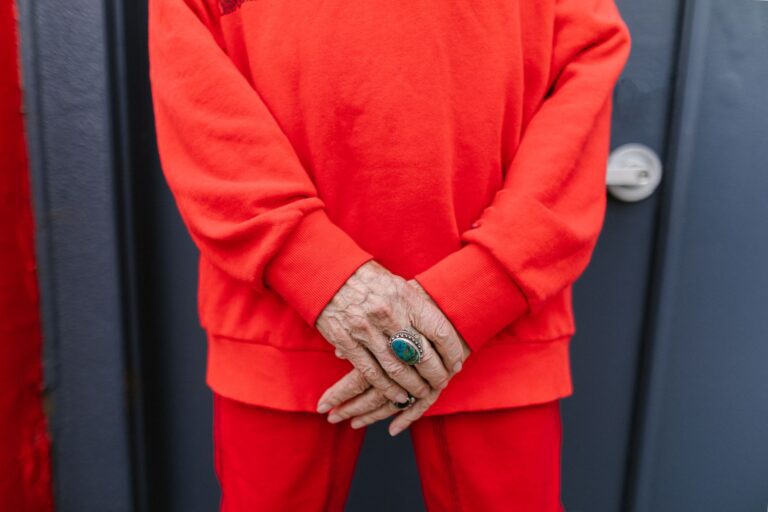
My father bought it in the summer of 1966, at a trading post on the highway east of Rapid City, on the way home from selling two steers. He paid more for it than he had ever paid for anything that could not pull a trailer. It was a single oval of turquoise the size of a thumbnail, set in silver, and the stone had a dark spiderweb matrix running through it that Mama always said looked like a map of rivers. She wore it on her right hand for forty years. She wore it kneading frybread dough, so there was flour worked into the band that no amount of washing ever fully got out. She wore it at every wake and every giveaway and every graduation in three generations of our family. When she talked with her hands, which was always, that stone moved through the air like a bird you’d learned to watch for.
And she had promised it to me. Not in a will. Our family did not do much with lawyers back then. She said it out loud, more than once, at her own kitchen table, with Vance sitting right there: “When I’m gone, the ring goes to Wanda. Eldest daughter. That’s how my mother did it and that’s how I’ll do it.”
Mama died the first week of October, 2006. Heart, in her sleep, sixty-nine years old. I had spent the last fourteen months of her life driving out to the home place every single day, before my shift and after it, because I was the one still in town and I was the one she’d let help her. I cooked for her. I set her hair on Saturdays. I sat with her through the World Series she didn’t live to see the end of. I was the one who found her, that Tuesday morning, lying peaceful with her hands folded like she’d arranged herself for company.
Eleven days after we buried her, my sister-in-law Sherri was at the home place boxing up Mama’s dresser, and she came out to the porch holding the empty ring box. Just the box. Blue velvet, worn pale at the corners, and nothing in it.
I want to be careful here and tell it exactly the way it happened, because for twenty years the way it happened got told wrong.
Nobody accused me that day. That day it was just confusion, everybody turning the house over, checking coat pockets and coffee cans. The accusation came later, at the funeral lunch for Mama’s cousin three weeks after that, when the grief was still wet and the family was all in one room again. Somebody at the long table asked, innocent as weather, whether the ring had ever turned up. And Vance, my big brother, four years older than me, deacon of that very church, the man who gave the toast at my wedding, set down his coffee and said it.
“Ask Wanda where Mama’s ring went. She knows her way to a pawn counter.”
Here is why it worked. A lie that big does not stand up on its own. It has to have something true to lean against, and mine did.
That was the worst year of my life even before Mama died. My marriage had come apart in the spring, and it had come apart the expensive way, with a husband who left the state and left me the debts. I was cleaning at the school district and picking up shifts at the cafe out by the interstate, and it was not enough, and everybody knew it was not enough, because in a town of six hundred people your bounced check at the co-op is community news. And in August, two months before Mama died, I had asked her for a loan. Four hundred dollars, to keep the electricity on. She gave it to me and fed me supper and never mentioned it again.
But Vance knew. And when he needed a story, there it was, already half built. Broke divorced Wanda, always over at Mama’s house, had a key, asked for money that summer. She couldn’t even wait for her inheritance. She took the ring that was coming to her anyway and turned it into cash while her mother’s grave was still settling.
Why would I steal what was already promised to me? I asked that out loud, more than once, in those first awful months. And the answer came back, unspoken but plain on every face: because a pawn counter pays faster than grief.
You cannot prove an empty hand. I learned that. You can prove where you were on a Tuesday. You cannot prove what you did not do in a house you were in and out of every day for a year. There was no ring on my finger and no ring in my drawer and no receipt saying I hadn’t done it, because there is no such thing as a receipt for innocence.
So the lie moved in. And a lie like that does not stay a scandal. That is what people who have never lived under one do not understand. A scandal would have been easier, a scandal burns hot and burns out. This did something worse. It became furniture. It became a fact about me, like my height. Wanda Redcloud, fifty-nine, cleans at the school, took her mama’s ring.
Get a new story in your inbox every morning.
Facebook doesn’t show you every story we post. Our free newsletter does. Join 2,500+ readers.
Let me tell you what twenty years of that looks like, because it does not look like shouting.
It looks like Thanksgiving, the very next year, moved from my house to Sherri and Vance’s without anybody exactly deciding it, and me finding out from a phone message about what to bring. Yams. Twenty years, and I never hosted a holiday again, and I brought the yams every single time.
It looks like the Christmas of 2009, when Vance had a photo of Mama enlarged and framed for every household in the family. Mama at the powwow grounds in her good shawl, laughing, her right hand lifted, the turquoise catching the sun. He handed those frames around the tree one by one. My sister got one. My cousins got one. Even the in-laws got one. I did not get one. He looked right at me over the wrapping paper and let the pile run out, and everyone in that room understood the arithmetic, and nobody said a word.
It looks like the purses. I noticed it the third or fourth year. When I came into a room at a family doing, there would be this small tide of motion, handbags drifting up off the floor and onto laps, casual as anything, women I had known my whole life tucking their bags a little closer while they smiled at me about the weather.
It looks like my daughter, Nola, coming home from a sleepover at her cousin’s when she was fourteen, standing in my kitchen with her coat still on, asking me in a voice I had never heard from her before: “Mom. Did you sell Grandma’s ring?” Because her cousin had told her, matter of fact, the way you’d tell somebody the capital of a state. That is the one I do not forgive easily even now. Vance did not just tell his generation. He salted the ground so the story would come up in the next one.
It looks like grace. Every holiday, Vance said the blessing, because Vance was the deacon, and one Easter, with all of us holding hands around the table, he thanked the Lord for family, “even the ones who take from it,” and then said amen, and everybody ate.
And here is the part I have to own, the part that shames me a little even though I have been told it shouldn’t. I kept going. Every holiday, every funeral, every graduation, for twenty years, I showed up with my yams and my folding chairs and I sat at the far end of the table and I took it. My sister moved to Spokane and got to be neutral from a distance. I stayed. People ask me why now, and I have had a lot of years to work out the answer. I stayed because it was my family. Because those were my mother’s grandchildren growing up in those backyards, and if I disappeared, the story would not disappear with me. It would just finish hardening with nobody there to stand against it. An empty chair confesses. So I sat in mine.
I will tell you the other reason I stayed, and she is the reason there is a story to tell at all.
Aunt Dovie was Mama’s youngest sister. Dovie ran the kitchen at the Grey Grass school for thirty-four years, which meant she had fed every child in that town for two generations, including me, including Vance. She was small and quick and she wore her hair in the same tight silver bun for as long as I knew her, and she had a way of looking at you over her glasses that could stop a grown man from reaching for the last piece of chicken.
Dovie never once, in twenty years, treated me like a thief. I want that on the record. At every family gathering, she sat next to me. Not near me. Next to me, her chair touching mine, like a fence post you could lean on. She sent me home with the leftovers in her old Folgers cans. When Nola graduated, Dovie stood up and hollered for her like it was a rodeo. She never said Vance was lying. But she never let me sit alone, not one time, and when you are the family criminal, the person who sits beside you is not a small thing. She was the reason I could keep walking into those rooms.
I understand now that it was more than kindness. I understand now that it was penance. But I am getting ahead of myself.
In February of this year, Dovie went in about a cough that would not quit, and it was not a cough. It was in her lungs and it had already traveled. She was eighty-one. She heard the options, thanked the doctor the way she’d thank a boy for carrying her groceries, and told us all she would be dying at home, in her own house at the edge of town, with her own coffee pot. Hospice started coming in June. Nola and I took the Tuesday and Friday shifts. Vance and Sherri took Sundays after church, and I will say this for my brother: he came every Sunday and he mowed her yard without being asked.
By the Fourth of July, Dovie was down to ninety-some pounds and tethered to an oxygen machine, and everybody understood, without saying it, that this was her last one.
The Fourth is our family’s big day. Bigger than Christmas. It has been since before I was born. Grey Grass does it the way small towns do: the volunteer fire department runs the parade at eleven, which is two fire trucks, the 4-H, a hay wagon of Legion veterans, and every kid in town on a bicycle with crepe paper in the spokes. Then the families scatter to their yards for the long afternoon. Ours gathers at the home place, which is Vance’s place now, because of course it is. Mama’s house, Mama’s cottonwoods, Mama’s porch, and the flag Daddy bought at the hardware store in 1975 going up the pole at dawn.
This year there were maybe thirty of us. Card tables end to end under the cottonwoods with the cloths clothespinned down against the wind. The beans, the potato salad in the avocado green Tupperware older than my marriage, a washtub of pop and ice, Sherri’s flag cake with the berry stripes, and my frybread and wojapi, which I make the way Mama made it, and which everybody eats plenty of, thief or no thief. Horseshoes clanking by the shelterbelt. Somebody’s radio going. Kids running through the sprinkler in their good clothes because nobody’s kids ever brought a change of clothes in the history of the world.
Nola drove Dovie out at two o’clock, and we set her up like royalty in the shade, in the good lawn chair with the cushion, her oxygen bottle standing beside her in a little red wagon one of the great-greats had decorated with flag stickers. She had gotten so small. But her eyes over those glasses were the same eyes, and she watched that yard all afternoon like a woman doing inventory.
Toward evening, before the pie and after the corn, Vance stood up at the head of the tables and dinged his fork on his glass. This was ritual too. Vance gives the toast on the Fourth, the same way he says grace, because Vance is the oldest and Vance is the deacon and Vance has spent twenty years being the trustworthy one, which I have come to understand was the whole point.
He talked about the country, and the family, and the men in our family who had served it, and it was a fine little speech, it always is. And then he lifted his glass toward the porch and said, “And Mama. Twenty years this fall. She loved this day more than Christmas. She’d have been out here in her shawl with that ring flashing around, bossing everybody.” He smiled, easy as you please, and he could not help himself. Twenty years of getting away with it will make a man comfortable. He turned that smile down the tables to me, and he said, “Course, if anybody wants to know where the ring ended up, you’d have to ask Wanda.”
It got the same low chuckle it always got. Twenty years of that chuckle. I was looking at my plate, doing what I do, which is being a stone the water moves over.
And then I heard the oxygen machine wheeze, and a chair scrape, and my aunt Dovie, eighty-one years old and ninety-one pounds, dying in a lawn chair with flag stickers on her air bottle, said, “Cut that radio.”
One of the great-nephews cut the radio.
She got herself up. Nola moved to help her and Dovie waved her off with one hand and gripped the table edge with the other, and she stood all the way up, hunched but up, and the whole yard went still the way it does before hail.
“Vance Redcloud,” she said. Not loud. She did not have loud left. But that yard was so quiet by then that the horseshoe pit heard her. “Twenty years I have listened to you tell that joke. It is not going to get told at my funeral, so I am dealing with it now.”
Vance’s glass was still half up in the air, and I watched something move through his face, fast, like a shadow under water, and I did not understand yet what it was. It was recognition. He knew what was coming before any of the rest of us did, because he was the only one there who knew there was anything to come.
“In October of 2006,” Dovie said, and she had to stop for breath every few words, which somehow made it worse, made every phrase land alone, “eleven days after we buried my sister, I was in Rapid City staying with my cousin. And I walked past the pawn shop on East North Street, and in the window, on a little velvet tray, I saw my sister’s ring.”
Nobody moved. The sprinkler went around. I remember the sprinkler, and the flag snapping up on the pole, because it was suddenly the loudest thing in the world.
“I’d have known that stone in the dark,” she said. “That matrix like rivers. I went in and I told the man that ring belonged to my sister who had just passed, and I asked him who brought it in. And he didn’t have to tell me, but I expect I looked like somebody’s aunt, and he pulled the ticket.” She stopped and breathed. The machine wheezed. “And the name on that pawn ticket was not Wanda’s.”
She lifted her hand off the table and pointed it at my brother, and her finger did not shake.
“It was yours, Vance. It has been yours for twenty years.”
I have tried since that evening to describe to myself what happened in my body in that moment, and the closest I have come is this: it was like a sound you have lived beside so long you stopped hearing it, a fan, a highway, suddenly shutting off. A silence so big it has a shape. Twenty years of holding my face still at family tables, and the muscle finally let go, and I just sat there shaking with my hands flat on the tablecloth like I was trying to hold the whole table down, or maybe hold myself down, one or the other.
Sherri said, “Dovie, honey,” in a voice like something breaking, and looked at her husband to say it wasn’t so.
And Vance sat down. That was his answer. My brother, who had an easy line for every occasion for twenty years, folded down into his chair like his strings were cut and put his hand over his mouth, and every soul at those card tables watched him do it, and that was the confession before the confession.
Dovie was not finished. She was dying, and dying people do not save anything for later.
“He pawned it for two hundred and fifty dollars,” she said. “I bought it back for three hundred and ten, out of my kitchen money. And then I drove to this house, to this house, Vance, and I set it on that kitchen table in there, and I asked you what in God’s name you had done.”
The why of it came out of her in pieces, between breaths, and Vance never once interrupted her, staring at the tablecloth. That fall he had been drowning and too proud to say so. The propane business was slow, there was a truck payment behind and a co-op account he’d let get away from him, and there were the video lottery machines in the back of the bar in Kadoka that nobody in the family knew he’d gotten friendly with. He was the steady one. Being the steady one was the only thing he had left, and he could not stand in front of the co-op board or the church board or his wife and say he was eleven hundred dollars from the edge. Mama’s dresser was right there, and the house keys were in his pocket same as mine, and a pawn loan is not selling, that is what he told himself. Thirty days. He’d have it back in the box in thirty days and no one would ever know.
And then Sherri found the empty box in eleven days.
“And when everybody started asking,” Dovie said, “somebody at a funeral lunch wondered out loud where it went, and this man, this man sitting right there, opened his mouth, and out came your name, Wanda. And I believe it surprised him as much as anybody. That is what I have decided over twenty years of watching him. The first time was not planned. It was just there, and it fit, and he grabbed it like a rail on the stairs.” She breathed. “But every time after that was planned. Every joke. Every grace. Every Christmas. Twenty years of choosing it again.”
Then she turned and looked at me, and this is the part where my aunt, whom I loved more than anyone left alive, put her own self on the scale, and I understood at last what all those years of sitting beside me had been.
“I told him he had until Christmas to tell the truth,” she said. “That was Christmas of 2006. He cried at that kitchen table and he begged me, and I loved him. I helped raise him, summers, when your mama was working. And I told myself that keeping quiet was keeping peace.” Her voice went down to almost nothing and the yard leaned in. “It was not peace. It was just quiet. There is a difference, and I knew the difference, and I chose quiet, because the truth would cost him everything and the lie only cost you. That is the arithmetic I did, Wanda. I did it every Christmas for twenty years. I would look at him across the church and think, this year he’ll stand up. And he never did. And I got old waiting on a coward, and now I am out of time, and I am not going to stand in front of my sister in glory holding her ring and his lie both.”
She reached into the pocket of her housedress, where she kept her hard candies and her Kleenex, and she brought out a man’s white handkerchief knotted at the top, and her hands would not manage the knot, so Nola undid it for her, crying so hard she could barely see it.
And there it was. Twenty years in a cedar box at the edge of town. The silver a little dark, the stone exactly the same, because turquoise does not age, we age. That matrix like a map of rivers.
“This was always yours,” Dovie said. “Your mother said so at her own table. I am sorry it comes to you this late, and I am sorry it comes from my hand and not hers, and I am sorry, Wanda.” My aunt, who fed this whole town for thirty-four years, stood there in front of everybody and said sorry to the family thief. “I am sorry I sat beside you all those years instead of standing up for you. Sitting beside somebody is not the same. I knew that too.”
She put the ring in my palm and folded my fingers over it with both her small cold hands, and then she was done, all the way done, and Nola eased her back down into the lawn chair, and the oxygen wheezed, and thirty people stood in a yard in South Dakota in absolute silence while the flag Daddy bought in 1975 snapped on the pole.
You want to know what I said. I have thought about it a great deal, because I had twenty years to script that moment and I never once imagined it right. In my kitchen, at two in the morning, over two decades, I had composed speeches that would have blistered paint. Where the anger should have been there was just this enormous tiredness, and under the tiredness, like a stone under water, grief. Not for the ring. For the twenty years. For every holiday Mama’s grandchildren watched their family treat me like a thief, and learned it was normal.
I put the ring on my right hand, where she wore it. It fit like it had been sized. I looked down the card tables at my brother, who still had not raised his head, and I said the only thing that was true enough to say out loud.
“Twenty years, Vance.”
That was all. And my brother, sixty-three years old, deacon of First Congregational, put his face down into his hands in front of his wife and his children and his grandchildren and wept like a man at a graveside, which I suppose he was. The grave of the steady one. Twenty years of building that man, and it took a dying woman four minutes to lay him down.
People started moving again the way they do after a car wreck, slow, in pieces. Somebody took the kids to the sprinkler. Sherri sat staring at her flag cake like she’d never seen it before. And I got up and walked out past the horseshoe pits to the fence line, because I could not be looked at for one more minute, and I stood there holding the top wire and watching the light go long and gold over the section the way it does on the Fourth, and I cried the way you cry when the thing you are crying for is twenty years wide.
He came out to me at the fence. I heard him coming and I did not turn around. For a while he stood there and neither one of us said anything, two gray-headed people at a fence they had both climbed over as children.
“It was going to be thirty days,” he finally said. “I have told myself the whole story so many ways, Wanda, but that is the true beginning of it. Thirty days and back in the box.”
“And then it was twenty years,” I said.
“And then it was twenty years.”
I asked him the only question I had. Not why he took it. Dovie had answered that, and anyway, need is not hard to understand. I asked him why it had to be me.
My brother looked out at the section for a long time, and when he answered, he had the decency not to dress it up. “Because everybody would believe it,” he said. “You were broke and you were there. It was cheap and it was easy, and I paid for my mess with your name because your name was the closest thing to reach.” He was crying again, quiet. “I’d say I don’t know how a man does that for twenty years, but I do know. You do it one holiday at a time. And every year it got harder to tell because there was more of it to tell. The lie got too big to carry back. So I let you carry it.”
“You didn’t just take a ring,” I said. “You took every Thanksgiving I ate at the far end of the table. You took my daughter standing in my kitchen at fourteen asking me if I stole from her grandma. You cannot pawn those back, Vance. There’s no ticket.”
“I know it,” he said. “I’m not asking you tonight for anything. I just needed to say the words to your face with nobody’s funeral between us.” He started back toward the yard, and then he stopped and said the one thing that I turn over the most, even now. “She sat next to you every time,” he said. “Twenty years. I watched her do it, and I knew exactly what it meant, and it never once made me brave. That’s the kind of man I’ve been, Wanda. Not the kind who does one terrible thing. The kind who watches an old woman do his repenting for him.”
I will not tell you that we embraced at the fence line and the music swelled, because we did not, and it did not. I told him I heard him. That was what I had that night. He nodded and walked back to his family, and I stood at the wire until the first fireworks went up from the fairgrounds, and I watched them with my mother’s ring on my hand for the first time in my life, and that is the Fourth of July I will be thinking about on every Fourth of July I have left.
Dovie lasted five more weeks. She died on the nineteenth of August, in her own bed, with her coffee pot clean on the stove and Nola holding one hand and me holding the other. Near the end she was mostly elsewhere, but she had one good evening, and in it she pulled my hand over to feel the ring on my finger and said, “There it is,” with real satisfaction, like a woman finally seeing the last row of a quilt bound off.
The funeral was at First Congregational, of course. The lunch was in the basement, of course, the same basement, the same long tables, the same church ladies’ grandaughters running the coffee urns. I had not been down those stairs in some years, and my body remembered before I did, and my hands went cold on the stair rail.
And this is the end of the story, and I would not believe it either, except that a hundred people saw it.
After the lunch, my brother Vance stood up at the head table, where the family of the deceased sits, and he dinged his fork on his glass, and the basement went quiet for the deacon the way it always has. And he did not give a toast. He gave a confession. To the whole town, in the room where he had started the lie twenty years before, standing six feet from where he had been standing the first time, my brother said, “Most of you have heard me make a joke over the years about my mother’s ring and my sister Wanda. I need to tell you that the joke was a lie, and I knew it was a lie, because I am the one who pawned that ring in Rapid City in 2006, and I let my sister carry it. Dovie Yellow Hawk knew the truth for twenty years and she died refusing to carry it any further, and I am not going to make her carry it into the ground. Wanda never took a thing from this family.” His voice went, and he stood there until it came back. “It was me. If you have treated her differently all these years because of what I said, the debt for that is mine, and you can bring it to me.”
You could hear the coffee urns cutting on and off. Then old Alberta from the altar guild, who is ninety-one and does not wait for permission, got up from her table and walked over to me and took my hand, the ring hand, and held it in both of hers exactly the way you hold something at a funeral, and one by one, that basement full of people lined up behind her.
I wish everyone who has ever been believed about the worst thing they never did could have five minutes of what that felt like.
It has been a while now. Enough time that I can tell you honestly what got repaired and what did not, because this is a true accounting, and a true accounting does not end with everything back in the box.
Nola calls her uncle again, short calls, but calls. Sherri and I had a long afternoon on her porch that I will keep private, except to say that she did not know, I am satisfied of that, and that being married to the lie all those years cost her something too. The nieces and nephews who grew up on the story have come to me one and two at a time, awkward and sweet, the way young people apologize for things older people did. Thanksgiving is at my house this year. I did not ask. Sherri announced it at the funeral lunch like a woman daring anyone to object, and nobody objected. I am making the yams anyway. I have gotten good at them.
Vance and I have coffee on Saturdays, most Saturdays, at the cafe out by the interstate where I used to wait tables in the bad year. Some Saturdays we talk about it and some Saturdays we talk about cattle prices and grandkids, and both kinds of Saturday are the work. It will never be what it might have been. Forgiveness is not a door you fling open. It is a road you grade one pass at a time, and some weeks the rain undoes your work, and you go back out anyway. He is my brother. He did a coward’s thing and he lived in it so long it fit like a chair, and at sixty-three he finally stood up out of it in a church basement, and I have decided that counts. Dovie thought it would count. That is good enough for me.
Mama’s ring is on my hand as I write this. Flour in the band already, because I make the frybread now, and my granddaughter stands on the kitchen chair to watch, and she likes to press her thumb on the stone and hear about the rivers. Twenty years that stone sat in the dark in a cedar box, waiting on the truth the way turquoise waits, without aging, without hurrying, harder than the lie ever was.
It took twenty years. But every river in that stone finally made it home.
This story is a dramatization. Names, characters, and details are invented, and any resemblance to real people or events is coincidental.