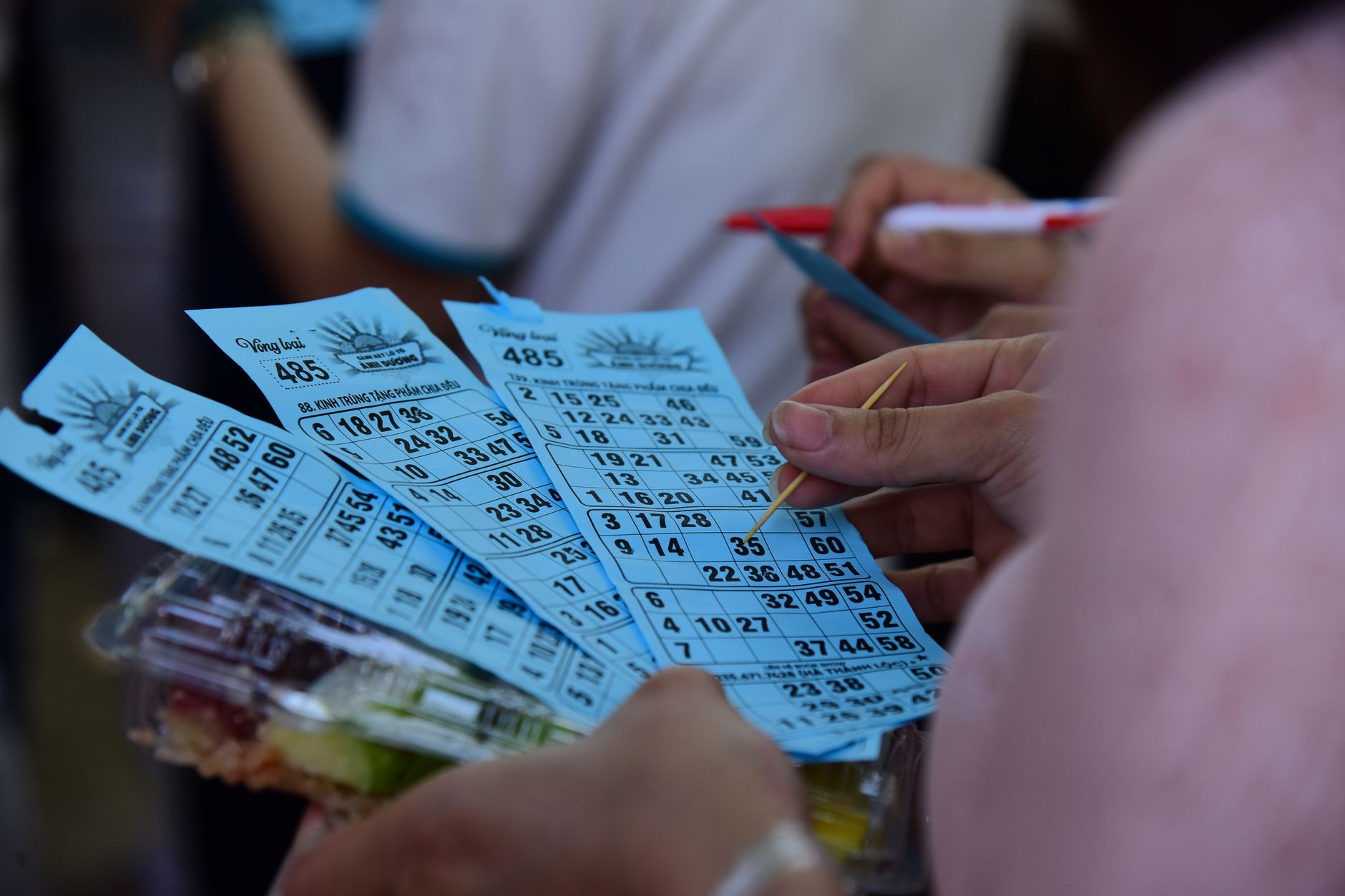
The Bingo War That Made Us Friends
There is a particular sound a bingo dauber makes when you slam it down on a card just a little harder than you need to, and for eleven years that sound was the closest thing Glenda Pruitt and I had to a love language.
I should explain.
Tuesday night at the Cedar Falls Senior Center was bingo night, and bingo night was war. Not the kind of war you read about. No one bled. No one even raised their voice above what the room would politely tolerate. It was a slow, simmering, eleven-year campaign of muttered insults, stolen seats, rival casseroles, and competing lucky daubers, fought entirely between two women in their seventies who would each have told you, with a straight face, that the other one was the single most insufferable human being in the county.
That was me and Glenda. I am Mavis. I am the reasonable one. I want that on the record before I tell you the rest, because the rest does not always make me look reasonable, and a woman my age has earned the right to control her own narrative.
Let me take you back to how it started, because everybody at the center has an opinion on how it started and almost all of them are wrong.
It was a folding chair. The third one in from the aisle in the second row, the one with the good view of the caller’s board and just far enough from the heat vent that you did not roast through your cardigan by the third game. I had been sitting in that chair every Tuesday for two years. It was my chair the way a pew is somebody’s pew. Nobody assigns it to you. God assigns it to you. And then one Tuesday in the autumn of what I am fairly sure was 2015, I walked in at five minutes to seven, set down my purse, went to get my coffee, came back, and there was Glenda Pruitt sitting in my chair like she had paid for it.
I had never met the woman. She had just moved up from somewhere south, Tennessee or thereabouts, you could hear it in the way she said “y’all” and “fixin’ to” and a few other things she said about me later that I will not repeat in a Christian publication.
“Excuse me,” I said, polite as Sunday. “I believe that’s my seat.”
She looked up at me. She had these reading glasses on a beaded chain and she lowered her chin and looked at me over the top of them, which I would come to learn was the single most aggravating thing a human face can do.
“I don’t see your name on it,” she said.
And reader, that was it. That was the shot heard round the senior center. Eleven years from one folding chair.
Now, a wiser woman, a saintlier woman, might have laughed it off and found another seat. I am not that woman. I sat down directly behind her, leaned forward, and for the entire first game I narrated her play under my breath just loud enough for her to hear. “Ooh, she needs I-22. She is not going to get I-22. Oh, that is a shame about I-22.” She got I-22 on the next call and won eleven dollars, and she turned around in her stolen chair, fanned herself with the bills, and said, “Bless your heart, sugar.”
If you are from the South you know that “bless your heart” is not a kindness. It is a polished little dagger with a bow on it. I was not from the South, but I understood the woman perfectly, the way you understand a rival animal. We knew each other completely from that first night. We just decided to spend the next eleven years pretending we did not.
The casseroles came next.
The center does a potluck table at bingo, has for decades, you bring a dish and you put it out and people graze between games. For years I had been the casserole woman. My broccoli and rice with the crushed cracker top was a legend in that building. People requested it. The activities director, a sweet anxious man named Dennis who I will get to, used to call ahead to make sure I was bringing it.
Glenda’s second Tuesday, she shows up with a dish. King Ranch chicken, layered tortillas and green chilis and three kinds of cheese, the whole thing bubbling like a small Texas volcano, and she sets it down right next to mine. Right next to mine. And by the end of the night her pan was scraped clean and mine had a sad little squared-off corner missing where exactly two people had been polite.
I did not say a word. I am not petty.
The next Tuesday I brought my broccoli and rice and a second dish. A seven-layer dip the size of a hubcap. The Tuesday after that Glenda brought her King Ranch and a peach cobbler. By Thanksgiving the two of us were each hauling in enough food to feed a wedding, and Dennis had to set up a second folding table, and the other ladies stopped bringing anything at all because what was the point, the Mavis-and-Glenda table had become a buffet that could have provisioned an army through a hard winter. People gained weight. There are men at that center who owe their cholesterol numbers to a feud they never even knew the cause of.
The daubers were where it got personal.
A bingo dauber, for the uninitiated, is a fat little bottle of ink with a sponge tip you use to mark your numbers, and a serious player has a lucky one. Mine was purple. I had bought it at a craft fair in 1998 and it had marked a hundred wins and I loved it the way you love a good dog. Glenda’s was hot pink, with little rhinestones somebody had glued around the cap, gaudy as a Las Vegas wedding, and she would set it upright on the table next to her cards like a little plastic monument to herself.
One Tuesday I won the blackout, the big one, forty dollars and a gift card to the Cracker Barrel, and as I was collecting my winnings Glenda said, loud enough for the room, “Beginner’s luck. That purple’s running dry. I can tell from here.”
So the following week I showed up with a brand-new purple dauber, top of the line, and I held it up and I clicked the cap off real slow and I said, “Funny thing about luck, Glenda. You can just buy more.” And she clutched her rhinestone bottle to her chest like I had threatened its life, and somewhere across the room old Walt Henderson laughed so hard he had to be helped to the water fountain.
That is the texture of it. Eleven years of that. I want you to understand it was vicious and it was constant and it was, I see now, the most fun either of us had all week.
We had rules, though neither of us ever spoke them aloud. We never touched each other’s food once it was on a plate. We never said anything in front of Dennis that would make him do his nervous thing where he clasps his hands and says “Now, ladies.” We never, ever crossed the line into anything that could not be taken back. It was a war the way a long marriage is a war. Underneath all the artillery there was a structure holding it up, and the structure was that every single Tuesday, without fail, both of us came back.
I told my daughter Renee about Glenda once, on the phone, and Renee said, “Mom, you talk about this woman more than you talk about anybody. You sure you don’t like her?” And I said, “Renee, I would rather lose a toe,” and Renee laughed and said, “Okay, Mom,” in that voice grown children use when they have decided they know something about you that you do not know about yourself.
Renee lives in Portland. That is the other thing you have to understand about both of us, Glenda and me, and it is the thing that made everything that came later make sense.
We were both alone.
Not lonely, exactly. I had Renee on the phone twice a week and a nice church and a paid-off house and my health, mostly. But Renee was three time zones away with two kids and a job, and my husband Harold had been gone six years by then, and the truth of being a widow at my age is that the days are very long and very quiet and the only thing that reliably puts a hard edge on the week, the only thing that makes a Tuesday different from a Wednesday, is having somewhere to be and someone to spar with when you get there.
Glenda’s situation I knew less about, because we did not exchange tender confidences, we exchanged fire. But I had pieced together a few things over the years the way you do. She had a son, but he was in the service and stationed overseas, Germany I thought, and he was not the calling-every-Sunday type. There had been a husband but she never mentioned him in any tense at all, which usually means a divorce that left a mark. She lived alone out on Route 9 in a little place with a porch, and she drove herself to bingo in a Buick the color of a bruise, and the only standing appointment in her week, as far as I could ever tell, was the same one as mine. Tuesday. Seven o’clock. The war.
I did not let myself think about that too hard back then. It would have ruined the fun.
The night everything changed was the first Tuesday in November, and I remember it was cold and spitting the kind of rain that cannot commit to being snow.
It had been a good night. A vicious night. Glenda had gotten to the chair first, my chair, which after eleven years had become a chair we both claimed and neither of us fully owned, a sort of demilitarized zone we took turns occupying out of spite. She had brought a pecan pie that I will admit, only here, only to you, was the finest pecan pie I have ever put in my mouth, and I had told her it was “a little wet in the middle,” and she had told me my broccoli rice was “brave,” and Dennis had done his “now, ladies,” and Walt had laughed, and it was, in short, a perfect Tuesday.
We were three games in. Glenda was one number from the blackout. I knew this because I always knew exactly where Glenda was on her card, the way you keep track of a storm. The caller, a nice retired postman named Earl, pulled the ball and called “B-9,” and that was her number, that was the win, and the whole table looked at Glenda to do her thing, her big showy slap of the rhinestone dauber and her little “well now” that drove me up a wall.
And she did not do it.
She just sat there. Her hand was up over the card, the pink dauber an inch off the paper, and it was shaking. Her face had gone the color of old candle wax. And she turned and she looked at me, of all the people in that room she looked at me, and she said, in a small flat voice that had nothing of Tennessee in it at all, “Mavis. Something’s wrong.”
I have replayed that moment a thousand times. Eleven years of muttered war, and when the floor opened under her, her body turned to the one person in the building she had spent over a decade fighting. I have thought about that a great deal since. I think when you face someone every week, when you study them, when you know exactly where they are on their card at all times, you are not a stranger to them anymore, whatever you tell yourself. You are the most familiar face in the room. And the body, in trouble, goes toward what it knows.
I was up out of my chair before I made any decision to be. The dauber rolled off the table. I had her by the shoulders and her skin was clammy and her left hand had curled up funny against her chest and the whole left side of her face had gone slack, just slid, like a curtain coming half off its rod.
I had a nurse for a sister once, gone now, but I had heard her talk enough. I knew what I was looking at.
“Earl!” I yelled, and my voice came out of me in a register I did not know I still had. “Call 911. Now. Stroke. Tell them stroke.” And then, because Dennis was standing there with his hands clasped doing his nervous freeze, “Dennis, the time. Look at the clock and remember the time, they’re going to ask. Go.”
And then I sat down next to Glenda Pruitt, my mortal enemy of eleven years, and I took her good hand in both of mine and I held on.
“You listen to me,” I said. “You are not going anywhere. You hear me? You have not paid me back for that pecan pie comment yet and I will not let you weasel out of it by dying in a bingo hall. That is exactly the kind of cheap shot I would expect from you and I will not have it.”
And the corner of her mouth, the side that still worked, it went up. Just a little. She squeezed my hand. She could not talk anymore by then, the words had gone, but she squeezed my hand and she held my eyes and she did not let go, and I did not let go, and that is how we stayed, two old women on a folding chair in a room that had gone dead silent, until the ambulance came and the men in the dark coats came and lifted her up.
“Family?” one of them asked, clipboard out, as they got the gurney straight. “Is any family here?”
And the room was quiet, and nobody stepped forward, because the truth was that the nearest thing Glenda Pruitt had to family in a five-hundred-mile radius was a son in Germany who did not call and a woman who had spent eleven years insulting her casseroles.
“I’m with her,” I heard myself say. “I’m riding along.”
I do not know what made me say it. I was not family. I was not even a friend, not by any definition I would have signed my name to that morning. But the man looked at me, and he looked at the way I still had her hand, and he said, “Come on, then,” and he did not ask me a single follow-up question, and I have always thought that man understood something about people that took me seventy-odd years and a folding chair to learn.
I grabbed her purse off the floor. I grabbed her rhinestone dauber too, I do not know why, I just could not stand to leave it there on the linoleum, and I climbed up into the back of that ambulance still wearing my coat from the war I had been winning twenty minutes earlier, and I held her hand the whole ride, and I did not stop talking, because I had read somewhere that you should not stop talking to them, and so I told Glenda Pruitt every single thing about her that had driven me crazy for eleven years.
“You always took my chair,” I told her, while the siren went and the lights washed red over both of us. “Eleven years and you never once admitted it was my chair. And that King Ranch chicken, you knew, you knew you were elbowing in on my potluck table, you did it on purpose, I have always known you did it on purpose. And the dauber. The rhinestones, Glenda. Who puts rhinestones on a dauber. A person who wants attention, that is who. You have wanted attention your whole life and the most aggravating thing about you is that you deserve it and I was never, ever going to give you the satisfaction of telling you so. So you had better not die, because if you die you win, and I am not going to lose to you. Not like this. Not after I have come this far.”
Her hand kept squeezing mine the whole way. The whole way.
They took her in through the doors where I could not follow, and a nice young woman at the desk told me to sit, and I sat in that waiting room in my coat for four hours with her purse and her gaudy dauber in my lap, and I did the only thing I could think to do, which was figure out who needed calling.
I went through her purse. I want it on the record that I asked her permission out loud even though she was three rooms away getting a clot pulled out of her brain, because there are lines, and I was not going to paw through a woman’s handbag without saying something. “I’m sorry, Glenda,” I said to the empty waiting room. “I have to find your son’s number.” And I found it, in a little address book held together with a rubber band, in handwriting that got shakier toward the back the way all our handwriting does now.
I called Germany. It rang a long time. A man answered, sleep-rough, six hours ahead and not happy about it, and I told him who I was, which was nobody, just a woman from the bingo, and I told him about his mother. And there was a long silence on the line, the kind that costs international rates, and then this grown man’s voice cracked right down the middle and he said, “Is she, is she gonna be okay?” and I said, “I don’t know yet, son. But I’m here. I’m not leaving. You go on and make your arrangements and you call me at this number and I will tell you everything the doctors tell me, and your mother will not be alone for one minute. You have my word.”
His name was David. He cried on the phone to a stranger, and I let him, and when we hung up I sat there in the fluorescent light and I cried too, for a woman I had spent eleven years pretending to hate, and somewhere in those four hours of crying and praying and bad coffee the pretending just quietly fell away and did not come back.
It was a stroke. A real one. They had caught it fast, and the fast part was the part that mattered, the doctor told me later that the difference between a good outcome and a terrible one is often nothing but minutes, and Glenda had had the dumb luck to drop in a room with a hundred witnesses and a woman who had once listened to a nurse sister talk. If she had been home alone on Route 9 with her pecan pie and her Buick and nobody, the doctor did not say it but I heard it, she would not have made it through the night.
She made it through the night.
They let me in to see her at two in the morning. Half her face still drooped and her left hand still curled and there were wires and a bag dripping into her arm, but her eyes were open, and when she saw me come around the curtain with her purse and her dauber in my hands, something happened to the working half of her face that I will not forget if I live to be a hundred.
She tried to talk. It came out slurred and slow, the stroke had taken her clean speech and would make her fight months to get it back, but she got the words out, one at a time, looking right at me.
“You. Stole. My. Seat.”
And reader, I laughed so hard a nurse came running.
“I did not,” I said, sitting down beside her, taking her good hand the way I had in the ambulance like it was already mine to take. “That ambulance was my seat. I have been sitting in it for hours. You can’t have it. I don’t see your name on it.”
And Glenda Pruitt, who could barely move the left side of her own face, laughed. It came out crooked and it came out hard-won and it was the best sound I had heard in eleven years.
That was the night the war ended. Not with a winner. With a friendship neither of us had the sense to start any other way.
The weeks after were not easy and I am not going to pretend they were, because Glenda would haunt me if I dressed it up. A stroke is a long road. There was rehab, there was a speech therapist named Patrice that Glenda was rude to for three solid weeks until Patrice won her over the way you win over a cat, and there was the question of what happens to a woman who lives alone out on Route 9 when she can no longer fully trust her left hand or her own front steps.
David flew home for two weeks, and he was a good boy, you could see he loved her, but he had a posting and a life an ocean away and he could not stay, and there was a hard afternoon in a hospital social worker’s office where words like “facility” and “assisted living” got said, and Glenda’s working hand gripped the arm of her wheelchair so tight her knuckles went white, because she had been independent her whole life and the thought of being warehoused somewhere was worse to her than the stroke had been.
I was at that meeting. By then nobody questioned that I would be at the meetings.
And I heard myself say, for the second time in a month, a thing I had not planned to say. I said, “She’ll come stay with me. While she gets her strength back. I’ve got the spare room that’s done nothing but collect Harold’s old fishing magazines for six years, and I’m rattling around that house alone anyway, and Lord knows the woman and I already see each other every week, what’s seven days instead of one.” And David looked at me like I had handed him the moon, and the social worker looked relieved, and Glenda looked at me with her crooked face and said, slow and clear, “I’m. Not. Eating. Your. Broccoli.”
“Nobody,” I said, “is asking you to.”
So Glenda Pruitt moved into my spare room the week before Christmas, and she has been there ever since, and that was four years ago.
I will tell you what nobody warns you about, about the friendship that comes late. It comes in fast and it comes in deep, because you do not have time to be coy. We are two old women. We did the math out loud one night, sitting on my porch, how many good years we might reasonably have left, and it is not a long number, and once you have said that number out loud to each other there is no point at all in pretending you do not like somebody.
So we stopped pretending.
I learned things about Glenda I never knew. I learned her husband left her forty-one years ago for a younger woman and she raised David alone on a waitress’s pay and never let a soul see her cry, and that the hardness I had taken for meanness was just the shell a woman grows when she has had to be her own whole world for a very long time. I learned she paints, little watercolors of birds, hundreds of them, and that she is good, much better than her pecan pie even, which she now makes for me on my birthday with the wet middle on purpose because I once made the mistake of admitting I had grown to love it that way. I learned she snores like a chainsaw and steals the good blanket and hums hymns when she does the dishes one-handed, and that she had wanted, her whole life, a friend who would just stay, and had decided somewhere along the way that wanting it was a weakness, and so had armored up and made do with a worthy enemy instead.
I had done the very same thing. We figured that out together too. We had each been so afraid of being the lonely old widow that we had turned the one person who showed up reliably every week into a rival instead of a friend, because a rival you can keep at arm’s length and a friend can break your heart by leaving. Eleven years we wasted that way. Eleven years we could have been having coffee, and instead we had a war.
But here is the thing I have decided about those eleven years, and Glenda agrees with me, we discussed it. They were not wasted after all. Because the truth is, if we had been polite friends, the casual kind, the kind who say “we should get coffee sometime” and never do, I do not think either of us would have looked up from her own card the moment the other one was in trouble. It was the war that did it. It was eleven years of watching her so closely, of always knowing exactly where she was on her card, that meant the second something went wrong I saw it before she finished falling. You cannot pay that kind of attention to someone you are indifferent to. We had been paying ferocious, devoted, daily attention to each other for over a decade. We had just been calling it something else.
We still go to bingo. Of course we go to bingo. Glenda’s left hand came back about eighty percent, enough to hold a dauber, and you have never seen anything like the night she walked back into the Cedar Falls Senior Center on my arm, slow, with a cane, four months after the ambulance, and the whole room stood up. Walt cried. Dennis cried, then clasped his hands and said “Now, ladies,” out of pure habit, and we both told him to hush, in unison, and that was the moment everyone knew for sure that something had changed.
We sit together now. Same row. We brought one folding chair in from the side and set it next to the disputed one, and now it is just our two chairs, and the dispute, like the war, is over. We share a potluck table. One table. My broccoli rice and her King Ranch chicken side by side at last, and people come from the far side of the room for it, the famous Mavis-and-Glenda table, and only the two of us know it used to be a battlefield.
She still has the rhinestone dauber. I bought her a new one for her first birthday in my house, hot pink, and I glued on extra rhinestones myself, more than the original, gaudy as a slot machine, because I had finally understood that the rhinestones were never about wanting attention. They were about a woman raising a boy alone on waitress pay deciding that one small thing in her life, even if it was only a bingo dauber, was going to be allowed to sparkle.
We win about the same amount we always did, which is to say not much, because bingo is luck and luck does not care who you love. But we do not race each other for it anymore. When Glenda gets close to a blackout now, I lean over and I tell her, quiet, just for her, “You’re one away. B-9. Watch for it.” And she pats my hand, the way I patted hers in the ambulance, and she says, “I know, sugar. I always know where I am on my card.”
And every single Tuesday, when the night winds down and Earl reads the last ball and Dennis starts stacking the chairs, the two of us sit a minute longer in the emptying hall, two old widows who found each other eleven years too late and just in time, and one of us always says it. It started as a joke and it has become the truest thing either of us knows.
“Best enemy I ever had,” one of us says.
“Best friend I never wanted,” says the other.
And then we gather up the daubers, the purple one and the pink one, and we go home. The same home. And I would not trade those eleven years of war, or the four years of peace that the war was secretly building the whole time, for any easier or earlier or gentler friendship in the world.
I do not see her name on that chair, by the way. I checked. After everything, I checked. There is no name on it.
There does not need to be.
A dramatization, inspired by the small wars and unexpected friendships that get made at senior-center bingo nights everywhere.