They Were Ashamed to Call Her Grandma
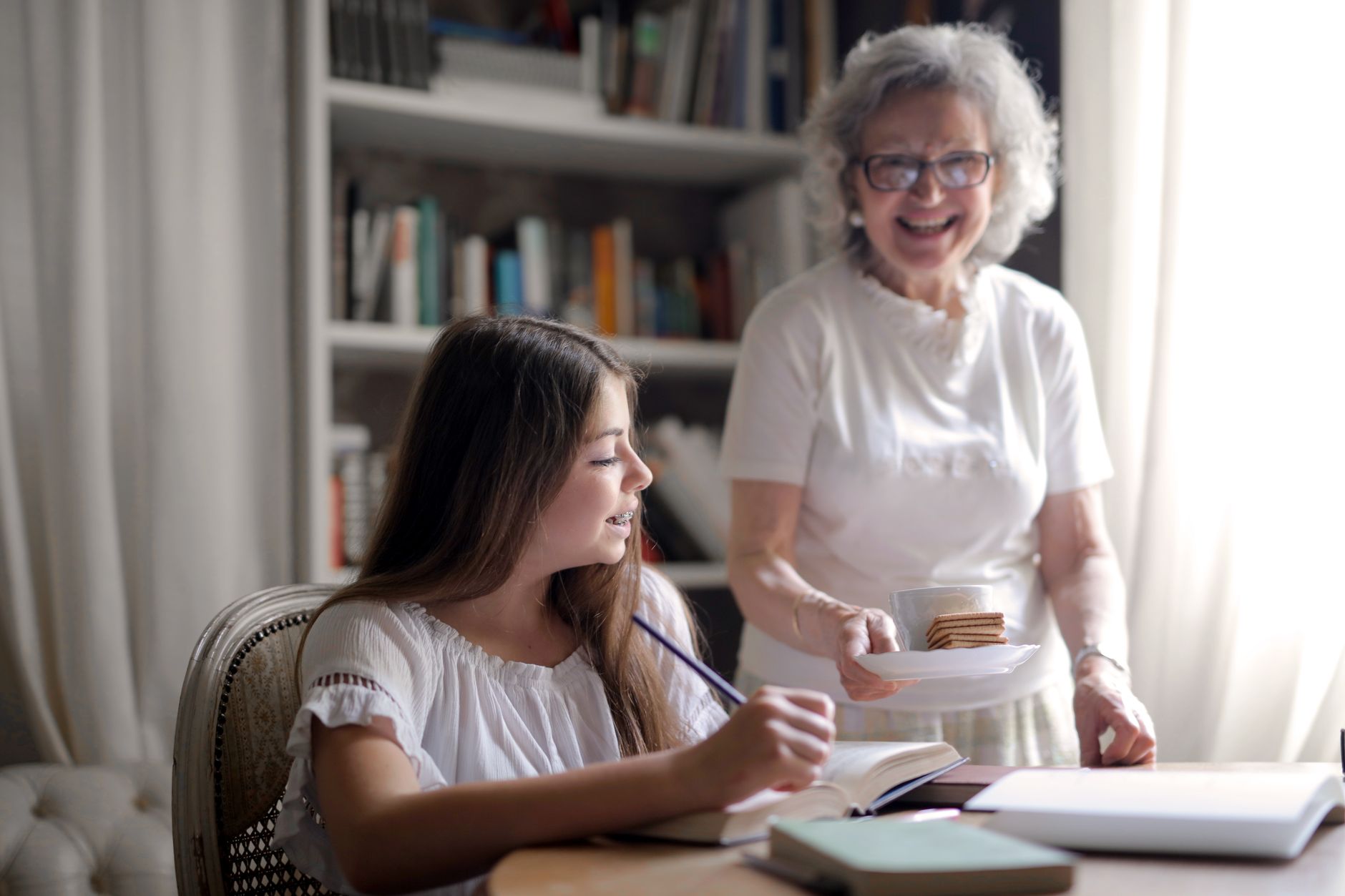
I knew my granddaughter was ashamed of me long before she ever said a word about it. You learn to read a child the way you read weather. The little tightening around the mouth. The way she walked three steps ahead of me on the sidewalk near the school, fast enough that anyone watching would not be sure we were together. The way she stopped letting me come to the front gate. By the time Sienna was fifteen, I had stopped being her grandmother in public and started being the old woman who happened to be holding the same umbrella.
My name is Lorraine. I am seventy-three years old. I have raised Sienna alone since she was six, since the night her mother, my own daughter Dana, packed two trash bags of clothes and left them by the door and did not come back. I am not going to spend this story being cruel about Dana. She was sick in a way none of us understood in time, and she ran from a life that was too heavy for her. But the running left a little girl in a house with a grandmother who already had gray hair and tired hands, and that little girl grew up looking at the other children’s young, bright mothers in their nice cars and doing the math.
I cleaned offices at night. I want you to understand that plainly, because it is the center of everything that happened later. Five nights a week I rode the bus across town to a row of glass buildings, and from nine in the evening until two or three in the morning I emptied trash cans, vacuumed carpets the color of oatmeal, wiped down conference tables that strangers in suits had leaned their elbows on all day, and scrubbed toilets in bathrooms with marble counters nicer than anything I have ever owned. Then I rode the bus home, slept a few hours, and got Sienna up for school. For nine years that was the shape of my life. I do not tell you this for pity. I tell you so you understand that the woman Sienna was embarrassed by was a woman who had not slept a full night in almost a decade so that Sienna would never know what it was to go without.
She never went without. That was the whole point. New shoes when her feet grew. The field trip money in the envelope on time. The class photo package, the middle one, not the cheapest. I learned the prices of things the way other women learn recipes. I knew to the dollar what a graphing calculator cost and what a winter coat cost and what it cost to keep a teenage girl from being the one kid who could not.
But I could not buy her the thing she wanted most, which was a different grandmother. A younger one. A prettier one. One who knew the right words and wore the right clothes and did not smell faintly of the industrial lemon cleaner that no amount of showering ever quite got off my hands.
I first really understood it the autumn she turned fourteen. There was a parent breakfast at the school, a thing they did for the families. I had traded a shift to be there. I put on my good blouse, the navy one with the small buttons, and I pressed my slacks, and I rode the early bus so I would not be late. I found Sienna in the cafeteria standing with two other girls and their mothers, and those mothers were the kind of women you see in commercials, lean and easy in their expensive coats, laughing with their teeth. I came up beside Sienna and I put my hand on her shoulder and I said, good morning, sweetheart, and one of the girls said, oh, is this your grandma?
And Sienna said, no. She said it fast. She said, no, she just helps out at our house sometimes.
I want to tell you that I corrected her. I want to tell you that I had the dignity to say, I am her grandmother and I raised her and I am proud to. But I did not. I stood there and I let the lie hang in the air because correcting it would have humiliated her in front of those women, and even then, even with my heart folding in half, I would not do that to her. I said something about needing more coffee and I walked to the back of the room and I drank a cup I did not want, and I watched my granddaughter be somebody else’s idea of a girl with no old woman attached to her, and I smiled at the wall so no one would see my face.
I rode the bus home that morning and I did not go to sleep. I sat at the kitchen table in my pressed slacks and I let myself cry for exactly as long as it took the kettle to boil, and then I stopped, because crying does not clean an office and crying does not pay for shoes.
I should tell you what those early years were like, because the shame did not come from nowhere, and neither did the love. When Sienna came to me at six, she did not sleep. She would wake at two and three in the morning calling for a mother who was not coming, and there were whole months where I worked my shift, rode the bus home in the dark, and then sat up the rest of the night holding a little girl who could not be told the truth in a way that would not break her. I made up a softer truth. I told her that her mama was sick in a place far away and that being away was the only way her mama knew how to get better, and that none of it, not one minute of it, was Sienna’s fault. I told her that so many times that I started to half believe it myself. A child needs a story she can survive, and I gave her the kindest one I could build.
There was a winter, the second winter, when the heat in our apartment went out and the landlord took eleven days to fix it. Eleven days in January. I bought a little electric heater with money I did not have and I put it in Sienna’s room and I told her it was a special grandma heater that only worked for granddaughters, and I slept those eleven nights in my coat in the front room so the one warm spot in the apartment would be hers. She never knew. She thought the whole apartment was warm because she was warm. That is the entire job of a grandmother raising a child alone. You arrange the world so that the cold always lands on you and never on her, and you do it quietly enough that she grows up thinking the world was simply warm.
So when she got old enough to be ashamed of me, I did not have the luxury of being wounded the way another woman might. I had already decided, years before, that her comfort came before mine, and being claimed in public is a comfort. If pretending I was the help kept her from being the poor girl raised by the old cleaning lady, then I would be the help. I had slept in a coat for eleven nights. I could stand at the back of a cafeteria for ten minutes.
I never told her I heard it. What would have been the point? She was fourteen and the world was telling her every hour of every day that she was supposed to be ashamed of being poor and ashamed of being raised by an old woman, and I was not going to add my hurt to the pile she was already carrying. So I carried it myself. I have carried a lot of things myself. My back is not what it used to be, but it learned to hold weight a long time ago.
Here is the part I have never told anyone, the part that matters for what happened at the end. Somewhere in those years, I started covering other children too.
It began with a boy named Marcus. He was in Sienna’s grade, a quiet kid with shoes that were coming apart at the toe, and one day I was in the school office paying for Sienna’s field trip and I heard the secretary tell him gently that his lunch account was empty again and he would have to take the cheese sandwich, the one they gave the kids who could not pay, the one every other kid in that cafeteria knew the meaning of. I watched his face do the thing I had watched Sienna’s face do. The tightening. The shame that a child should never have to feel over a sandwich.
So I paid it. I told the secretary, a kind woman named Mrs. Albright, to put forty dollars on that boy’s account and not to tell him who did it. She looked at me for a long moment, because she knew exactly what my own circumstances were, she had seen me count out field trip money in nickels more than once, and she said, Lorraine, are you sure. And I said, I am sure, just do not tell him it was me.
After that it became a thing between Mrs. Albright and me. She would catch me at the desk and say quietly, there is a girl in the seventh grade whose winter coat did not make it through last year, or, the Pelltier kids have not eaten a hot lunch in two weeks. And I would do what I could. Never a lot. Forty here, sixty there. A coat once, from the resale shop, left in the office with no name on the bag. I was cleaning rich people’s buildings at night and bringing home barely enough, and I have no good explanation for why I gave away money I did not have except that I knew what that cheese sandwich felt like, and I could not stand to know a child was eating it when I had forty dollars in my purse.
I want to be honest about what it cost, because it was not nothing, and I do not want you to think I am some saint who never noticed the price. There were months I gave away the lunch money and then ate beans for dinner three nights running myself. There was a March I covered the Pelltier children’s field trip and then could not afford the medicine for my own knee, and I limped through my shifts for two weeks with a heating pad I plugged in during my break in the supply closet of a building full of men who made in an afternoon what I made in a month. I would mop those long hallways at one in the morning, my knee singing, and I would think about that little girl in the seventh grade in a coat that finally fit, and I will not pretend the thought did not warm me more than the heating pad did. I have been poor my whole life. I learned a long time ago that the only wealth a poor woman can reliably build is the kind you give away, because that kind no one can take from you and no landlord can shut off.
Mrs. Albright tried to stop me more than once. She would say, Lorraine, you cannot keep doing this, you have less than half these families do. And I would tell her the same thing every time. I would say, I have a roof and a granddaughter and two working hands, and that is more than enough to spare a child a cheese sandwich. She stopped arguing eventually. I think she understood that for me it was not charity. It was the one place in my whole small life where I got to be the one with something to give instead of the one with my hand out, and a woman needs that. A woman needs one place where she is not the one being helped.
I made Mrs. Albright promise, every single time, that no one would know it was me. I did not want thanks. I did not want it getting back to Sienna, who would have been mortified to learn that her embarrassing grandmother was the office charity, handing out lunch money like she was somebody, when at home we ate a lot of beans and rice ourselves. I kept it secret for years. Three years, almost four. I truly believed I would take it to my grave, that no one would ever stand up in a room and say my name out loud in connection with it.
I was wrong about that. And the person who proved me wrong was a man named Mr. Okafor.
Mr. Okafor was Sienna’s teacher in her junior year. He taught history, and he was the first teacher who ever seemed to really see Sienna, not as a quiet girl with no money but as a sharp one with something to say. He was a tall man, soft-spoken, with a way of looking at you over his glasses that made you feel he was actually listening. Sienna came home that year talking about him, repeating things he had said in class, and for the first time in a long time she was lit up about something. I was grateful to him before I ever met him.
I did meet him, once, at a conference, and he shook my hand with both of his and he said, Mrs. Lorraine, your granddaughter is one of the finest students I have ever taught, and you should be very proud. I said thank you and I did not tell him that Sienna would not want him knowing I was her grandmother and not some hired help. He must have known. Teachers know more than we think. But he said it kindly and he meant it, and I held onto that for a long time.
What I did not know, what I could not have known, was that Mr. Okafor had also figured out, somehow, the other thing. The office thing. The years of forty dollars. I do not know exactly how. Maybe Mrs. Albright told him, near the end, when she was retiring. Maybe he saw the pattern and asked. Mr. Okafor was the kind of man who paid attention, and I think he had been paying attention to me for a long time without my knowing it.
The school had an awards night every spring. It was a big thing, held in the auditorium, families dressed up, the principal at a podium, certificates and little trophies for academics and citizenship and attendance. Sienna had never gotten one before. That year she was getting an academic award, history, Mr. Okafor’s class, and she was getting it for an essay she had written. She had not wanted me to come. She did not say it outright, but she found a dozen ways to make it clear. She said it would be boring. She said I would be tired from work. She said I did not have to go to all that trouble.
I went anyway. I traded another shift. I wore the navy blouse. I sat in the back, near the door, where I would not embarrass her, where she could pretend, if she needed to, that she had come alone. I told myself I would clap for her from the back and slip out before the lights came up and she would never have to introduce me to anyone. I had gotten good at being there without being seen. It was the only way I knew how to love her in public.
The awards went on for a long time. Attendance, citizenship, the math awards, the science fair. I clapped for every child. I always clap for every child. And then they came to the history award, and the principal said Sienna’s name, and my girl walked up onto that stage in a dress I had bought her at the resale shop and pressed myself the night before, and she was beautiful, and she took her certificate and shook the principal’s hand, and I clapped so hard my old palms stung, and I thought, that is it, that is the moment, I can go home now full.
But Mr. Okafor was standing at the side of the stage, and he stepped to the microphone, and he asked the principal if he could say something. There was a little ripple in the room. This was not part of the program. The principal nodded and stepped back, and Mr. Okafor adjusted the microphone down to his height, and he looked out at all of us, and then he started to talk.
He talked about Sienna first. He said she was one of the most gifted students he had taught in twenty years, that her essay had made him stop and read it twice, that she had a mind that asked the right questions. Sienna stood there next to him going pink with pleasure, and I was so proud I could not breathe.
And then Mr. Okafor said, but I want to tell you about someone else tonight. Someone who is in this room.
I did not know yet that he meant me. I swear to you I did not. I was sitting in the back thinking he meant another student, another family. I had no idea my whole life was about to be said out loud in front of four hundred people.
He said, there is a woman in this room who has been quietly taking care of children at this school for years. Children who are not hers. He said, she does not know that I know this, and she made the office promise never to tell, and I am about to break that promise tonight, and I hope she will forgive me, because some things should not stay secret forever.
I felt my face go cold. I gripped my purse with both hands. People were looking around, the way a room does when it is told someone among them has a secret.
He said, for almost four years, this woman has been paying off the lunch accounts of children whose families could not. She has bought coats. She has covered field trip fees so that no child had to be the one left behind at school while the class went to the museum. She did all of this anonymously. She did all of this while working nights cleaning offices, on a wage I am told would make most of us weep, while raising a granddaughter of her own with everything she had. He said, she gave away money she did not have, to children she had no obligation to, and she made sure no one would ever know, because she did not want thanks. She wanted those children to eat a hot lunch and keep their dignity.
The room had gone very quiet. I could hear my own heart. And Sienna, up on that stage, had turned to look at Mr. Okafor with a strange expression, because she did not know either. She had no idea he was talking about her grandmother. She thought, like everyone else, that he meant some saint of a stranger.
And then Mr. Okafor looked toward the back of the room. He looked right at me. And he said, her name is Lorraine. She is here tonight. She came to watch her granddaughter, Sienna, receive this award. Lorraine, would you stand up.
I have been embarrassed many times in my life. I have been overlooked and talked down to and treated like furniture in rooms full of important people. But I had never in my life had four hundred faces turn toward me at once. I wanted to disappear into the wall. My legs did not want to work. But there was a thing in his voice, a kindness so firm it was almost a command, and somehow I stood. I stood up in my navy blouse in the back of that auditorium, an old woman with tired hands, and I did not know what to do with myself.
And the room began to clap.
It started slow and then it built, the way rain builds, and then people were standing, row after row of them, parents I had never met, children, teachers, the principal, all of them on their feet and turned toward me, clapping, and some of them were crying, and I stood there with my hand over my mouth and I could not stop the tears and I did not try.
But that is not the part I will remember when I am dying. That is not the part that broke me open.
The part I will remember is Sienna.
Because when Mr. Okafor said her grandmother’s name, when the room turned and stood, my granddaughter understood, all at once, every single thing. She understood that the embarrassing old woman in the back was the secret everyone was applauding. She understood about the nights cleaning offices. She understood about the cheese sandwiches and the coats and the children who got to keep their dignity because a grandmother they did not know gave away money she did not have. And she understood, I think, in one terrible and beautiful instant, every time she had walked three steps ahead of me, every time she had said no, that is not my grandmother, she just helps out sometimes.
And my Sienna, on that stage, in front of everyone, dropped her certificate. She just let it fall. And she came down off that stage. She did not walk. She ran. She ran up the center aisle of that auditorium with the whole room watching and she got to the back where I was standing shaking, and she threw both arms around me so hard she nearly knocked me over, and she pressed her face into my neck, and I felt her whole body heaving, and she said into my collar, over and over, so only I could hear it, I am sorry, Grandma, I am sorry, I am so sorry, I love you, I am so sorry.
And I held my girl in the back of that auditorium while four hundred strangers clapped, and I said the only thing I have ever wanted to say to her, which was, I know, baby, I know, it is alright, I have got you, I have always got you.
I want to tell you about what came after, because the story does not end with the applause. Applause fades. What matters is what a moment changes, and that moment changed everything between us, completely and for good.
Sienna was different from that night on. Not dramatically, not in some movie way. She did not suddenly become a perfect child. But the shame was gone, lifted clean out of her, and in its place was something I had been waiting nine years to see, which was pride. She started walking next to me. She started introducing me. This is my grandmother, Lorraine, she would say, and she would say it like it was the best thing she had to offer, like I was somebody worth claiming. She came to me one evening a few weeks later, while I was getting ready for my shift, and she sat on the edge of my bed and watched me lace up my work shoes, and she said, Grandma, I never asked you. I never once asked what your nights were like. I am asking now. Tell me.
So I told her. I told her about the glass buildings and the oatmeal carpets and the marble bathrooms and the bus at two in the morning. I told her things I had never told anyone, the loneliness of it, the way the city looks empty and enormous at that hour, the way I used to think about her sleeping at home and it would be the thing that got me through the last hour of the shift. And she cried, and she held my hand, and she said, I am going to take care of you one day. I promise you. You are not going to clean offices when you are old. And I told her she did not have to promise me anything, that raising her had been the great privilege of my life, that she owed me nothing. But she shook her head and she said, I am not promising because I owe you. I am promising because I love you. There is a difference.
There is a difference. She was right. There is.
She found out, eventually, the full list. Mrs. Albright, who came to the awards night though she was long retired, sat with me afterward and told Sienna the names, the years, the count of it. Sienna learned that her grandmother had quietly taken care of more than a dozen children over those years, that some of them were kids she knew, kids in her own grade, kids who had no idea that the lunch on their tray had been paid for by the old woman Sienna used to pretend she did not know. Marcus, the boy with the broken shoes, was at that awards night, a junior now, tall and steady. He came and found me and he did not say much. He just held my hand in both of his, the way Mr. Okafor had, and he said, it was you. All this time it was you. And I said, eat your lunch, sweetheart, that is all I ever wanted.
Sienna is grown now. She is twenty-four. She did not become a doctor or a lawyer, nothing like that. She is a teacher. She teaches history, like Mr. Okafor, in a school not unlike the one she grew up in, full of kids who do the same math she used to do, kids who are ashamed of the wrong things. And I have learned, because she finally told me, that there is a fund at her school, a quiet one, that covers lunch accounts and field trips and the occasional winter coat, for children whose families cannot, and that no child is ever told where the money comes from. She runs it herself. She named it after me. The Lorraine Fund, though the children never see that name, because the whole point, she says, the whole point Grandma taught me, is that they get to keep their dignity and never know they were helped.
She did keep her promise, the other one too. I do not clean offices anymore. I have not in years. She would not allow it. She moved me into a little apartment near her, with good light and a chair by the window, and on Sundays she comes and we sit and drink coffee and she tells me about her students, the sharp ones, the quiet ones, the ones who walk three steps ahead of whoever loves them because the world has taught them to be ashamed. And she watches those children the way Mr. Okafor watched her. She sees them.
Mr. Okafor passed away two years ago. I went to his funeral. I sat near the back, out of an old habit, and when it was the time in the service for people to stand and say something, I almost did not, because I am still an old woman who does not like four hundred faces turned her way. But I made myself stand, because he had once made me stand, and I owed him that. And I said, in front of all those people, that this man had once stood up in a crowded room and said my name out loud when I had spent years making sure no one would. I said he gave me back my granddaughter, though he could not have known it, in the space of one sentence. I said the world is full of people who do quiet good and never get their name said, and most of them die with it unsaid, and that is alright, that is how it should be. But once in a while, I said, God sends a man who pays attention, a man who decides that some things should not stay secret forever, and he says your name into a microphone, and the whole room stands up, and a child you love runs up an aisle and tells you the thing you waited nine years to hear.
I sat back down. Sienna was next to me, holding my hand. She was crying. So was I.
I am seventy-three. My hands are still rough. The lemon smell is finally, mostly, gone. I do not have much, by the measure most people use. But I have a granddaughter who claims me out loud, who named her life’s quiet work after a grandmother she was once ashamed of, who sits with me on Sundays and sees the children no one else sees. And I have the memory of one spring night in an auditorium, the night a good man said my name, the night my girl let her certificate fall and ran to me, the night four hundred strangers stood up for an old woman who only ever wanted some children to keep their dignity.
If you are an old woman somewhere, riding a late bus home from a job that breaks your back, raising a child who walks three steps ahead of you, I want you to hear this. They are not ashamed of you. They are ashamed of a world that taught them what to value, and one day, if you are lucky, someone will stand up in a crowded room and tell them the truth about you, and you will watch the shame fall out of them like a coat they have outgrown. Keep going until then. Keep your hands busy and your name quiet and your love loud where it counts. The night will come when they run to you.
Mine did. She still does. Every Sunday, she still does.