
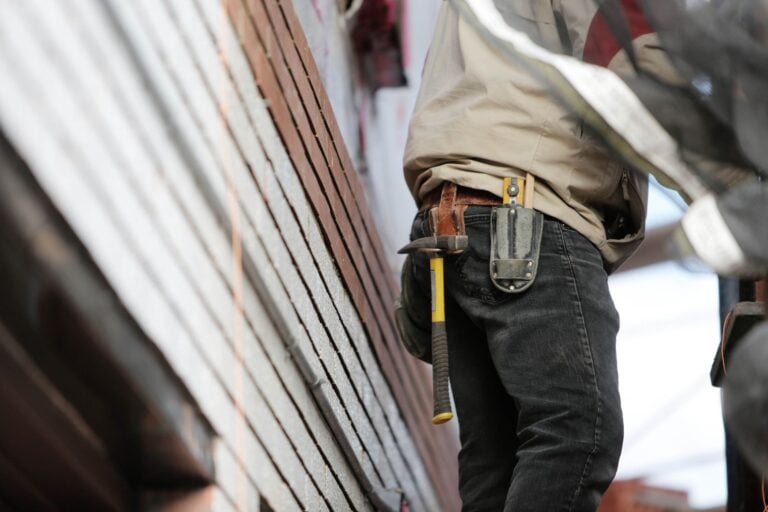
My name is Ray Delgado and for eleven years I was the man nobody at Heronwood looked at twice.
Heronwood Pointe is a condo tower on the river. Forty units, marble in the lobby, a chandelier in the entry that I cleaned twice a year on a forty foot lift because the company that bid the job wanted nine hundred dollars to do it and I could do it in an afternoon. The people who live there are the kind of people who do not learn the name of the man who keeps their building from falling apart. I had been the building engineer since the place opened. Engineer is the title on the door of the little office in the sub-basement. To the board I was just the handyman, and they said it that way, with the word just doing all the work.
I want to tell this right, so I am going to start with the boiler room and the cold, because that is where I lived most of my hours, and because that is where it ended up mattering.
A building is a body. People do not think about it that way, but it is true. It has lungs, which are the air handlers up on the roof. It has a heart, which is the pumps. It has veins, which are the risers running floor to floor, and it has a gut, the sub-basement, where everything that goes wrong eventually drains down to. When you have walked a body for eleven years, you know it the way you know your own knees. You know which pump runs a half degree hot in August. You know the riser on the north wall ticks when the heat kicks on, and that it is nothing, just metal stretching. You know the smell of the place when it is healthy and you know, the second you come down the stairs, when it is not.
I knew Heronwood. That is the whole story, really, but a thing like that takes a night to prove.
Let me give you a normal day, so the cold night has something to stand against. I am up at five. I let myself in the service door on the river side because the front of the building is for owners and the people who service their owners, the dog walkers and the grocery deliveries and me. First thing, every morning, eleven years, I walk the gut. Down to the sub-basement, hand on the pumps, listening. A pump tells you everything if you put your hand on the housing and close your eyes. Then the risers, then the roof, where the air handlers run and the river fans out below you flat and brown and patient. By the time the owners come down for their cars at eight, the building has already been kept alive for three hours by a man they will not look at. That is not a complaint. That is just the shape of the job. The keeping is invisible. You only get seen when you fail, and a man like me builds his whole pride on never being seen, which is a strange thing to build a life out of, but it is mine.
I have pulled a child’s shoe out of the trash chute at midnight. I have stood in a flooded laundry room at Christmas with a wet vac while a party went on three floors up that I was not invited to and would not have gone to. I have carried Mrs. Ardle’s groceries when her hip went and never told anyone. I have kept the heat on through a freeze when the gas company swore the line was dead, by babying a thirty year old boiler through the night with a flashlight in my teeth, so that forty units of older people did not wake up cold. None of that is in any report. None of that has a line item. It is just the body of the building being kept, by the man who knows the body, on nights nobody sees.
Get a new story in your inbox every morning.
Facebook doesn’t show you every story we post. Our free newsletter does. Join 2,500+ readers.
The man who ran the board was Garrett Voss. Chairman of the homeowners association, owned the penthouse, ran money for a living, the kind of man who shakes your hand and is already looking past you at the next person worth shaking hands with. He had a way of talking to me that I got used to and never stopped feeling. He would stand in the lobby in a coat that cost more than my truck and he would say, Ray, the elevator made a noise, handle it, and walk off before I could answer. I was a function to him. Press the button, the building works. He never once asked me a question he actually wanted the answer to.
Two springs back the board hired a firm to look the building over. Resigned and re-clad, big assessment, the kind of project that gets a man like Garrett excited because there are line items to manage. They brought in a structural engineer, a young guy named Patrick Hale, sharp suit, tablet, a firm with three names on the door and a number that made the treasurer wince. Forty thousand for the assessment phase alone. He walked the building in a day and a half. I offered to walk it with him. I knew where the bodies were buried, so to speak, every patch and workaround and soft spot eleven years had taught me. Garrett waved me off in front of the man. Ray, we are paying for a professional, he said. You can get back to the trash chute.
The trash chute. I went back to the trash chute. That is a thing about this work. You eat it. You have a family and a mortgage and the eating of it is part of the wage.
But I did walk behind Hale on my own time, quiet, just to see what a forty thousand dollar set of eyes saw. And here is the thing I noticed, and could not unnotice. He never went into the storm vault.
I should explain the vault. Heronwood sits maybe a hundred and ten feet off the river, and the original builders knew the river comes up. There is a storm water vault under the loading dock, a concrete room with a sump and a backflow preventer and a manual gate valve that seals the building’s storm drains off from the city main when the river backs up into it. If the river gets high enough, the city storm system goes to pressure and it will push water backward, up through your drains, into your sub-basement, into your electrical room, into your pumps, into the heart of the building. The backflow preventer is supposed to stop that automatically. It is a flap, basically, a check valve. And I had been telling the board for three years the flap was failing.
I had it in writing. I am careful that way. Every year I do a written walk-down, I sign it, I hand it up. Three years running I had written, in plain words, backflow preventer in storm vault is seized, recommend replacement, approximately twelve hundred dollars. Three years running it came back to me through the property manager with the same answer. Tabled. Not in this year’s budget. Garrett’s budget. Twelve hundred dollars to a man with a penthouse, tabled, because it was a problem you could not see and a problem you could not see was not a problem to him. It was just the handyman asking for money again.
Hale’s report came back beautiful. Bound, color photographs, a logo on every page. It covered the facade and the roof membrane and the parking structure. It did not contain the word vault. He never opened the door. I know he never opened it because I had chained that door shut myself after a tenant’s kid got down there once, and the chain had not been cut. Forty thousand dollars and the one place the building was actually going to die, he never put his hand on the door.
I sat with that. I am not proud of every thought I had. There is a small ugly part of a man, after eleven years of being walked past, that thinks let it come, then. Let the river come up and let them find out what the handyman knew. I am telling you I had that thought so you will believe me when I tell you what I did instead.
It came in June. We had a week of rain up north, the kind that does not fall on you but fills the whole watershed and comes down the river days later. I watched the gauge online the way I watch it every spring, and on the Thursday the number got into the range that makes my stomach tighten. The river was going to crest sometime in the night, higher than I had seen it in eleven years, higher than the year they sandbagged the lobby.
I called the property manager. Voicemail. I called Garrett’s cell, which I was not supposed to have, but I had it. He picked up annoyed. There was a dinner in the background. I told him the river was going to crest near record and the backflow preventer in the storm vault was seized and if the city main pressurized we were going to take water in the sub-basement, in the electrical room, in the pumps. I asked permission to stay on site overnight and seal the manual gate by hand if it came to that.
He said, and I will remember this until I am in the ground, he said, Ray, it is raining, it rains every June, do not turn a Thursday into overtime. Watch the trash chute and let the engineers worry about the building. And he hung up.
The engineers. The engineer was at home asleep forty miles away with his forty thousand dollar report. The engineer of record on the building, the man who actually knew it, was standing in the loading dock at eleven at night with a chain cutter and a four foot pipe wrench and a headlamp, going down into the place none of them would look.
I cut my own chain off the vault door. The smell hit me coming down the ladder, that wet concrete and river smell, and I knew before my boots touched the floor. There was already water on the slab, an inch, coming up through the seized preventer in a slow boil, river pushing backward into the building exactly the way I had written it would for three years. Another two hours of that and it reaches the electrical room. When river water hits the main electrical room of an occupied forty unit tower, you do not have a flood, you have a fire and a flood and forty families in the dark on a high floor with no elevators and no pumps. That is a 2 a.m. evacuation down a wet stairwell of people in their seventies and eighties. That is somebody dying on the stairs.
The manual gate valve is a wheel the size of a manhole cover, on a stem that had not been turned in years. I got the pipe wrench on it. It would not move. I want to be honest about this part because it is the part nobody saw. I stood in rising river water in the dark and I pulled on a wrench until I felt something tear in my shoulder that has not been fully right since, and the wheel did not move, and the water came up over my boots, and I thought about Garrett at his dinner, and I thought about the forty people up above me asleep, and I put the headlamp on the stem and I saw it. The stem was just dry. Eleven years and nobody had ever turned it, the packing had gone to glue. So I climbed back up, I got the can of penetrating oil off my own cart, the cart they sent me back to, I soaked the stem, I gave it ten minutes I did not feel I had, and I got the wrench back on it, and I put my whole hundred and ninety pounds and eleven years into it, and the wheel broke loose with a crack that echoed off the concrete, and it turned. A quarter turn. A half. Full closed. The gate sealed the building off from the river.
The boil stopped. The inch of water on the slab stopped being an inch and a half and started, slowly, being an inch again as my sump ran it out. I stood down there until almost four, watching it, with my shoulder screaming and my boots full of river, until I was sure the gate would hold and the city main would crest and start to drop. Then I went up, and I changed into the spare clothes I keep in the office, and I wrote it down. I am careful that way. Time the call was made. Time refused. Time I cut the chain. The reading on the slab. What it would have reached. I signed it.
I did not tell anyone. That is the part I am proudest of and I do not fully understand it myself. I could have woken the building. I could have made it a scene. I could have stood in the lobby in the morning wet to the waist so they would have to see it. I did not. I cleaned up, I ran the sump dry, I oiled the gate so it would turn easy next time, I ordered the twelve hundred dollar preventer on my own authority and my own card, and I went home and slept four hours and came back.
It came out anyway, the way things do. The night doorman had seen me go down with the chain cutter and come up at four soaked through, and he is a talker. By the end of the week the property manager had pulled my written log, the three years of tabled requests and the time-stamped record of the night, and somebody, I think it was the treasurer, walked it up to the rest of the board. And then the river story that did not happen became the only story in the building, because the people who live there are not stupid, they are just insulated, and when you put it in front of them in plain numbers, that a twelve hundred dollar part the board tabled three times almost took the whole tower and one man stayed up alone in the dark to stop it, they understood exactly what they had been walking past for eleven years.
They called a special meeting. I have been to a hundred board meetings, standing at the back in case the projector needs a cord. This time they put a chair out for me at the table, which had never happened, and I did not know what to do with my hands.
Garrett was there. He looked smaller than he does in the lobby. The treasurer read the timeline out loud, the calls, the refusals, the slab, what it would have cost and what it would have killed. Nobody looked at their phones. When it was done it was very quiet, and Garrett stood up. I braced for the version of him I knew, the one who would find the angle, make it about procedure, about why I should not have had his cell number.
That is not what he did. He came around the table, which meant he had to walk the length of the room toward me with everyone watching, and he stood in front of me, close, the way he never had, and he put out his hand. I took it. And he said, in a voice that was not the lobby voice, that was something else, he said, Ray, I have walked past you in that lobby for eleven years and I never once said your name like it meant anything. You knew this building better than the man I paid forty thousand dollars, and you knew what I refused to pay for, and you stood in that water anyway for people who never thanked you. I was wrong about you. I was wrong about what you were. And I am sorry.
A grown man, in front of his whole board, in the building he ran, saying the words I was wrong and I am sorry to the handyman.
I want to tell you I had something graceful to say back. I did not. I said something like, the building is fine now, the gate turns easy, and a few people laughed the way you laugh when you are close to something. The chairman did not laugh. He kept his hand on mine a second longer than a handshake and he nodded like we had settled something that was eleven years old.
They made it right in the ways a board can. They put the engineer title on a real contract with a real wage to match it, and back pay for the night, and they paid me back the twelve hundred I had never asked them to. They put my name on the door of the office in the sub-basement, my actual name, Raymond Delgado, Building Engineer, on a little brass plate the treasurer ordered without telling me. Hale’s firm got a letter. They quietly did not get the re-clad contract.
But that is not the part I carry. The part I carry is small and I keep it in my truck. After the meeting Garrett caught me by the loading dock, alone this time, no audience, and he asked me to walk him down into the vault. The chairman of the board, in his good shoes, climbed down the ladder behind me into the wet concrete room he never knew was under his own home, and he stood there while I showed him the gate, and the new preventer, and the sump, and the line on the wall where the water came that night. He was quiet a long time. Then he said, how many times did you write this up. I told him three. He did not say anything to that. He just looked at the line on the wall for a while. When we came back up he shook my hand again, in the empty loading dock with no one to see it, which is the only handshake that ever counts.
I am still at Heronwood. I still walk the body of the building every morning, the lungs and the heart and the gut of it. The chandelier still needs doing twice a year and I still do it off the lift because nine hundred dollars is nine hundred dollars. People know my name now. That is a strange thing to get used to in your fifties, after eleven years of being a function. Mrs. Ardle on six brings me coffee. The new board members shake my hand first, before anyone.
I think about that thought I had, the ugly one, the let it come, then. I think about it because I want to be honest that it was there. And then I think about what would have been at the bottom of that thought, the stairwell at 2 a.m., the people in their seventies, and I am glad, all the way down, that the man I have been for eleven years in that sub-basement is the man who picked up the wrench instead. You do not do this work to be seen. You do it because the building is a body and somebody has to know it. They can call you just the handyman for eleven years. The river does not care what they call you. The river only asks one question, on one night, and the answer is whether you knew where the shutoff was.
I knew where the shutoff was.