The Signature My Brother Forged
My name is Earl Renner, and for thirty-one years I have run the feed store and the back forty that my father started with a loan and a handshake in 1968. I am fifty-four years old. My hands are cracked at the knuckles from winters of loading bags off a flatbed, and I have a stoop in my left shoulder from leaning over the same counter since I was nineteen. I am not a talker. I want to tell you that up front, because the whole reason this happened the way it did is that I am the quiet one, and my brother Dale is the one people listen to.
You would like Dale. Everybody likes Dale. He came home from the funeral parlor in a charcoal suit that fit him better than anything I have ever owned, and he hugged the widow of the man who used to deliver our hay and remembered her grandkids’ names, and by the end of the visitation half the town thought he was the one who had sat with our mother through the last eleven months of her dying. He had not. I had. But Dale tells a story the way some men throw a baseball, easy and loose and right where it needs to go, and I tell a story like a man reading a feed invoice out loud. So I learned a long time ago to just let him talk.
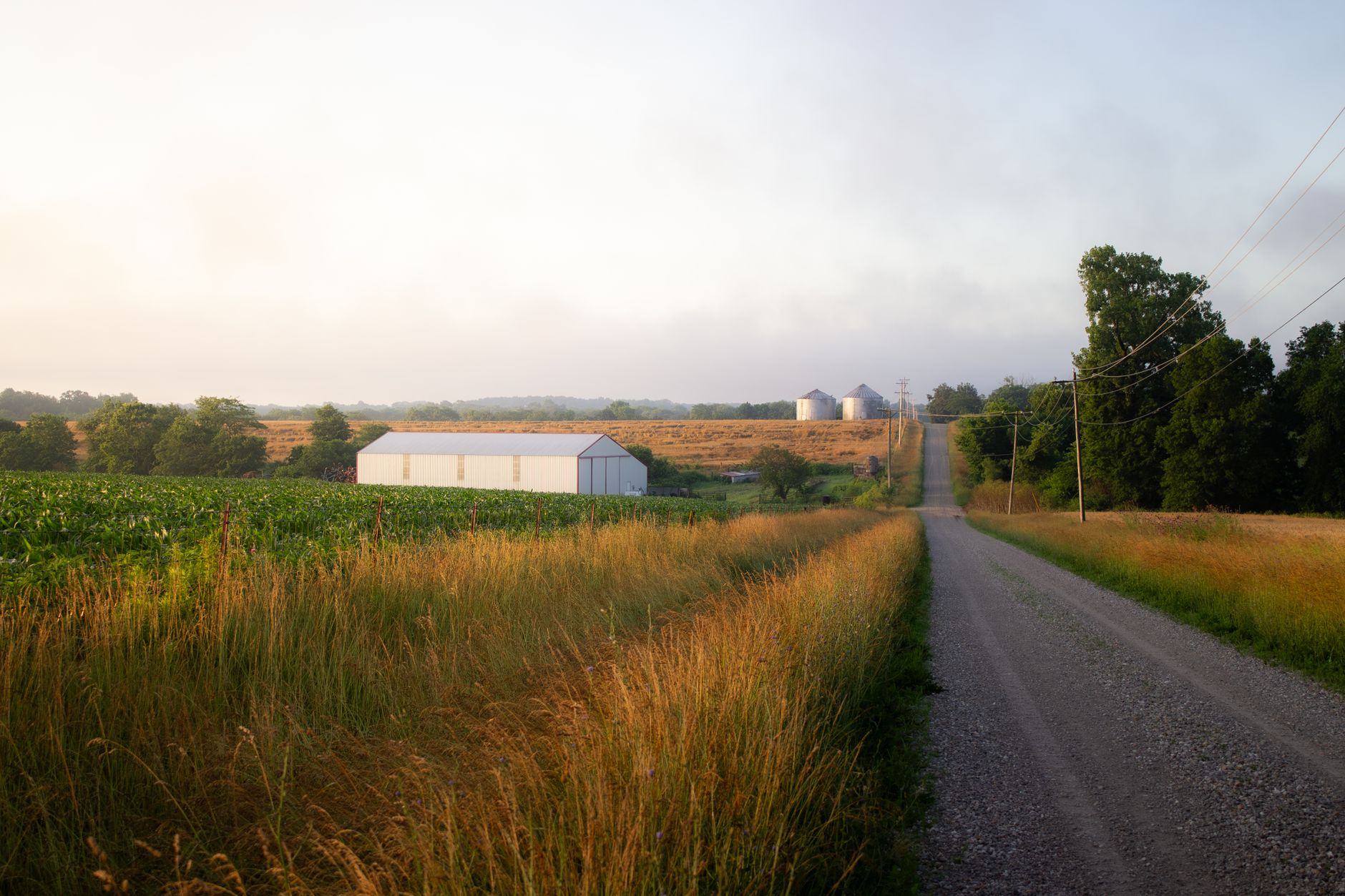
Our mother was named Iris. She lived eighty-one years in the white farmhouse at the end of Coler Road, and for the last of them she lived mostly in the front room because the stairs got to be too much. I moved a hospital bed in by the window so she could see the maples turn. I want you to understand the texture of that time, because later it became the thing that mattered, and at the time it just felt like my life narrowing down to a small bright point.
I would close the store at six, drive the four miles out to the farmhouse, and be there until I fell asleep in the recliner around two in the morning. I learned to crush her pills into applesauce because she could not swallow them whole anymore. I learned which side she liked to be turned toward. I learned the names of all three of the hospice nurses and which one she trusted, and I would call ahead and ask for the one she liked. I kept a notebook by the bed. I am a feed man. I keep records the way other people breathe. Every medication, every dose, every visit from the doctor, every day she was lucid and every day she was not, I wrote it down in a spiral notebook with the date in the left margin. I did not know I was building a case. I thought I was just keeping track because that is what I do.
Dale visited. I want to be fair to him, because being fair to him is the whole point of how this ended. He visited maybe once a month, and when he came he was wonderful. He would sit on the edge of her bed and make her laugh until she coughed, and bring her those orange slice candies she liked, and stay two hours and then go back to the city where he sold commercial real estate and lived in a condo with a view of the river. He never crushed a pill. He never turned her in the night. But she lit up when he came, and I never once said a word about the difference, because what would have been the point.
She died on a Tuesday in March, a little after four in the morning, with my hand on her shoulder. I wrote that down too. Time of death, the nurse’s name, the weather. It was snowing.
The trouble started six weeks after the funeral, in the office of a man named Garrett Pinney, who had been our mother’s lawyer for thirty years and who I had always thought of as a friend. Dale set the meeting. He called me at the store and said we needed to “get the estate squared away,” and I said fine, and I closed up early and drove into town in my work clothes because it did not occur to me to change.
Dale was already there in a suit. So was a younger man I did not know, who turned out to be Dale’s own attorney, a fellow named Brandt with a leather folio and a way of looking at me like I was a delivery he had not ordered. And that is when I learned that the farm was not mine, and was not even half mine. It belonged to Dale.
I want to describe his face when he told me, because I have thought about it more than I would like to admit. He did not gloat. That is the thing people never understand about Dale. He leaned forward with this look of patient sorrow, like he was the one breaking hard news to a grieving man, and he said, “Earl, Mom and I talked about this a lot near the end. She wanted the property to go to me. She knew you’d be taken care of with the store, and she worried the land was too much for you to carry. I know it’s hard. I wish she’d told you herself.”
Then Brandt slid a paper across the table. A transfer of the deed. Iris Renner’s signature at the bottom, dated the previous November. Signing the entire farm, the house, the back forty, the equipment sheds, all of it, over to Dale. Witnessed. Notarized. Clean as a whistle.
I looked at the signature for a long time. My mother had a particular hand. She made her capital I with a little serif top and bottom like a printed letter, and she always trailed the final R in Renner up into a little flourish, a thing she learned in a penmanship class in 1948 that she was proud of her whole life. The signature on the paper had the flourish. It had the serifed I. It looked like her signature the way a man in a photograph looks like himself. Close. Convincing to anyone who had not sat across a kitchen table from the real thing ten thousand times.
But I had crushed that woman’s pills into applesauce in November because she could not hold a spoon. And I knew, the way you know the weight of a feed sack without reading the label, that on the date on that paper, my mother could not have signed her own name to save her life.
I did not say that in the room. This is the part where people in town later said I just sat there and took it, that I rolled over while I stared at my boots. And it is true that I did not raise my voice. Garrett Pinney would not meet my eyes. Dale kept talking in that warm sorrowful voice about how he hoped this would not come between us. And I just said, “Can I get a copy of that?” Brandt looked at Dale, and Dale nodded, and they made me a copy on Garrett’s machine, and I folded it into my shirt pocket and drove home.
I want to tell you what I did that night, because it is the truest thing about me. I did not call a lawyer. I did not call anyone. I went out to the equipment shed where I keep thirty years of feed-store records in banker’s boxes, and I started pulling boxes. Because here is the thing about a man nobody listens to. He gets very good at keeping the receipts.
The town turned on me fast, and it turned almost without my noticing, the way weather turns. Dale was generous with the story, and his version was a good one. Poor Dale, having to deal with bitter Earl who could not accept that Mom loved them differently. Within a month there were people at the diner who would nod at me a little too carefully. The Hendersons, who had bought feed from me for twenty years, started driving forty minutes to the co-op in Marshall. My own pastor pulled me aside after service and told me, kindly, that bitterness was a poison I should not drink. He meant well. He had heard Dale’s version, which had me as the bitter brother, and he had never once asked me mine. Nobody asked me mine. That is the part I want you to sit with. In a town of people who had known me my whole life, not one person came to me and said, Earl, what actually happened. They all already knew, because Dale had told them.
So I stopped going to the diner. I stopped explaining myself to anyone, which was easy, because I had never been any good at it. And I went into the boxes.
Here is what I had, and here is why it took me four months to lay it out the way it needed to be laid out.
I had the spiral notebooks. Eleven months of them. Every entry dated, in my hand, with the medication log and the lucidity notes. The week of the date on that deed, my notebook had three days marked “non-responsive, sleeping most of day,” and the day of the signing itself read “Mom did not wake to eat. Nurse R. came 2pm, said it could be days now.” It was not days. She rallied. She lived four more months. But on that day, my mother was a woman who could not be woken to eat applesauce, and Dale’s paper said she had sat up and signed a five-page property transfer.
I had the hospice records. I requested them, which I had every right to do as the next of kin who had managed her care, and they came in a thick envelope, and they matched my notebook to the hour. The visiting nurse’s notes for that week were her own professional record, on letterhead, time-stamped, saying the same thing my spiral notebook said.
And I had the one thing I did not know I had until I went through the boxes a second time, in the cold, at one in the morning, with a work light hung off a nail. I had the feed-store delivery logs.
You have to understand how I run my business. When a customer is on a standing order, I log the delivery and the customer signs the slip. And my mother, for thirty years, had a standing order for layer feed and scratch grain for the dozen hens she kept behind the house, the hens she would not give up even when she could no longer walk out to the coop, the hens I ended up feeding myself every morning before I opened the store. And there, in a banker’s box, was a delivery slip from the third week of November, the same week as the deed, where the feed had been delivered and the slip had been signed. Not by my mother. By me. Initialed and dated in my hand, with a note: “Mom not able to sign, ER for IR.” I had written it without thinking, the way I wrote everything down. A standing record, made in the ordinary course of business, that on that exact week my mother was not signing her name to anything, and that the man feeding her chickens knew it.
That was the moment, alone in a cold shed, that I understood I was not going to lose.
But I want to be honest about something. There were nights in those four months I came close to driving out to Dale’s condo and putting my fist through that river-view window. I am a quiet man but I am not a saint, and the bitterness everybody had already accused me of, I had to fight it off like a fever. What kept me steady was the work. Sorting paper is a kind of prayer for a man like me. Every dated slip I found was a stone I set down, and the wall I was building was not for revenge. The wall was for the truth, and there is a difference, and the difference is the only thing I have left that I am proud of.
I hired a lawyer in Marshall, a woman named Theresa Okafor who took one look at the spiral notebooks and the hospice records and the feed slip and got very quiet, the good kind of quiet, the kind I recognized. She sent the deed and a set of my mother’s known signatures to a forensic document examiner in the city. And the examiner found what I already knew in my bones. The signature on the deed was a freehand simulation, a careful forgery, traced and practiced. The pen pressure was wrong. The line had the tremor of someone copying slowly, not the speed of someone signing their own name from muscle memory. The flourish on the R was perfect, which was the tell, because a dying woman’s real flourish that month would have been a wreck, and this one was a museum piece. He had practiced it. My brother had sat somewhere with my mother’s checkbook and practiced her dying hand until he could fake the living one.
The meeting where it turned was not a courtroom. It never went to a courtroom, and I am glad, because a courtroom would have made it a spectacle and Dale would have had an audience. It turned in Theresa Okafor’s conference room on a Thursday, with Dale and Brandt on one side of the table and me and Theresa on the other, and the forensic report and the hospice records and my notebook and that single feed slip laid out in a row down the middle like a hand of cards.
Brandt read the forensic report first. I watched his jaw work. He understood in about ninety seconds that there was no version of this he could win, because you cannot argue with a hospice nurse’s contemporaneous notes and a chicken-feed delivery slip and a document examiner all saying the same thing on the same date. He set the report down and he did not pick it back up.
But it was Dale’s face I was watching. I had been watching Dale’s face my whole life, waiting for it to crack, and it never had, not at our father’s funeral, not at our mother’s. And it cracked then. Not all at once. First he went very still, which is a thing Dale never is. Then he looked at the feed slip, the dumb little carbon-copy feed slip with my initials on it, and I watched him understand that he had been undone not by a lawyer or a judge but by a man feeding chickens. By the brother nobody listened to, who wrote everything down. His mouth opened and then closed. And then, and this is the part I did not expect, his eyes filled up, and he said, very quietly, not to Theresa and not to Brandt but to me, “I needed the money, Earl. I’m so far underwater you have no idea.”
And there it was. The whole charming life with the river view was a house of cards, and he had been drowning in it, and instead of coming to his brother and saying I am in trouble, he had forged a dead woman’s hand to sell the only ground our father ever owned. That is who Dale is. He could talk his way into anyone’s trust except the one situation that required him to tell the simple truth and ask for help.
I had imagined this moment for four months. I had a hundred speeches. And when it came, I did not give a single one of them. I want to tell you why, because it is the only thing in this whole story I would not change.
I am fifty-four. Our parents are both in the ground. Dale is the only blood I have left in this world. And I looked at my brother crying in that conference room, ruined, caught, drowning, and I understood that I had a choice between being right and being his brother, and that I did not actually have to choose only one.
I had Theresa draw up papers that voided the forged transfer and restored the farm to the estate, where it went, by our mother’s actual will, fifty-fifty, to the both of us, the way Iris Renner had always intended and had told us both to our faces for thirty years. I did not press criminal charges. I could have. Theresa told me a forged property instrument was a felony, and that any prosecutor in the state would take it with the evidence I had. Dale knew it too. He sat there waiting for me to drop the hammer, because that is what he would have done.
Instead I bought him out. The farm appraised, and I took a loan against the store and the land, the way our father had in 1968 with nothing but a handshake, and I paid my brother his honest half in cash. It was more money than I will ever see again and it will take me the rest of my working life to pay back, but it cleared his debts and it left him standing, and it left the ground in the family, in the only Renner who was ever going to keep feeding those chickens. He signed the buyout with his own name, his real name, in front of a notary, and his hand was shaking, and for the first time in our lives I was not the brother who could not find his words. He could not find his.
I told him one thing before he left. I said, “Dale, I would have helped you. You only ever had to ask. The forging is what I can’t get past, not the asking.” And he nodded, and could not look at me, and drove back to the city.
We are not close now. I will not pretend we are. But he calls on our mother’s birthday, and last Christmas he came out to the farmhouse and we ate at the kitchen table where she used to sit, and he helped me carry feed out to the coop in the cold, and neither of us said one word about any of it.
The town came back around slower than it left. The Hendersons buy from me again. They never apologized and I never asked them to. The pastor knows the truth now, and he gave a sermon one Sunday about how the quietest man in the room is sometimes the one carrying the heaviest true thing, and he did not say my name, and he did not have to. Somebody told me about it at the diner, where I eat breakfast again now, alone, most mornings, with a spiral notebook open beside my plate because old habits keep a man honest.
People ask me sometimes, the few who know the real story, why I let him off. Why I bought him out instead of burying him, when I had the receipts to send my own brother to prison. And I tell them the truth, which is the only thing I was ever good at.
I did not do it for Dale. I did it for the woman who lit up every time he walked in the room, who loved her two sons differently and loved them both completely, and who would not have wanted one of her boys to put the other one in a cell over a piece of ground she only ever wanted to feed us all from in the first place. I did it because I am the one who keeps the records, and the record I most wanted to be able to read back to myself at the end was not a ledger of who did me wrong. It was a ledger of who I decided to be when I finally, for once in my life, held all the cards.
I kept the farm. I kept my brother. And I kept the only thing I ever really had, which is that I write everything down, and I can look back at every dated line of it and know that I told the truth and did not let it turn me cruel. My mother’s hens are still out behind the house. I feed them every morning before I open the store. And every morning I sign the slip myself, in my own plain hand, ER, with the date in the left margin, the way I always have.