Who Left the Firewood at My Door
The snow had quit sometime before four. I knew because I had listened to it quit.
When I came down at six, in my robe and Ray’s old slippers, the whole yard was one smooth white sheet under a sky so clear it hurt. It was a Saturday, which I would think about later. I went to the back storm door to see if the pipes had frozen overnight. That is how I started every morning that winter, checking for what else had gone wrong.
The stack was there. Eleven splits of ash, laid square against the wall, with a bundle of kindling beside it tied in orange baling twine.
And there were footprints.
After three months of nothing, after three months of frost and wind and bare frozen ground that kept every secret it was handed, there were footprints. Big boots, coming up my lane from the county road. And next to them, running alongside, a second set so small I thought for a moment a dog had come with him.
I stood there with my hand on the cold latch and my heart going like I was twenty. Then I did something I would not have told Ethel down the road about for a hundred dollars. I went and put on my dead husband’s barn coat over my robe.
I should tell you how I came to be standing there. It started in October, and it started with Ray.
Ray Oakes died on the ninth of October, a Thursday, at seventy-four years old. He had spent the afternoon stacking wood.
He came in at five, gray as putty, and said, “I’ll just sit a minute, Marian.” He sat down in his chair by the kitchen window. And that was the whole of it. Fifty-one years of marriage, and the end took less time than a pot of coffee.
The Methodist women did the lunch in the church basement, ham and scalloped potatoes and three kinds of Jell-O salad, and our son Jasper flew in from Colorado Springs and stayed four days. Everyone said what a good man Ray was. They were right. I nodded at all of it like a woman accepting a casserole.
We lived on forty acres out on County Road 14, about six miles from Tobin, Iowa, in a farmhouse Ray’s father had bought in 1961. The house has a propane furnace. It has had one since the seventies. But Ray had a saying he repeated every fall of our married life: “The furnace is for emergencies, Marian. The stove is for living.”
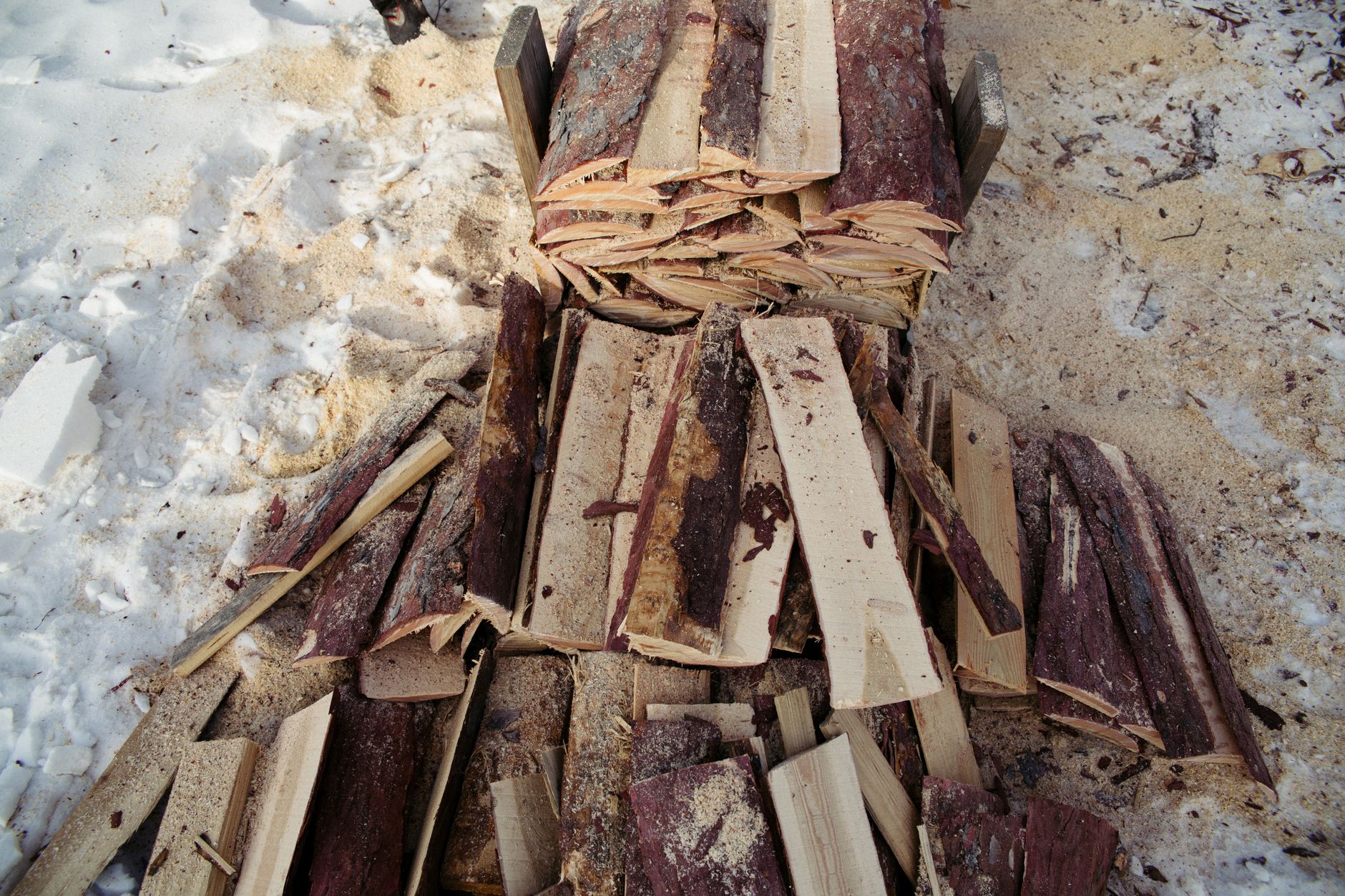
So the cast-iron stove in the front room did the real work. Ray cut it, split it, stacked it, hauled it in. He was cutting for the winter on the day he died. Three cords of rounds lay in a heap beside the machine shed, sixteen inches long, waiting to be split.
I could not split them. I am five foot three and seventy-two years old, with a bad right shoulder. I tried once, the second Saturday after the funeral. I set a round on the block and swung with everything I had, and the maul bounced off and rang up my arm to my teeth. I stood there with my hand on a handle Ray’s palms had worn pale as bone, and I did not try again.
Jasper called every Sunday. “You could hire somebody to split that wood, Mom. I’ll pay for it.”