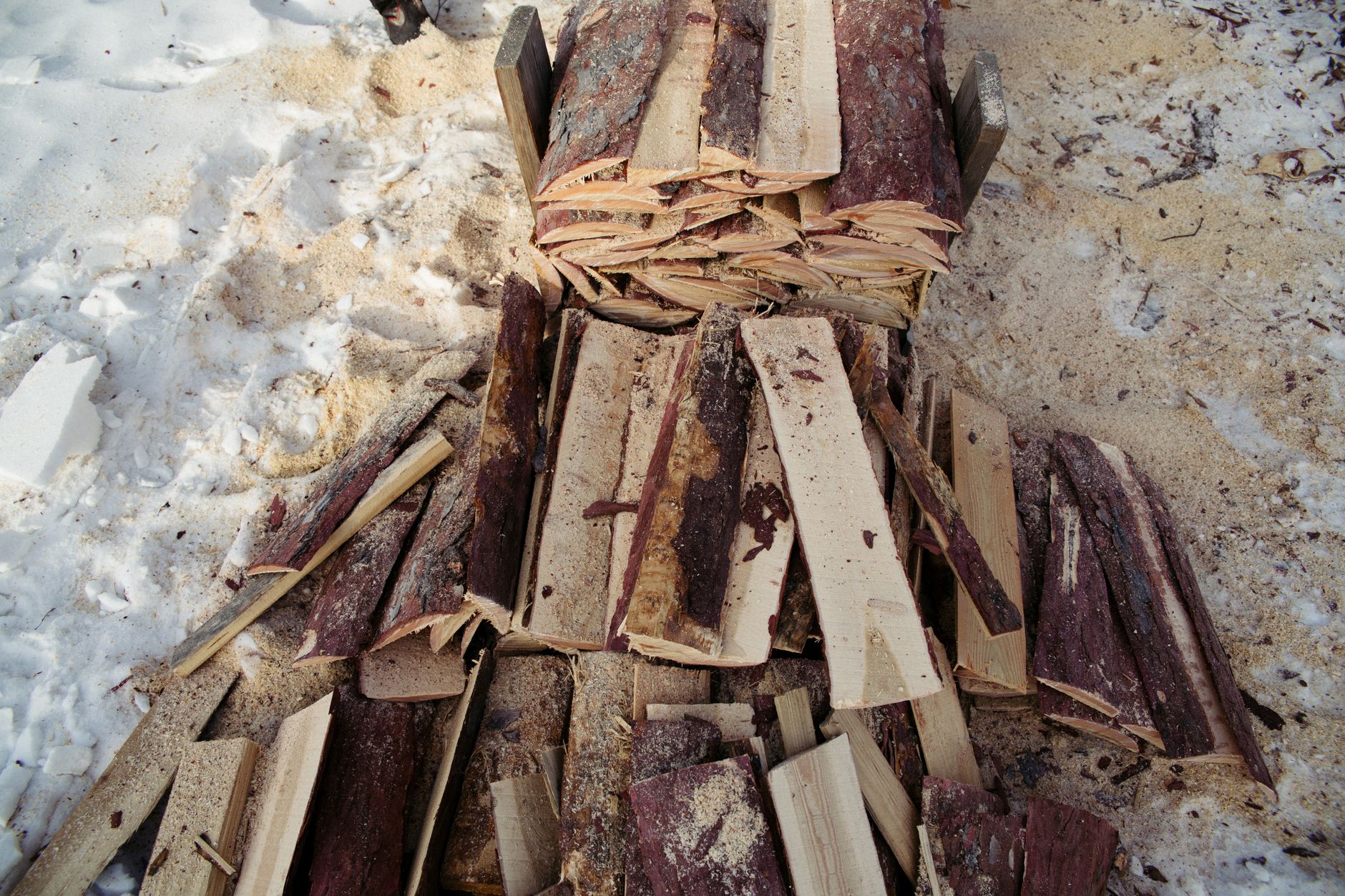
Who Left the Firewood at My Door
“Ray’s,” Jeff said quietly.
“His father’s,” I said. “Before that, I don’t know.”
“Somebody’s,” said Jeff. “It goes on.”
The paper turned up nine days later, and only because the pin came out of the gate chain.
It was a Tuesday. The chain that holds my pasture gate to its post had worked loose and dropped its cotter pin somewhere in the slush, and I thought, Ray would have had a dozen of those. So I went out to the machine shed in the barn coat and Ray’s overshoes and stood at his workbench, where I had not touched a thing since October.
His glasses were still on it, folded on a jar of washers. On the shelf above the vise sat a row of old coffee cans, Folgers and Maxwell House with the labels gone soft, where he kept fuses and bolts and odd screws. I had been dusting around those cans for fifty years and never taken the lid off one.
I took down the one where the cotter pins ought to be. I don’t know why that one. I just did.
Under the pins, at the bottom, was a piece of paper folded in eighths. A page torn from a spiral notebook, soft as cloth from years of handling.
I opened it under the bulb. It was written in pencil, in a boy’s careful block letters:
Dear whoever you are. Thank you for the wood. My mom cries when she thinks I am asleep but now it is the good kind. I will pay you back when I am big. J.
And underneath, in a different pencil, in my husband’s slanting hand, the hand that wrote the grocery lists and the birthday cards and every check I ever saw him sign:
Found this on the stack Dec 19, 95. Keep it. Don’t tell Marian, she’ll want to cook for them.
I read it three times. Then I stood in my husband’s shed with the cold coming through the soles of the overshoes, and I stayed there for a good while.
I had told myself at Christmas that I was done being angry at God. I was not, not entirely. There was still a stone in me about that Thursday afternoon, and the stacking, and the chair by the window. But I stood there and I thought, Lord, You let him keep it in a can of cotter pins for thirty years where I’d find it a week after the boy came. And the stone was mostly gone. Mostly.
I carried that paper in my apron pocket until Saturday, and took it out, I would guess, forty times.
On Saturdays, by then, they stayed for coffee after the wood was down. Jeff stamped his boots in the back hall. Kaitlyn took the chair by the window without being asked.
I poured the coffee and put the paper in Jeff’s hand without a word.
He unfolded it. I watched his face. He read the first line and I saw him know his own handwriting. By the third his mouth had come apart, and he put his big hand flat over his eyes. He read Ray’s line and made a sound that was half a laugh and half something that has no name.
“He kept it,” he said. “I wrote that when I was twelve. I thought it blew off the stack. I figured it blew into the field.” He stopped. “He kept it thirty years.”