Who Left the Firewood at My Door
“I was at the back of the church for the funeral,” he said. “You wouldn’t have seen me. I couldn’t come to the lunch. I sat in this truck in the parking lot for an hour. I knew if I looked you in the face I’d say it in front of everyone, and that’s the opposite of how he’d have wanted it done.”
“Oh, Jeff,” I said.
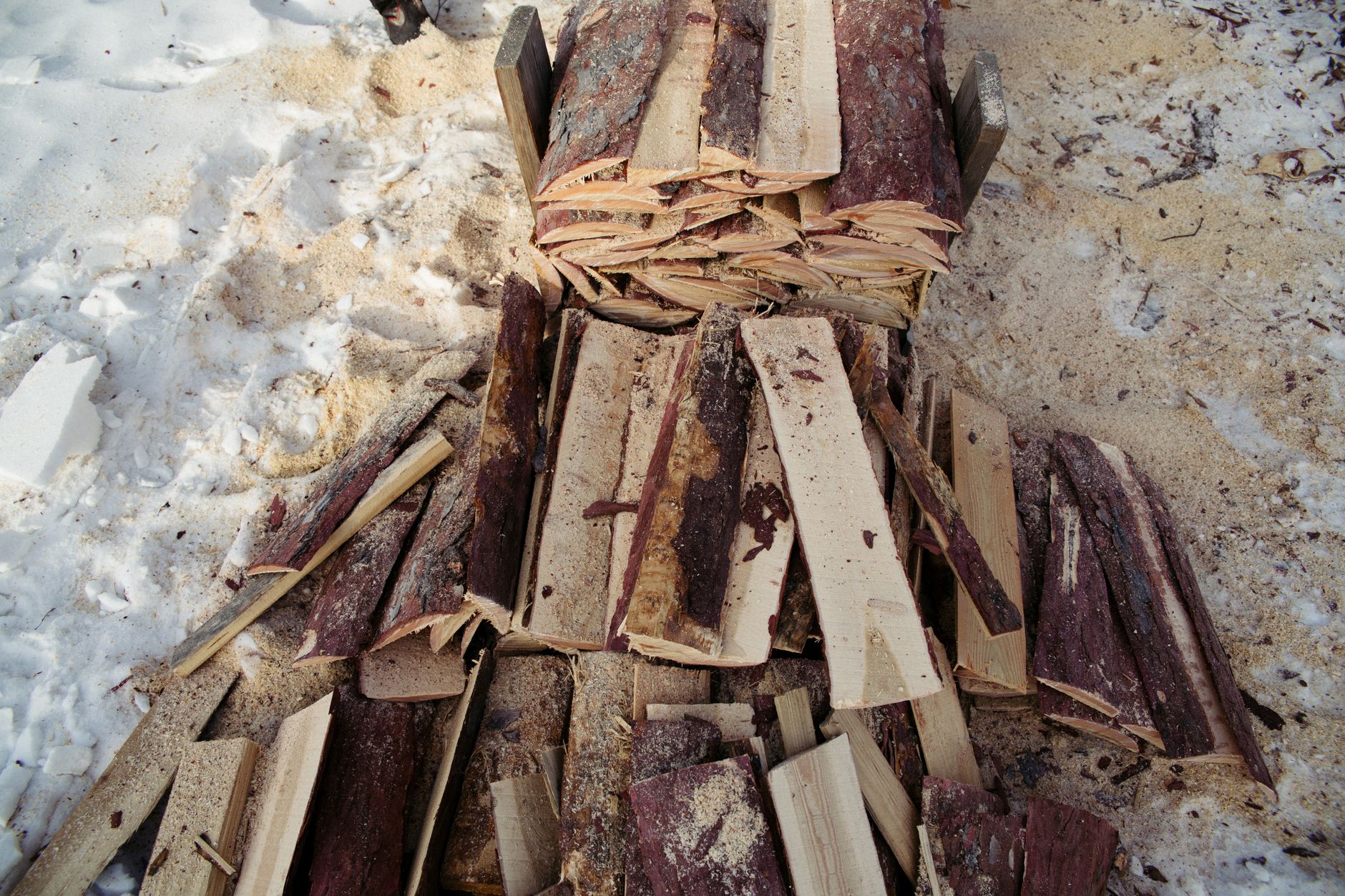
“I plow your road in the winter, Mrs. Oakes, and I drive it to the shed the rest of the year. I always looked at your chimney. Ray’s was smoking by five, every morning from October to April. The Saturday after he died, it wasn’t. And the rounds were still lying out there in the yard.” His voice caught. “I knew what that meant.”
He looked at his hands.
“I couldn’t touch his pile. It was his. I wasn’t going to be the man who split Ray Oakes’s wood without being asked. So I cut my own and split it at night in my yard, and I waited for the first hard freeze, because I didn’t want to be a stranger leaving wood on a mild day. I thought, there’s one thing I can do for that man, and nobody gets to stop me this time.”
“This morning, out by that heap,” he said, “I knelt down in the snow. I’ll admit that. I told him I’d split it the day you said I could.”
I could see it as clearly as if it were laid out in front of me. Ray going out the door at four in the morning with a thermos. “The buses won’t turn over in this cold, Marian, I’ve got to get the block heaters going.” I believed it. He’d come home at suppertime with sawdust in his collar and a stiff shoulder and I’d rub liniment on it. “That stove is eating wood,” he said, in March. I remember being puzzled at the shrunken pile, and I never once did the arithmetic.
I had been married to that man fifty-one years. I thought I had read him to the back cover. And here was a whole winter I had slept through while he went out in the dark and kept a family from freezing, and he never said one word. Not in thirty years. Not on his last afternoon, stacking wood.
“He never told me,” I said. “Never. He never said a word to me.”
“No, ma’am,” Jeff said. “I don’t think he’d have. But, Mrs. Oakes, I think I know why.”
“Why?”
He actually smiled, for the first time. A crooked, tired smile.
“I think he knew you’d have baked a hotdish.”
I laughed. It burst out of me, an ugly, startled laugh, because it was exactly true. I would have been at that door by nine o’clock the first morning with a tuna casserole and a pie, and Cathy Mortensen would have known in an instant whose pocket it came from. She was the sort who would sooner freeze quietly than be a charity.
Ray had known that. He’d known her pride better than I did. He’d known if the wood was nobody’s and everybody’s, from the church or the Lord or the weather, she could burn it with her head up.
So he’d let her believe whatever she needed to. And he’d let me believe it was the buses.