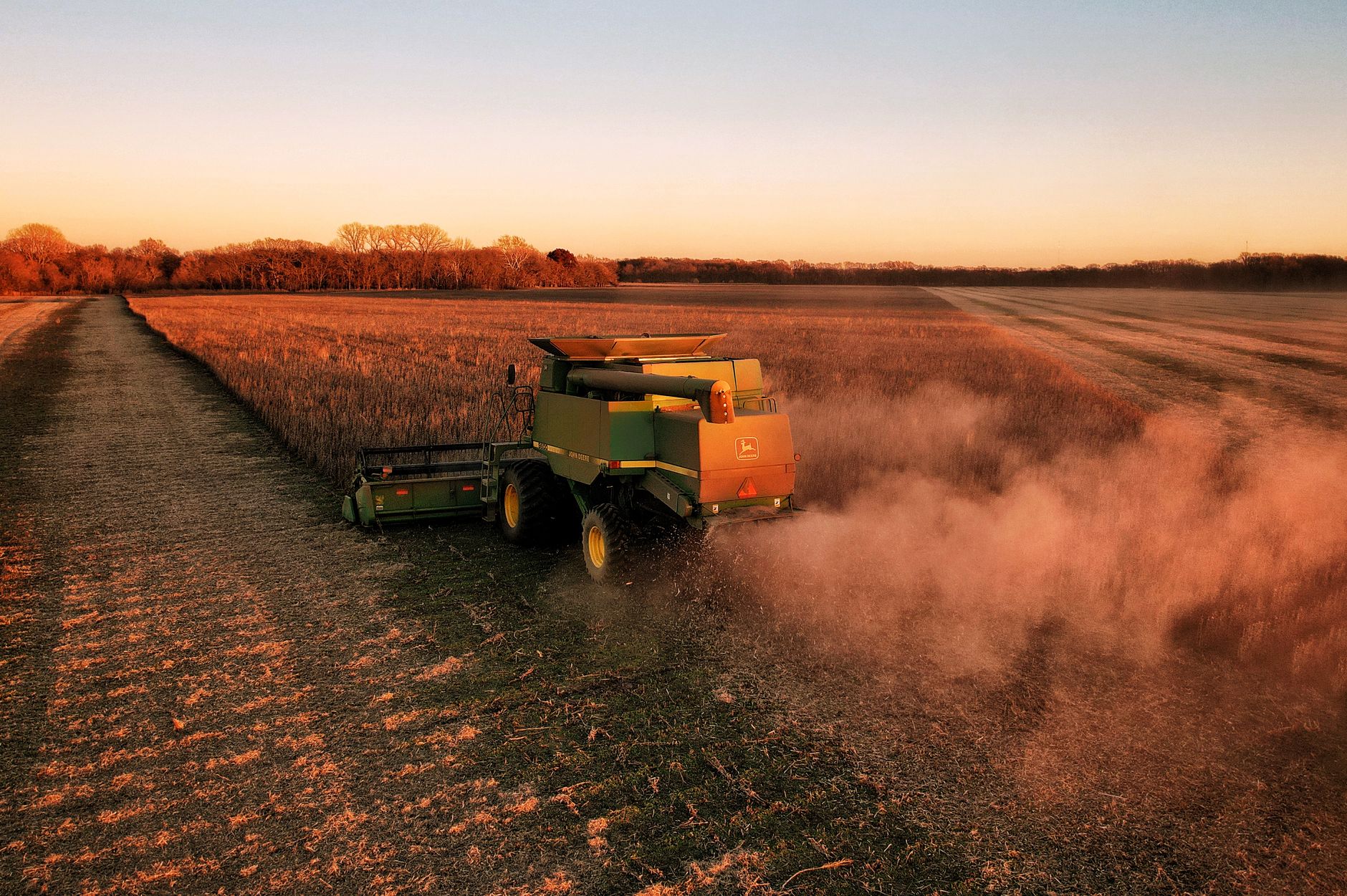
The Half of the Wheat I Cut Myself
Russ did not look up from the grease gun when he said it.
I was standing in the door of his shop in my work clothes, navy slacks and the good flats, because I had driven out straight from the dental office. It was the ninth of July. The wheat had been at the co-op for two weeks, and for the first time in eleven years there had been no envelope in my mailbox with my mother’s handwriting on it.
“The check came,” he said. “Eighteen thousand three hundred. I put it in the farm account.”
“Your farm account.”
“The farm account.” He pumped the gun twice into a bearing on the disc and wiped the fitting with his thumb. “Kelly, I’m going to say this once, and I’m not saying it to be ugly. A sister who moved to town doesn’t have a claim on a crop she never touched.”
The shop fan turned. Out past the open door, Ordell was backing the grain cart into the lean-to, slow and square, the way he did everything.
I had a speech I had practiced at three stoplights on the way out. Every word of it left my head, because my brother had said the thing in the voice he would use to tell me the price of diesel. He was not angry. He had thought about it, probably on a tractor, probably for years, and he was reporting a conclusion.
“You were in an office with the air on,” he said. “I was on that quarter in March top-dressing in a thirty-mile wind. I sprayed it. I cut it. I hauled it. Mom’s got her Social Security and the pasture rent, she doesn’t need it. So who’s it for?”
“It’s been for both of us since Dad died. That was how Mom wanted it.”
“Mom wanted a lot of things.” He finally looked at me. My brother is five years older than I am and has our father’s eyes, pale and steady, the kind that do not blink in wind. “I’m not taking anything from you, Kelly. You can’t take what a person never had.”
I looked at my flats. There was shop dust on them already.
“Thank you, Russ,” I said. “I’d rather hear it straight.”
He nodded, as if that was only reasonable of me, and bent back to the disc.
I walked to my car. Ordell, who had worked for my father since 1988 and for Russ ever since, lifted two fingers at me from the lean-to. It was all he ever did, but he kept them up a second longer than usual.
I drove a half mile down the section road to my mother’s house and sat in the yard with the engine off until my hands quit shaking.
I should tell you how it had worked, because my brother was not entirely wrong about the labor.
My mother, Jean Brandt, owns a quarter section nine miles south of the highway. A hundred and sixty acres, the home quarter, where she and Dad started out in 1971. When Dad died, Russ already had his own ground and his own machinery a half mile east, and he folded Mom’s quarter in with his. The seed and the fertilizer for it went on a farm account at the co-op. Russ took the going custom rate for his machine work off the top, which was fair and which nobody ever argued about. At harvest the co-op subtracted what was owed on the account and wrote a check for the rest.