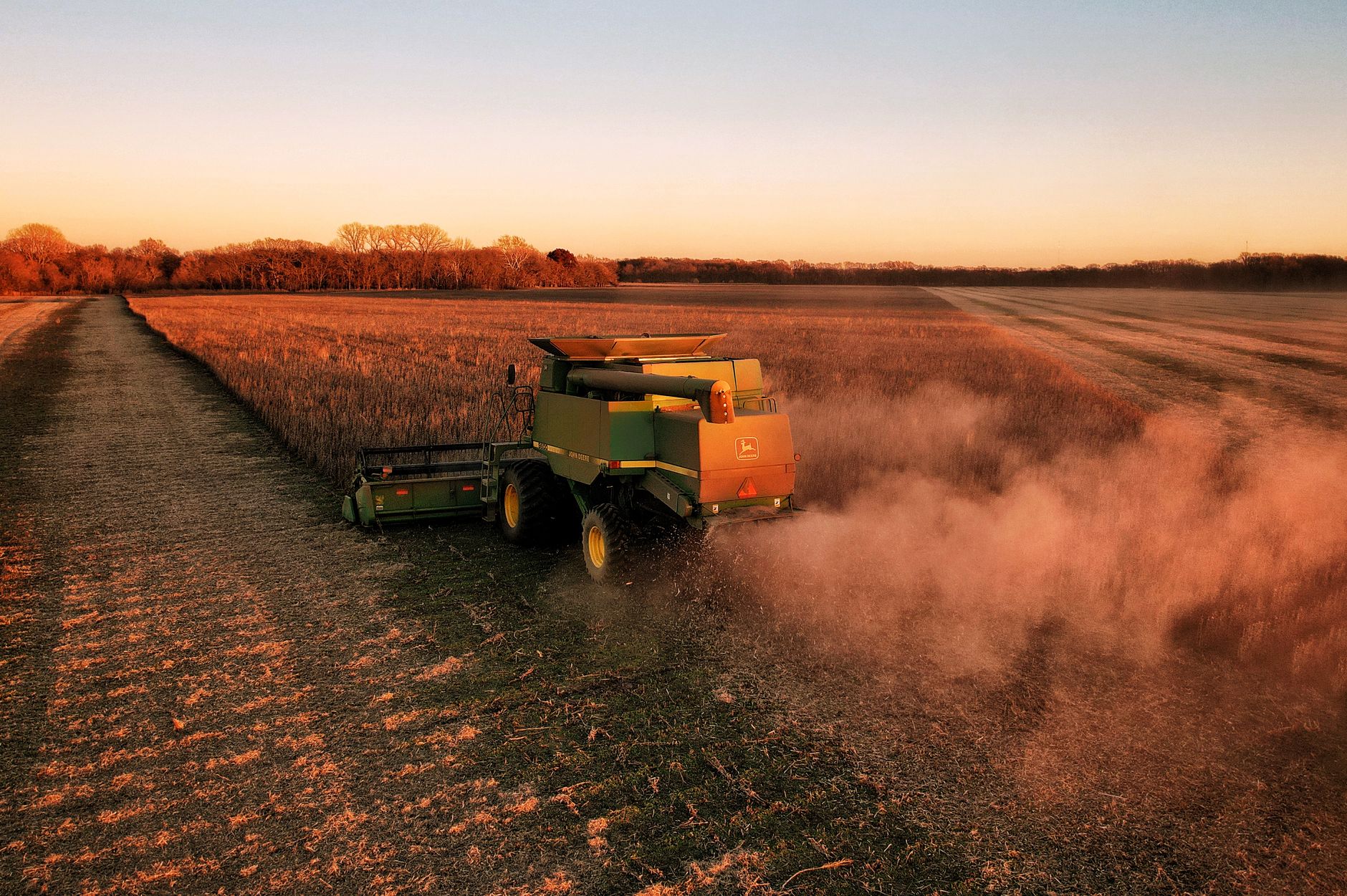
The Half of the Wheat I Cut Myself
And every July, Mom sat down at her kitchen table and split that check in two. One envelope to Russ. One envelope to me, in town, with my name in her schoolteacher cursive.
She never kept a dime of it. “I have enough,” she said, every single year. “Your father would want it going to you two.”
Three winters ago she had her hip replaced, and so she would not have to be driven in to sign for seed, she put the co-op account in Russ’s name. That was all it took. This year the check came to him, and he cashed it, and that was that.
Mom was at the sink when I came in. She did not turn around.
“You’ve been to the shop,” she said.
“You knew.”
“I knew when the check didn’t come to me.” She shut off the water. She is seventy-four, a small woman with big hands, and she dried each of them on the dish towel like she was finishing a job. “I wondered how long it would take you to drive out.”
I sat down at the table where I had done my homework. I said the obvious thing. “Mom, it’s your land. Call the co-op and put the account back in your name. Tell him.”
She hung the towel on the oven door and came and sat across from me.
“It’s half yours,” she said. “It always was.”
Then she got up and started peeling potatoes.
I waited for the rest. There was no rest. That was the whole of what my mother had to say on the subject, then and for the next twelve months, and it took me most of the drive home to understand that she had answered me.
She was not going to call anybody. One phone call to the co-op and one hard sentence to her son, and I would have had my envelope by Friday. And then for the rest of our lives I would have been the sister who got her share because Mother made him hand it over, and Russ would have been right about me in the only way that counted to him. A crop I never touched.
It’s half yours. Not half the check. Half the wheat.
I had been told where it was. Nobody was going to carry it to town for me.
The next Sunday I came out for dinner the way I always did, and while Mom’s roast rested I walked across the yard to the machine shed.
I had not been in there in years. The big doors hung on a track that screamed, and the light came in a wedge across the dirt floor, and there it sat at the back under a skin of dust and sparrow droppings: Dad’s combine. A red International 1460, older than I am, that he bought used at a farm sale in the spring of 1994 and ran until the summer before he died. Russ had newer machines by then. Nobody had the heart to sell this one and it was not worth much to haul off, so it had stayed where Dad parked it.
The header was gone. Russ had sold that at a consignment auction years back.
I climbed the ladder. The cab door stuck and then gave. Inside it smelled like hot vinyl and mouse and, under that, faintly, like my father’s work shirts.
The toolbox was still on the floor to the left of the seat. There is no second seat in a 1460. That toolbox, with a folded feed sack on it, was where I had ridden every harvest from the time I was six.