The Half of the Wheat I Cut Myself
“Batteries first,” he said. “Then you’ll want to drain that fuel. It’s turned to varnish.”
“Ordell, you work for Russ.”
“Six days.” He took the flashlight out of my hand and shone it up into the engine compartment. “Sunday’s my own. I’d as soon spend it on something your dad bought.”
That was the most I ever heard him say on the matter.
We worked every Sunday afternoon from November to the end of April. I bought the parts and he showed me where they went. Two batteries. Fuel filters, and the tank drained and flushed. Every belt on the machine, because the old ones had cracked like dry creek mud. A rear tire that would not hold air. Hydraulic hoses. We pulled out mouse nests by the grocery sack. He had me crawl up inside and check the rotor bars myself, with him calling up what to look for, because he said a person ought to know the inside of a thing she means to run.
I kept every receipt in a folder, like I do at work. By spring it came to a little over $2,300.
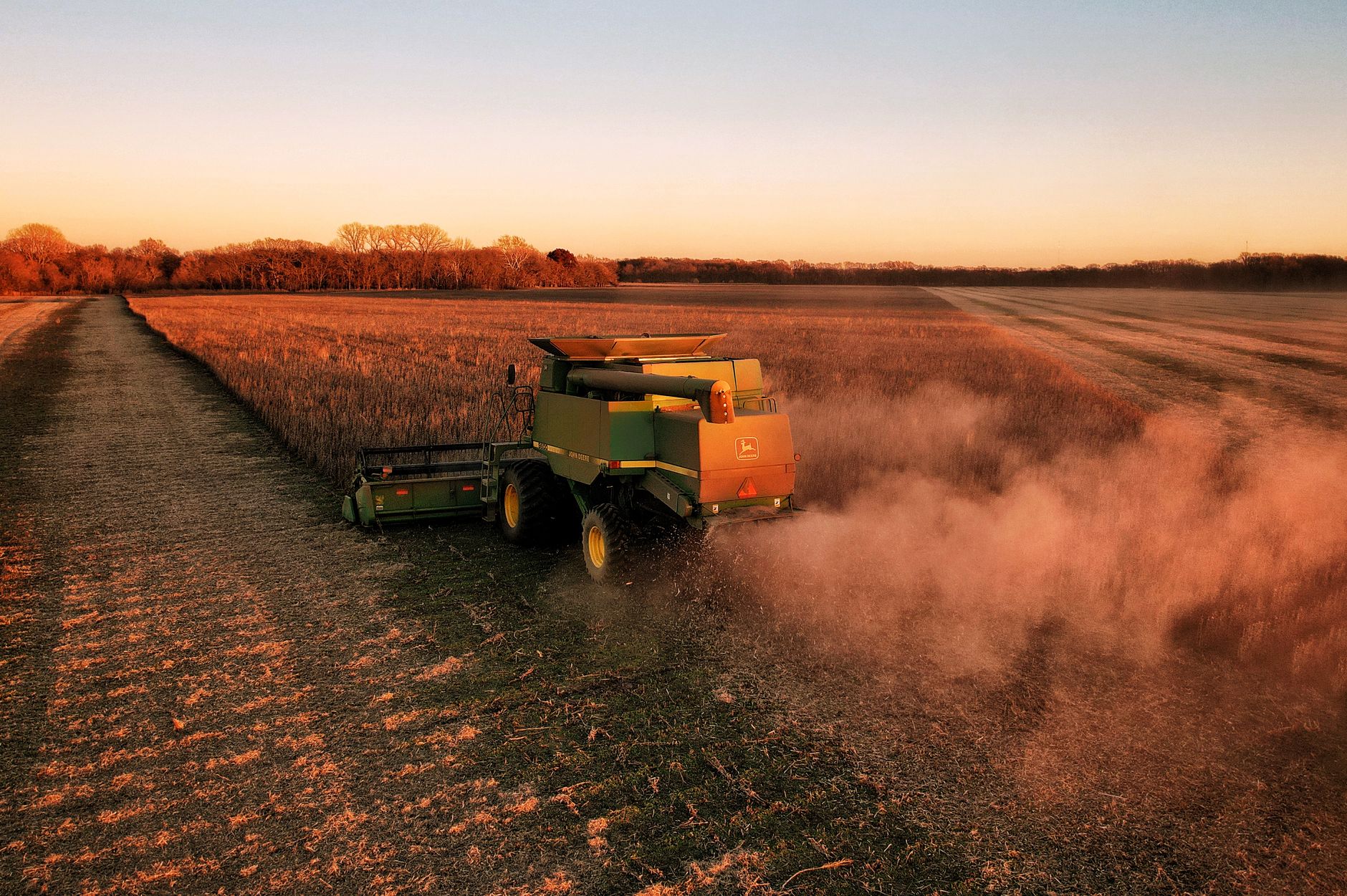
She fired on the fourth Sunday in January. It was nineteen degrees. Ordell had a hand on the cowl and I was in the seat, and she turned over slow, coughed, blew a wad of mouse nest out the stack as big as a cat, and settled into a rough steady idle that I felt up through the seat in my tailbone.
Ordell nodded once and took the toothpick out of his mouth, which for him was a parade.
Mom came out on the back step in her cardigan and listened to that engine for a long time, and I knew she was hearing 1994.
Russ knew, of course. You cannot start a diesel a half mile from a man’s house and keep it from him. One Sunday in March he was at Mom’s table for dinner, and he buttered a roll and said, not to me exactly, “That machine hasn’t cut since Dad. All that chaff and old grease on a hot manifold. You’ll burn the field down.”
“I’ll park a water tank at the end rows,” I said. “Like Dad did.”
He chewed. He did not say anything else, and neither did I, and Mom asked who wanted pie.
In May I put in for my vacation. One week, the first week of July. Dr. Martin asked if I was going somewhere nice.
“Harper County, more or less,” I said.
Harvest ran late that year. A cool wet June held it back, and the wheat that would usually be cut by the twentieth stood there turning from green to gold to that pale bone color it gets when it is ready, the heads tipped over like they are praying.
The last Saturday in June I rented a twenty-foot header from a salvage man north of town who keeps old ones for people with old machines. Six hundred dollars for two weeks. I hauled it out on his header trailer behind Mom’s pickup at forty miles an hour with my flashers on, and Ordell helped me hang it on the Sunday.
My daughter came with me. Maddie is twelve. Her father lives in Wichita and has her every other weekend, and the rest of the time it is the two of us. She stood in the shed door and looked up at it.
“You’re going to drive that.”
“I am.”
“Mom. You can’t parallel park.”
“There’s nothing to park next to,” I said.