The Half of the Wheat I Cut Myself
I started on the first of July, a Wednesday, at ten in the morning when the dew was off.
It was already ninety-four. By two it would be a hundred and two. The air conditioner in that cab had quit sometime in the Clinton administration and Ordell said fixing it would cost more than the machine, so I propped the cab door open with a bungee cord and took what breeze there was, and all the dust and chaff that came with it.
I wore jeans, a ball cap, and a gray T-shirt from the office fun run with a smiling tooth on the back. Town clothes. I owned nothing else to wear.
Mom had the grain truck parked at the end of the field. It is a 1974 Chevrolet with a sixteen-foot bed and a hoist, and my mother had driven it to the elevator every harvest from the year she married until the year Dad died. She was sitting in it now with the windows down and a thermos, in a straw hat, seventy-four years old with a new hip, and when I had asked her that morning whether she was sure, she had looked at me as if I had asked whether she was sure how to make gravy.
“Who do you think hauled it while you were learning to drive that thing?” she said.
The field is a half mile long. Russ’s eighty lay to the south and mine to the north, and there is nothing between them but the place where the drill turned. Ordell had driven a steel post at each end with a strip of orange flagging on it so there would be no question later about whose wheat was whose.
I pulled up to the edge of the standing wheat and stopped.
I got out on the ladder with one hand on the rail and looked at it for a minute. Eighty acres does not sound like much until you see it from the ladder of a machine older than you are. It went out gold and flat to a line of hedge trees. Maddie sat down in the open cab door behind me.
“Are you scared?” she asked.
“Yes,” I said.
“Okay. I just wanted to know if it was only me.”
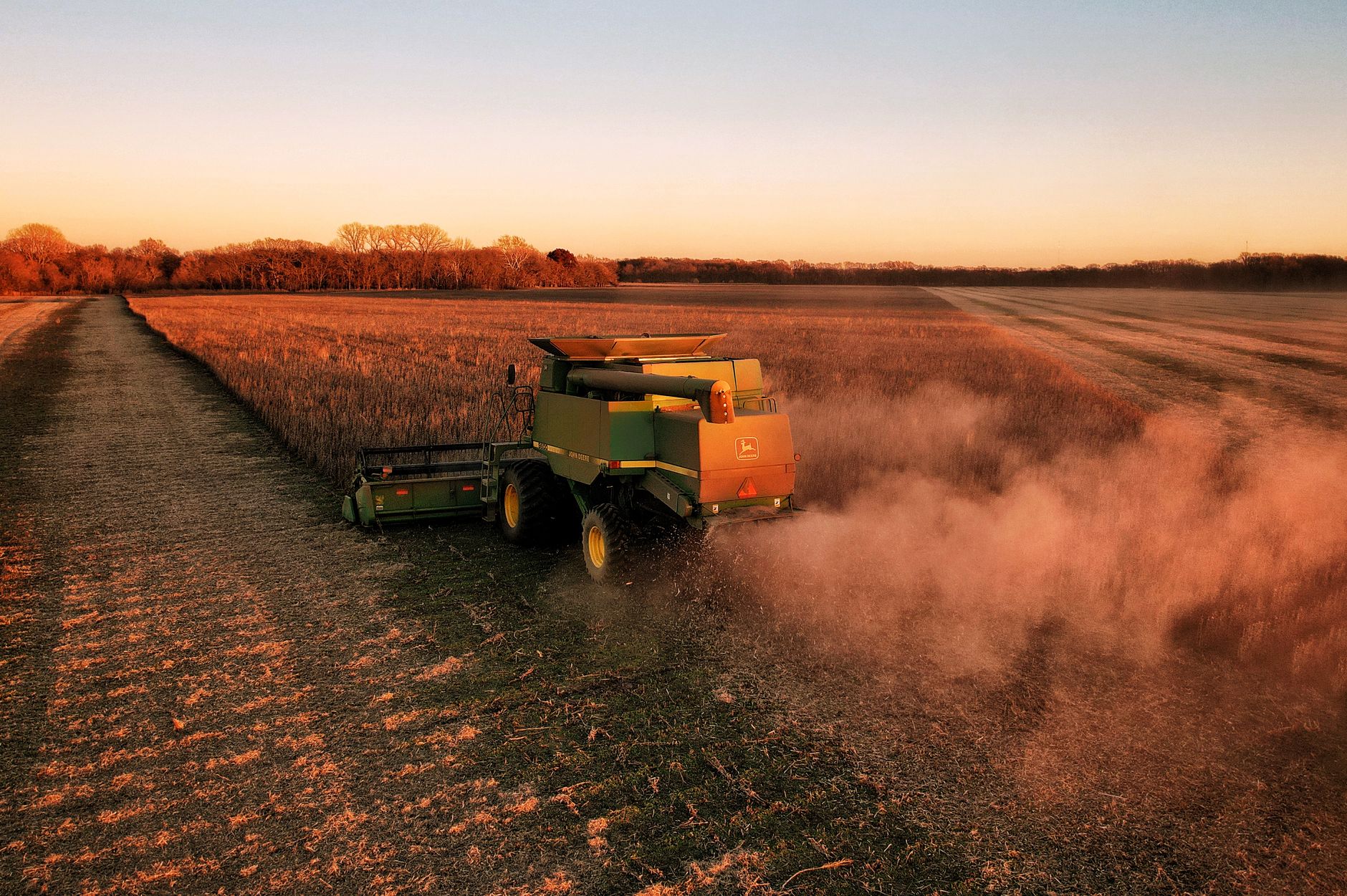
I got back in the seat. She settled on the toolbox with a folded beach towel under her, exactly where I used to sit. I throttled up, put the separator in gear, and the whole machine began to shake and roar in the way I remembered in my teeth. I lowered the header until the sickle was running about a hand above the ground, eased the hydro forward, and drove into the wheat.
I wish I could tell you it all came back at once. It came back in pieces. For the first hundred yards I was too fast and the reel was too slow and I was shoving wheat down instead of laying it in. Then I heard my father, plain as the engine. Watch the heads, not the ground. Let it feed you. Don’t you push it. I backed off. The wheat started folding over the sickle and riding up the feeder like water going over a spillway, and I looked in the mirror and there was a clean stubble strip behind me twenty feet wide and straight as a ruled line.
At the far end I climbed up to look in the grain tank. Red-brown kernels, hard and bright, mounding under the auger. I bit one. It cracked.
“Is it good?” Maddie yelled over the engine.