The Soup I Carried Next Door
Verna tasted my soup off the ladle, standing at her own stove, and I watched her face do something I had never seen it do.
It did not sour. I could have understood sour. It went still and gray, the way a face goes when the telephone rings at three in the morning.
Then she picked up the tureen I had just filled, the white ironstone one with the chipped handle, and she carried it to the sink.
“Verna?” I said.
She tipped it. All of it. Three quarts of chicken soup I had started at six that morning went down her drain in one long golden pour, and she turned the cold tap on behind it and stood there until the last of the rivels were gone.
Her kitchen opens onto the dining room through a wide archway. There is no door. Twelve of us had come for Lloyd’s seventy-eighth birthday, and every one of them was already sitting at that long table eight feet away with a napkin in a lap.
They saw the whole thing.
Verna set the empty tureen on the drainboard. She did not look at me. She looked out the window over the sink, toward the hedge.
“I would not feed that to a dog,” she said.
Nobody at the table moved. I remember the furnace kicking on. I remember Lloyd’s brother Don holding a dinner roll halfway to his plate.
And I remember my husband.
Aaron was standing at the counter with the bread knife in his hand and half a loaf of Verna’s white bread sliced in front of him. He is six foot two. He can pull the injectors out of a combine engine in an afternoon. He stood there with that knife and looked at his mother’s back, and then at me, and his mouth opened, and nothing came out of it.
Emma did. Emma is Aaron’s niece, ten years old, with a gap where her eyeteeth were coming in.
“But I wanted some,” she said, from the table. “It smelled good.”
“Hush,” said her mother.
Verna dried her hands on the towel. “We’ll start with the roast,” she said, to the room, in her company voice. “Kim, come get the potatoes.”
I had been married into that family for nine years, and I had lived in Schuyler for fourteen months, and I thought I knew what my mother-in-law was. She was particular. She ironed pillowcases. She had opinions about my pie crust and about how long my hair was for a woman of thirty-five, and she delivered them the way a person hands you your change. I had learned to take them the same way.
This was not that.
I could have said something. I have gone over that a hundred times. There were a dozen sentences ready in my mouth, and every one of them would have been true.
But I was in her kitchen, at her husband’s birthday, in front of her brother-in-law and her daughter and two ladies from her church circle. Anything I said, however quiet, would have turned into the story of the day Aaron’s wife made a scene at Lloyd’s birthday. I had been in that town just long enough to know how that works.
So I did not say anything.
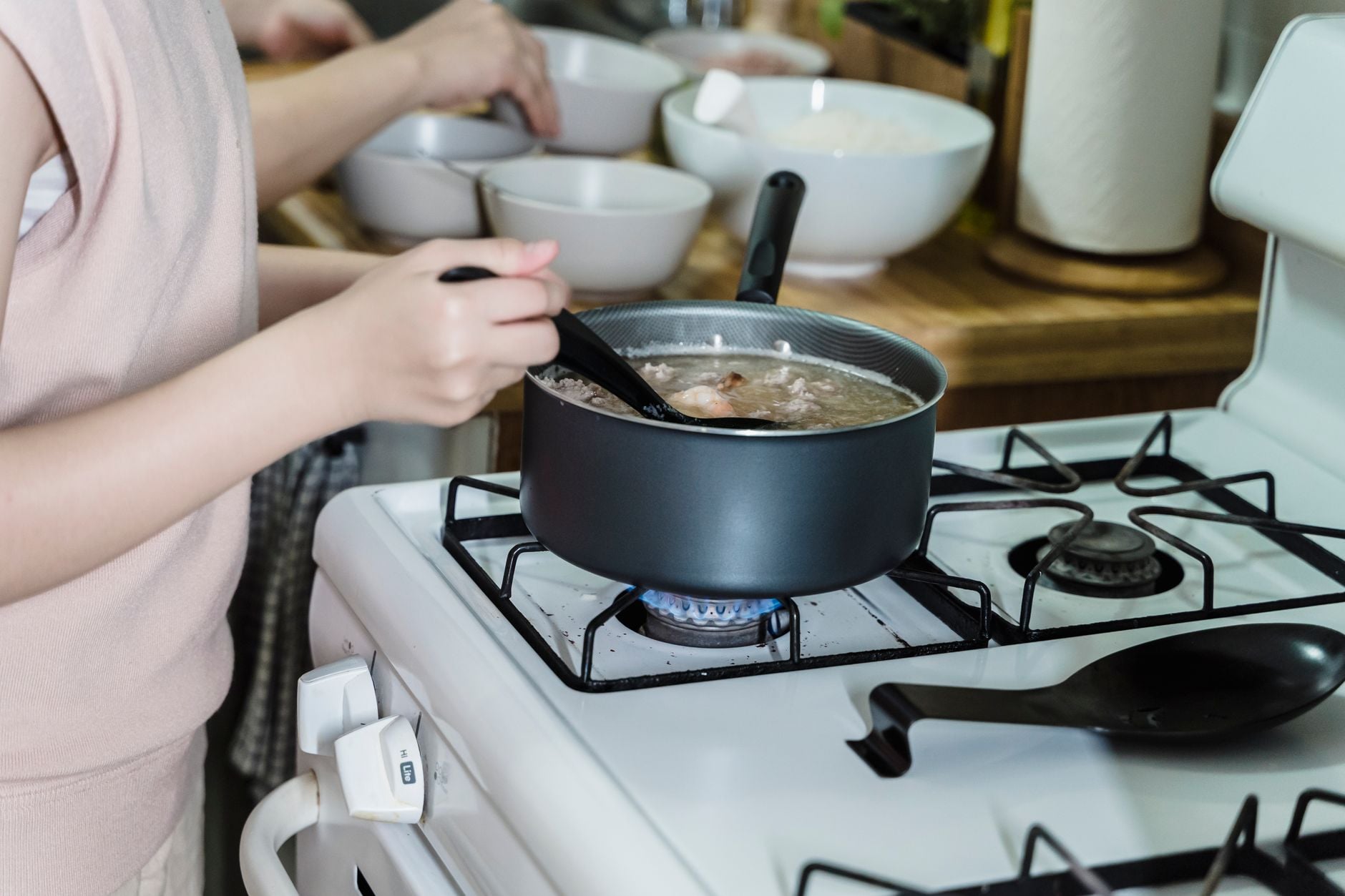
I looked at the stove instead. My big stockpot was still sitting on the back burner. It holds eight quarts, and I had only ladled out the top of it. There was better than a gallon of soup left in there, hot, with the steam still coming off.