The Soup I Carried Next Door
I was raised by a woman who washed and saved bread sacks. You do not pour out food.
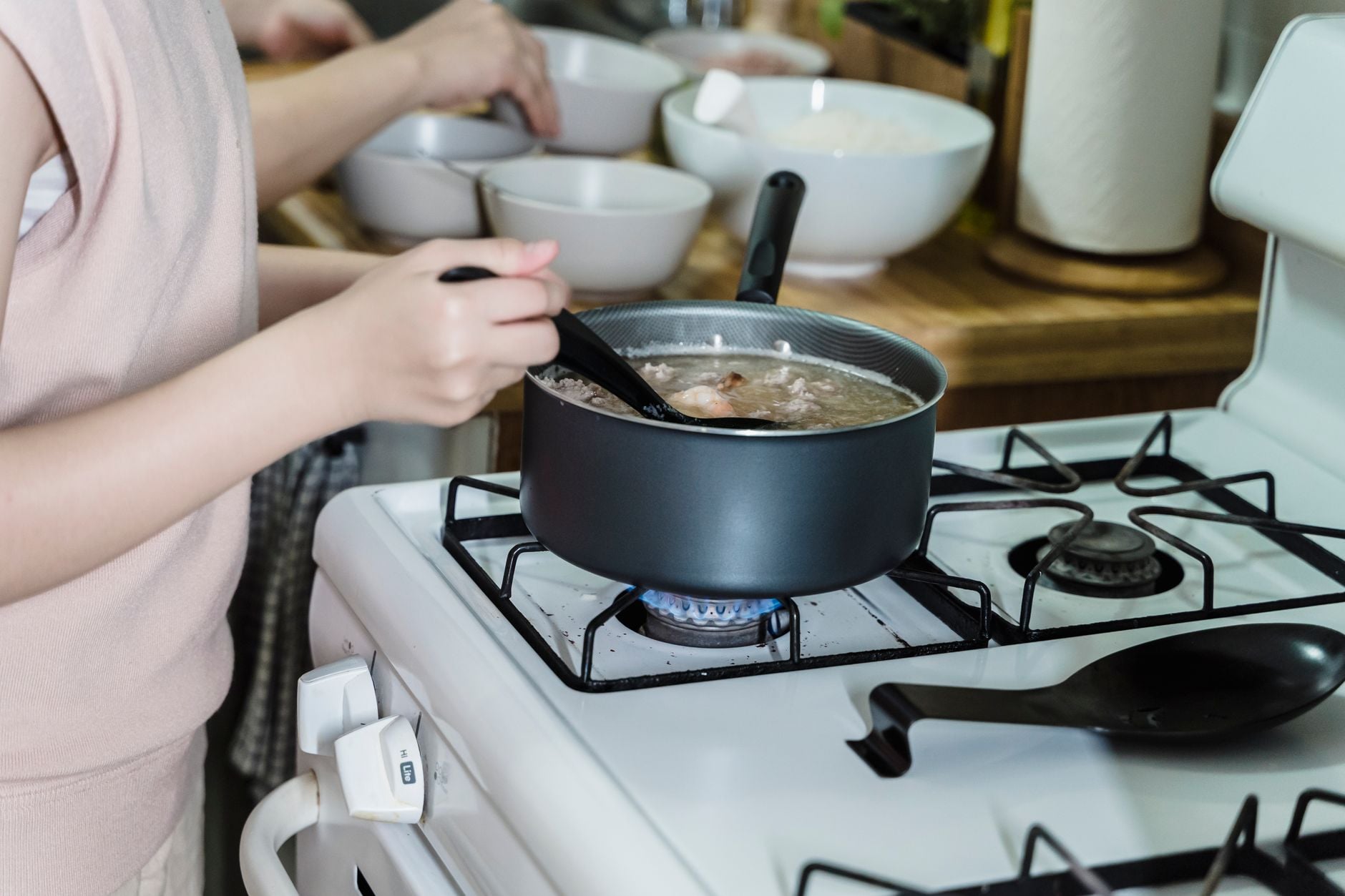
I put the lid on. I took two of Verna’s potholders off the hook, the quilted ones with the roosters, and I picked that pot up by both handles.
“Molly,” Aaron said. It was the first word out of him. “Where are you going?”
“I’m taking this to somebody who’ll eat it,” I said.
I meant home. I truly think I meant home when I said it. But our car was at the back of the driveway with Don’s pickup and Kim’s van parked behind it, and I was not going to stand in that kitchen holding sixteen pounds of hot soup while people shuffled vehicles for me.
I pushed the back door open with my hip and went down the steps, in my sweater and my apron, into the yard.
It was one of those October afternoons Nebraska hands out about four times a year. No wind for once. The light was low and yellow and the ash tree had let go of half its leaves. I stood on the walk with my arms already starting to shake and I looked at the hedge.
I should tell you about the hedge.
It runs the whole length of the side yard, between Lloyd and Verna’s house and the white house next door. It is privet, and it is taller than I am, and it is clipped flat on Verna’s side as if somebody had used a level. In the middle of it there is a gate. A plain wooden gate, painted green a long time ago, set into the hedge so neatly you could miss it.
In fourteen months of Sunday dinners I had never seen that gate open.
I had seen the man who lived behind it, though. You can see his kitchen window from Verna’s sink, right over the top of the hedge. Every Sunday while I washed and Kim dried, I would look up and there he would be: an old man at a table under a hanging light, with one plate in front of him. He ate slowly. He folded his napkin when he was done.
His mailbox said Halverson. That was all I knew.
I had asked about him once, my second or third Sunday. I said, “Does your neighbor have family around?” Verna was wrapping the leftover ham. She said, “We don’t bother with them,” and she pressed the foil down flat, and that was the end of it. I took it to mean he was a private man.
That was every bit of what I knew about Mr. Halverson when I stood on that walk with the pot. An old man ate alone forty feet from where a gallon of good soup had nearly gone to waste. It did not feel like a decision. It felt like arithmetic.
I walked across the grass to the gate.
The latch was the old thumb kind, and it was rusted clear shut. I had to set the pot down in the grass, work the latch with both hands until it shrieked, and shove. The hinges sounded like a hurt animal. Dry leaves had drifted against the far side and I had to push through them.
I picked the pot up again and stepped through.
His yard was plain and neat. A clothesline. A one-stall garage at the far side of the lot. And all along his side of the hedge, in a bed about four feet wide, a row of peony bushes, cut back for the winter and mulched with straw as carefully as a baby is tucked in.