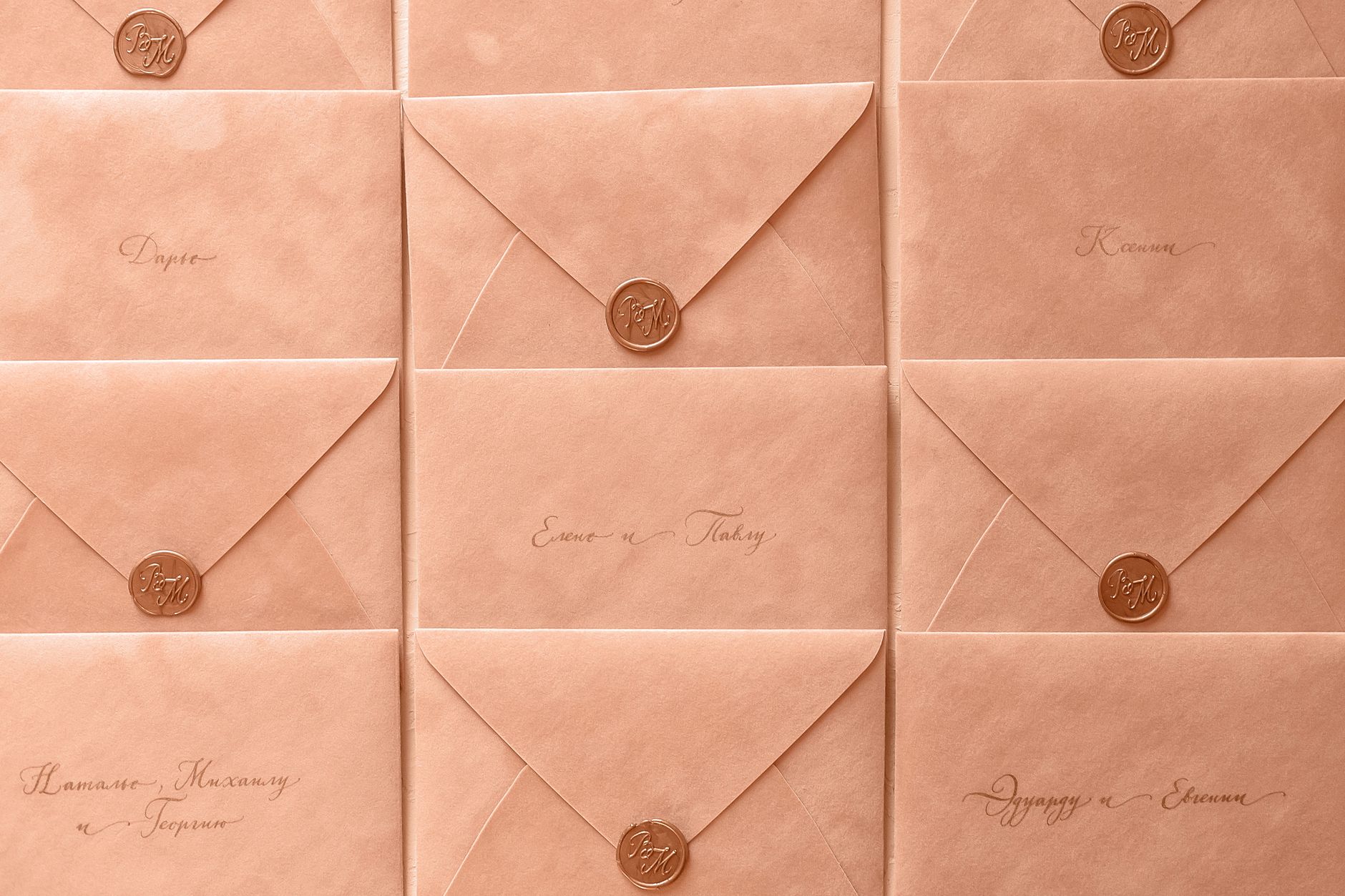
The Invitations in the Mop Bucket
“I’ve had a little accident,” Joanne said, and she stepped to one side so I could see the laundry room floor.
The bucket was yellow, the kind on wheels with a wringer on top. The water in it was the gray of a week of kitchen floors. And floating in it, stuck to the rim, sunk to the bottom in a soft cream-colored drift, were my wedding invitations.
All of them.
I knew it was all of them before I counted anything, because the box they had been packed in was sitting on top of her dryer. Empty. Dry as a bone. The lid set neatly beside it.
“I had them up on the shelf there,” she said, and pointed at the shelf over the utility sink, a good four feet from where the bucket stood. “I reached for the starch and the whole box just went.”
I looked at the shelf. I looked at the bucket. I looked at the box on the dryer, which had not caught one drop.
Joanne’s laundry room was the cleanest room in Llano County. People said you could eat off her floors, and she always answered, “Well, I’d rather you didn’t.” White washer, white dryer, a row of labeled baskets, a calendar from the propane company hung dead level. The whole room smelled like pine cleaner and hot cotton.
She was wearing a pink blouse with the cuffs still buttoned at the wrist. Pearls. Not a damp spot on her anywhere.
“I feel just awful about it,” she said.
She did not look awful. She looked like a woman waiting on a casserole to finish.
I got down on my knees on her tile. I don’t remember deciding to. I put my hand in that water, and it was cold, and it had grit in it, and I lifted out the first envelope my fingers found.
The ink had run. Not all the way. You could still read it if you knew what it said.
Mr. and Mrs. Carl Otto, in a hand that shook on every downstroke.
That was the part that got me. Not the money, not yet. The handwriting.
Ian’s grandmother had addressed every one of those envelopes. Nana Bea was 84 years old and her right hand had a tremor that made her hold her coffee cup with both. She had taught third grade in that county for 31 years, and she would not hear of printed labels on a wedding invitation. So for eleven evenings she had sat at her kitchen table under the light with a fountain pen and a ruler and a list, and she had written 140 names and addresses, slow, resting her wrist between each one.
Eleven evenings. I had sat with her for four of them and licked the stamps.
“The stamps are no good now either, I suppose,” Joanne said from the doorway. “What a shame. And so close to the day.”
Six weeks and two days. I knew the count without thinking.
I laid the envelope flat on my palm and I stood up. My knees were wet through my work pants.
There are things I could have said. I had them all lined up. I could have asked her how a box falls four feet sideways. I could have asked how every last envelope ended up under the water and the box ended up dry on the dryer with its lid beside it. I could have asked why she had told Nana Bea she’d carry them to the post office on Monday, and here it was Thursday, and they had never left her house.