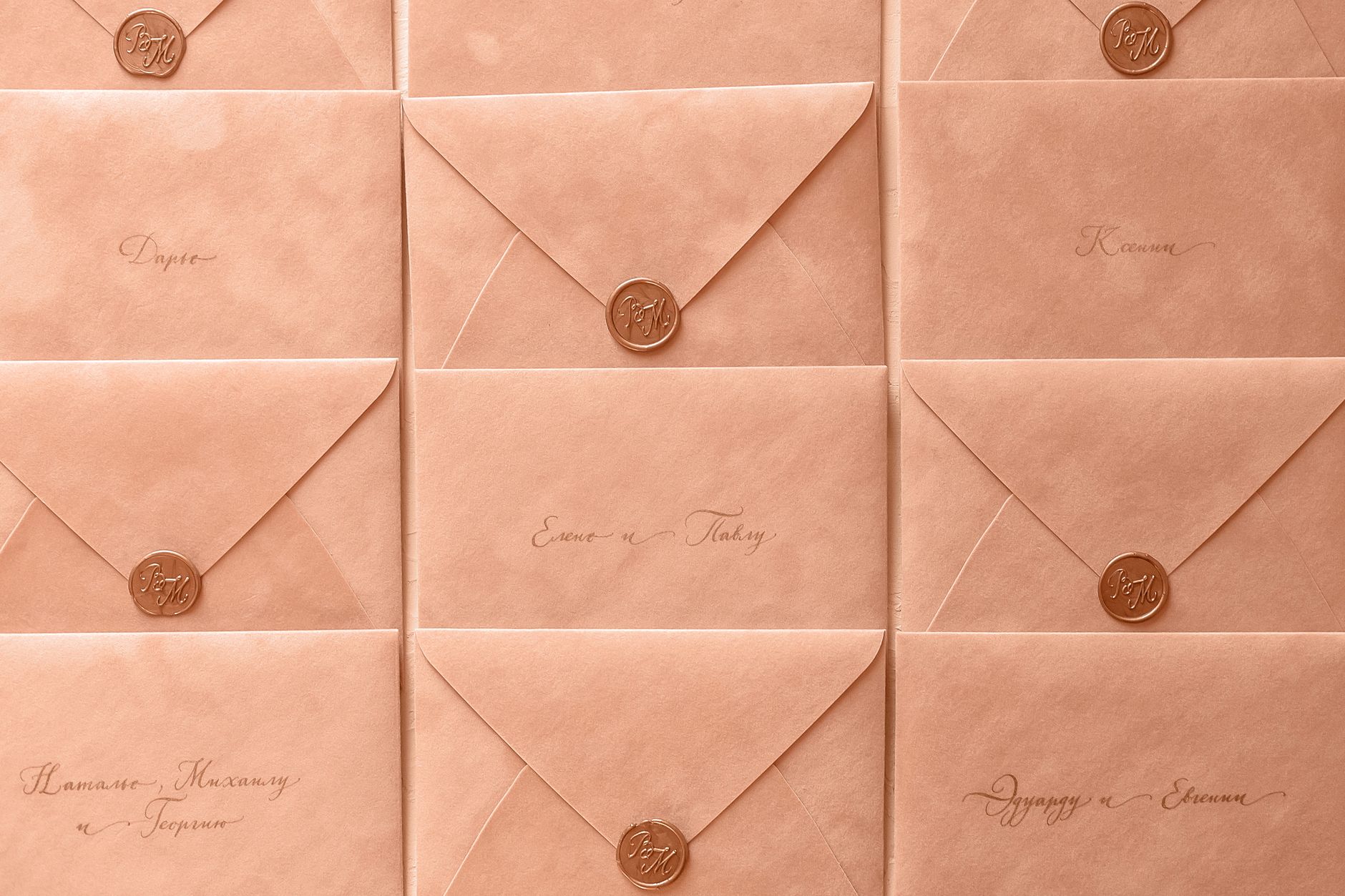
The Invitations in the Mop Bucket
My mother had the idea about the clothesline. She said people kept telling her they were hanging on to their card, they had it on the icebox, they had it in their Bible. So she strung a length of cotton line across the back of the foyer at Cedar Fork and set out a coffee can of wooden clothespins and a sign, in her own hand, that said to pin your invitation up if you’d like.
I did not know until the day whether she would come.
The twenty-fourth came up clear and cool, the first real fall day we’d had. The pasture was full of trucks by one o’clock. They had to open the second gate.
The bride’s room at Cedar Fork is the primary Sunday school room, right off the foyer, with little chairs and a flannel board. I stood in there in my dress with my mother fussing at my hem, and the door was cracked about four inches, and I could see straight across to the clothesline.
It was full. I counted later. A hundred and thirty-one index cards, pinned up edge to edge, lifting a little every time the front door opened. People had written on the backs of some of them. Scripture, mostly. One just said, “Bea taught me my letters in 1974.”
Every family that came through that door was holding a white card or had already hung one.
At ten till two, Joanne came in.
She was by herself. She had on a champagne-colored suit and her pearls, and her hair was done, and she looked exactly like the mother of the groom at a much larger church.
In her hand she had the envelope.
I knew it clear across the foyer. That tea-colored tide line. My strip of tape. She was carrying it in front of her, a little out from her body, the way you would carry something you wanted folks to notice you’d been sent.
I think she had meant it as a kind of proof. I think she had planned to show it around: look what that girl mailed me. But she stopped two steps inside the door, because she had seen the clothesline.
A hundred and thirty-one plain white cards. And hers.
My cousin’s boy was handing out programs. He is ten. Nobody had told him a thing. He looked up at her, and at what she was holding, and he said, good and loud, the way a ten-year-old says everything:
“Ma’am, yours is different. Yours is a real one. Do you want to pin it up with the others?”
The foyer went quiet. Not all at once. It went quiet from the door inward, like a wind laying down.
“No, thank you,” Joanne said.
She walked into the sanctuary. I moved to the other door, the one with the little window, and my mother did not even try to stop me.
That church has one aisle and it is not long. Every pew was full, and the folding chairs, and men were standing along the back wall with their hats in their hands. Joanne walked down the middle of all of them with that stained envelope, and I watched head after head turn, look at her hand, and turn back to the front.
Nobody said a word to her. Nobody was unkind. They only knew, every last one, and she could feel them knowing.
The front left pew was for Ian’s family. Nana Bea was already in it, in a blue dress, with her walker folded against the wall. She had been there since one o’clock.