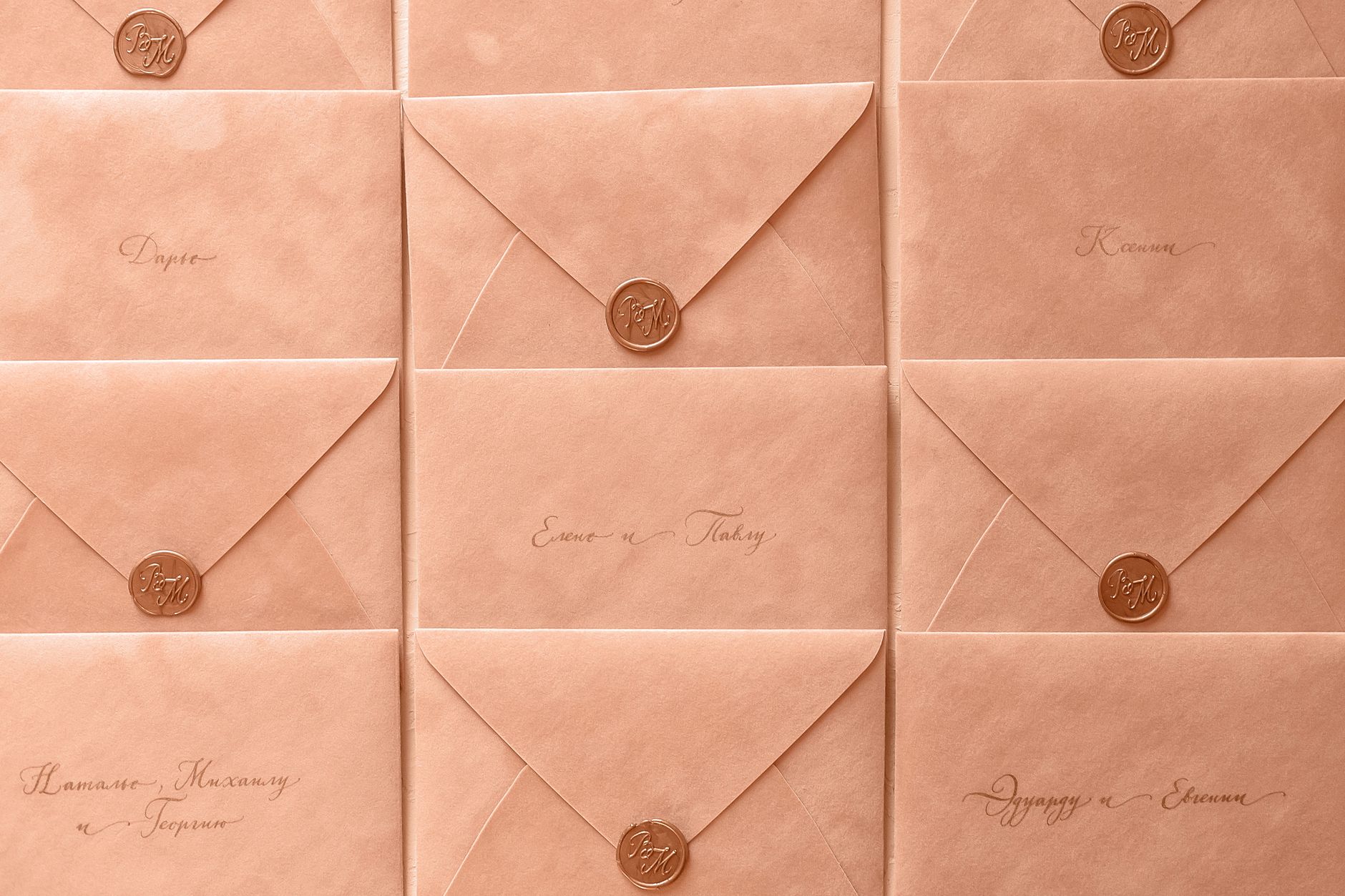
The Invitations in the Mop Bucket
Brenda came to the door already knowing. You could see it. She had her mouth set and her arms crossed over her cardigan.
“Bea,” she said. “Ian. Kelsey.”
“Brenda,” Nana Bea said. “We’ve come to invite you to a wedding.”
Brenda took the card and did not look at it.
“I’ll be frank with you,” she said. “Joanne told us at guild on Wednesday what happened, and I think it’s a shame, the way it’s being carried around town. An accident is an accident. I’d hate to think that family was being run down over a spilled box.”
Nana Bea opened her mouth.
And Ian said, “No ma’am. Let me.”
He stepped up onto the porch. He took his cap off, the way his daddy raised him to, and he held it against his leg, and he did not put on the nice voice. He used his own.
“Miss Brenda, my mother put them in a mop bucket. All hundred and forty. The box they came in was sitting dry on the dryer with the lid beside it. I’ve asked her about that twice and she won’t answer me.”
Brenda’s arms came uncrossed.
“My grandmother wrote every one of those by hand. It took her eleven nights, and you know what her hands are like. Kelsey paid for them out of a front desk paycheck. And Kelsey hasn’t said one ugly word about my mother to me or to anybody, not one, and I’ve been waiting on her to.” His voice roughed up and he cleared it. “I’ve made excuses for Mama my whole life. I’m not going to make this one. I’d be proud if you came to our wedding. It’s out at Cedar Fork. You can park in the pasture.”
Nobody said anything.
Brenda looked down at the index card in her hand. She read it this time, all the way to the three shaky letters at the bottom.
“She told us the box got knocked over by the cat,” she said quietly.
“Joanne doesn’t keep a cat,” said Nana Bea.
“No,” Brenda said. “No, she doesn’t, does she.”
She stood there another second. Then she tucked that card in the pocket of her cardigan and patted it flat.
“What can I bring?” she said.
When we were back in the truck I reached across Nana Bea’s lap and took Ian’s hand off the gearshift and held it. He was shaking worse than she was.
“Well,” Nana Bea said, looking straight out the windshield. “There he is.”
We finished on the third Sunday, at dusk, at a house in San Saba County with a porch full of dogs.
Nana Bea slept the whole way home with her head on my shoulder and her pocketbook empty on her knees.
Here is what I did not expect. People started calling. Not to gossip, or not only. To ask what they could do.
Peggy Otto said she and her sister would do the cakes. A man out toward Burnet, whose daughter Nana Bea had taught to read when nobody else could, said he had a pit on a trailer and four briskets with our name on them. Brenda, of all people, called me on a Monday and said in a stiff little voice that she would be doing the flowers for the church, and that it was not up for discussion.
I had been so scared that a wedding invited on index cards would look poor.
It turned out to be the only wedding anybody could remember being asked to face to face.