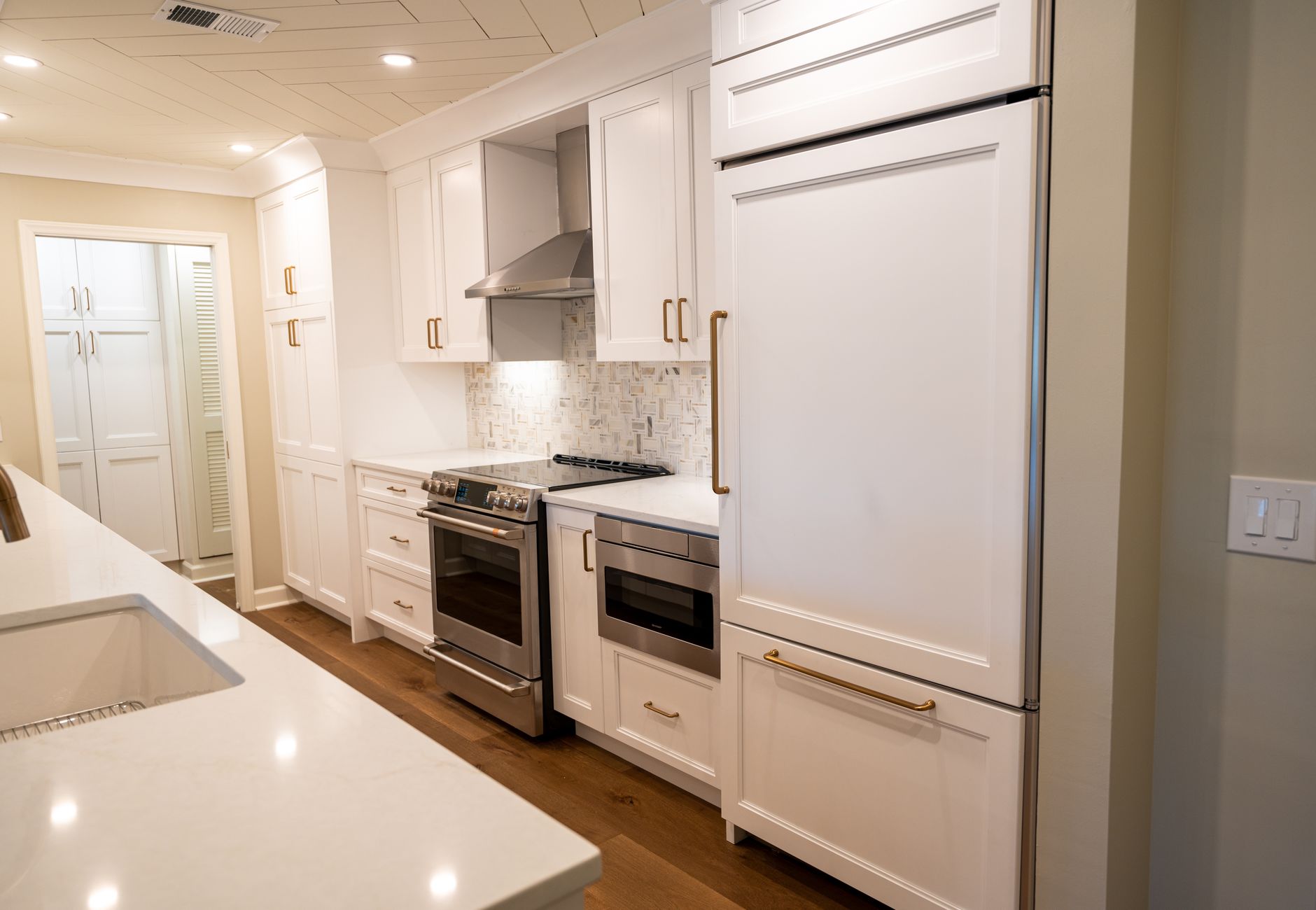
The Half a Kitchen I Paid For
What They Decided
Then Ben spoke up, which surprised me. Ben is the quiet one, the farmer. He has his father’s hands.
“We talked it over,” he said. “All four of us. Dad too.”
“You live here as long as you want,” Jill said. “For life. That’s first. Nobody ever asks you to leave this house.”
“And if you ever do leave,” Nick said, “for any reason, the twenty three thousand comes back to you. Before anybody else sees a dime. Windows and bathrooms. That’s yours.”
“Plus the kitchen,” Katie said. “Fifteen thousand and forty dollars.” She looked at her father. “He told us about the forty.”
Rod cleared his throat. It took him two tries.
“I’m calling the lawyer Tuesday,” he said. “I should have asked them in the first place. I should have asked them five years ago. I was afraid they’d think I was breaking my word to their mother.”
“Dad,” Jill said gently. “You weren’t breaking it. You were keeping it. She wanted us safe. Denise is part of us.”
Nobody said anything for a moment. In the living room, one of the grandkids laughed at the movie.
I want to tell you I said something wise. I didn’t. I said, “The ham’s going to get cold,” and every single one of them laughed, and Rod laughed the hardest, and then he crossed the line where the painted wall met the framing and put his arms around me in front of all of them.
He doesn’t do that in front of people. He did it then.
Easter Dinner
We ate at the dining room table with the leaves in and the card table pushed against the end for the kids. The refrigerator hummed behind Ben’s chair the whole meal. Nobody cared.
Rod said grace. He usually keeps it short. This time he thanked God for the food and for his children, and then he stopped for a long moment, and then he thanked God for his wife, and said my name, and sat down without finishing.
Jill reached over and squeezed his arm.
After dinner, the men went out and looked at the garage, which is what men do when they have feelings. I could see them through my window, standing around the workbench with coffee cups.
Then Nick came back in, wiping his boots on the rug.
“Dad’s side,” he said to me. “Ben and I are doing it. We’ll come down the next two Saturdays.”
Nick is a licensed electrician in St. Peter. Ben has hung more drywall on his farm than Steve Hanson’s whole crew. Rod would buy the cabinets and the counter out of his savings, to match mine.
“You don’t have to do that,” I said.
“Yeah,” Nick said. “We do.”
The Drawer
The dishes were the last thing. Jill washed and I dried, standing side by side at my sink, with the light going gold through the window.
When we were done, I opened the top drawer to put away the serving spoon, and Jill saw the tin.
She went very still. Then she reached past me and picked it up, the dented corner and all, and held it against her chest.
“I thought Dad threw this out,” she said. “When they gutted the kitchen. I didn’t want to ask.”
“I found it over the refrigerator,” I said. “Before the demolition. I didn’t know what to do with it. It didn’t seem like mine to keep, or to throw away.”
She opened it. She went through the cards one by one, the way I had. When she got to the rhubarb cake, the one that said Jill’s favorite, double the topping, she put her hand over her mouth.
I didn’t say anything. I just put my hand on her back, and we stood there.
After a while, she wiped her eyes on the dish towel. Then she looked at the last pie plate on my counter, the one with two slices of sour cream raisin left in it.
“Denise,” she said. “Would you write that one down for me?”
“The pie?”
“The pie. I want to put it in here. With hers.” She tapped the tin. “And I want it to stay in this drawer. In this kitchen.”
So I got a blank card out of my purse, because I always carry a few, and I sat down at my counter and wrote it out in my best handwriting. Sour cream raisin pie. One cup raisins, one cup sour cream, one cup sugar, two eggs. My mother’s way.
At the bottom, in the corner, I wrote: For Jill, and whoever she teaches.
She read it and put it in the back of the tin, behind the chicken noodle soup. Then she put the tin back in the drawer, and closed it, and kept her hand on it for a second.