The Half a Kitchen I Paid For
Easter
Rod’s kids always come home for Easter. It was Karen’s holiday. She did the ham and the scalloped potatoes and the lamb cake with coconut, and the kids have kept it going every year since she died, at the house on Fourth Street.
All four of them were coming. Jill and her husband and their two girls from Mankato. Nick and his wife from St. Peter. Ben and his family from out by Elmore, where he farms with his father in law. Katie, the baby, from Fairmont, where she teaches fourth grade.
Sixteen people in a house with half a kitchen.
The week before, I asked Rod if he’d told them. He was standing in the middle of the room, in his spot.
“I’ll tell them,” he said.
“Rod.”
“I’ll tell them, Denise.”
He didn’t. I know because I asked him again on Saturday night, and he said he’d tell them in the morning, before they came, and in the morning he went to the early service and came home and changed his shirt and went out to the garage.
I baked the ham on my side, in the oven in the dining room. I made the potatoes. I made two pies the night before, the way my mother taught me, sour cream raisin, because that’s what I bring to everything and Rod’s kids had come to expect it.
At a quarter to one, I heard a car in the driveway.
Jill
Jill always comes in the back door. She’s done it her whole life. She came in without knocking, the way you do at your parents’ house, carrying a pan of bars with foil over the top.
She got two steps into the kitchen and stopped.
I was standing at my sink. Rod had just come in from the garage and was standing in the middle of the room, in his spot, right where he’d stood all winter. Behind Jill, I could hear the girls coming up the steps and her husband saying something about the snow.
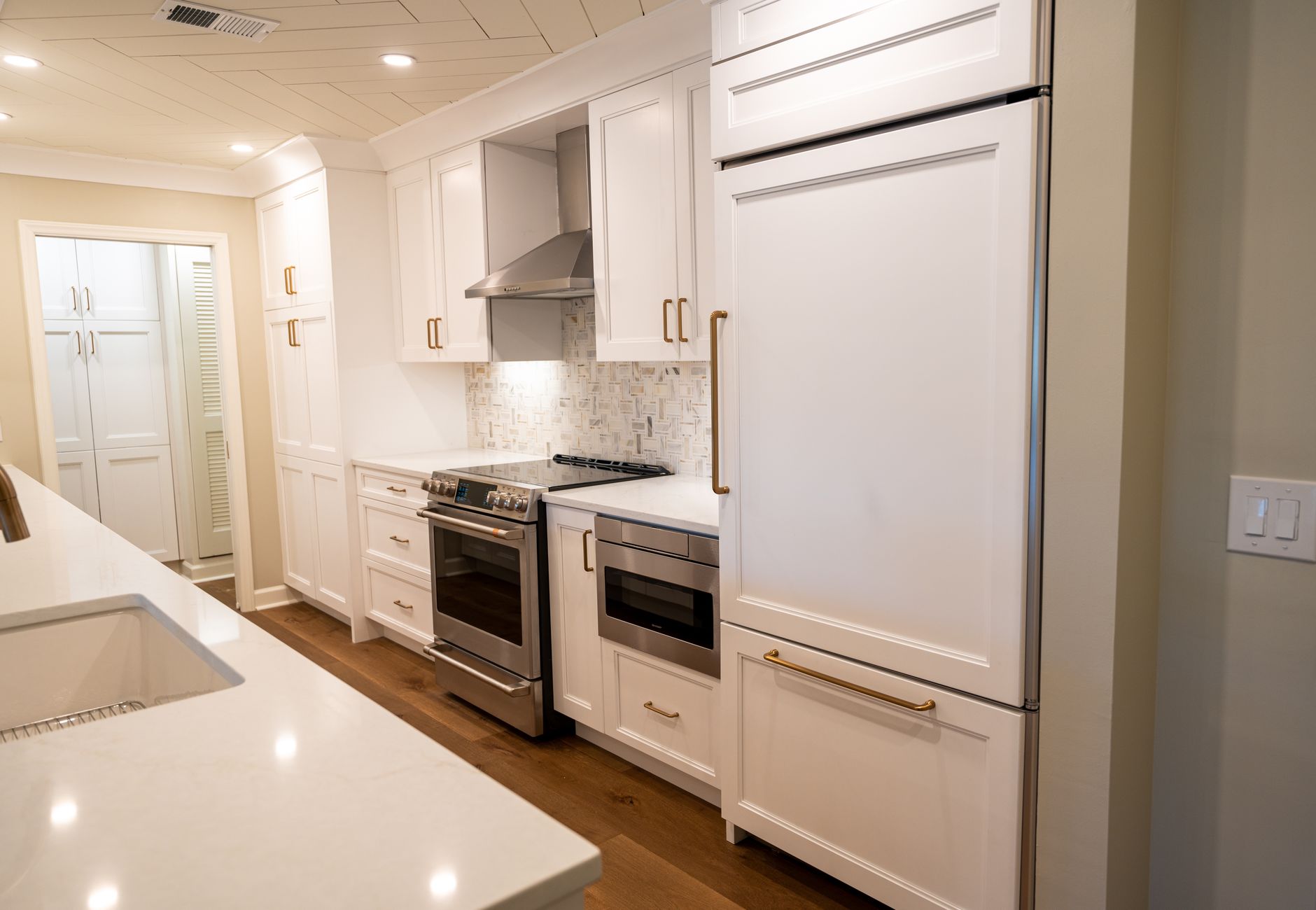
Jill looked at my side. The white cabinets, the counter, the sink under the window.
She looked at his side. The studs. The coiled wire. The sawhorse. The bare subfloor.
She looked at the refrigerator through the doorway, standing in the dining room.
Then she looked at her father.
I have known Jill for seven years. She’s a nurse at the hospital in Mankato, on the cancer floor, the same floor her mother died on. She is steady, and she does not make scenes. I had never once seen her look at Rod the way she looked at him then.
She set the pan of bars down on my counter, very carefully.
“Dad,” she said, in a voice so quiet I almost didn’t hear it. “Garage. Right now.”
He didn’t argue. He didn’t even look at me. He followed his oldest daughter out the back door like a boy called in from recess.