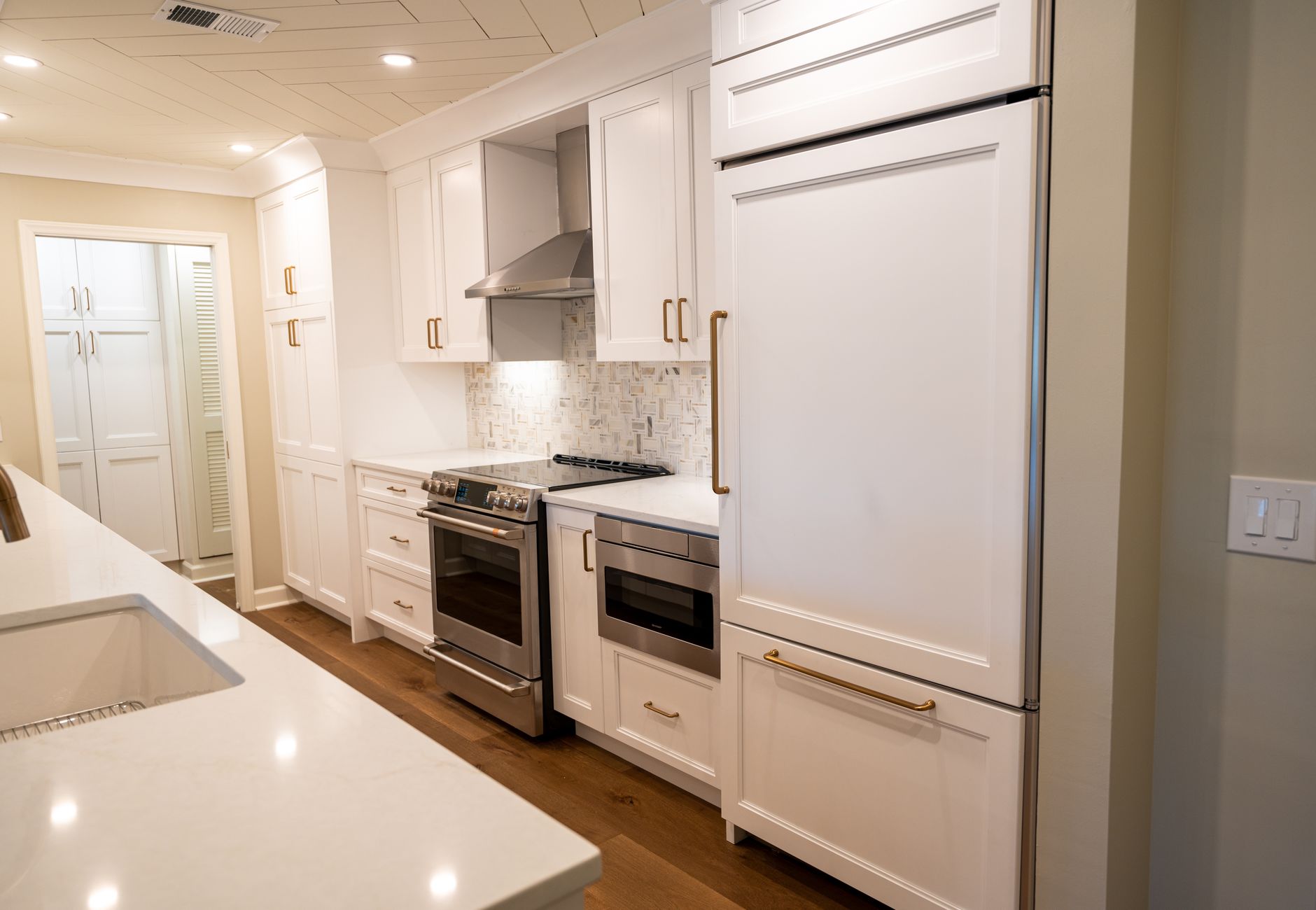
The Half a Kitchen I Paid For
The House on Fourth Street
I should tell you how I came to be sitting in that chair.
I drive school bus for the district in Blue Earth. I’ve done it for nineteen years. Before that I worked the line at the canning plant, and before that I was married to a man named Mike who is not part of this story except in one way.
When Mike and I divorced in 2009, I lost the house. It was in his name from before we married, and I’d spent eleven years painting it and wallpapering it and putting in a garden, and I walked out with my clothes and a car payment.
I learned something from that, or I thought I had. I bought my own little two bedroom house in Wells the next year, and I paid it off by driving bus and cleaning the Lutheran church on Saturdays. It took me ten years. That house was mine down to the shingles.
Then I met Rod at the Faribault County Fair, in the beer garden, of all places. He was fifty and two years a widower. He was a big, quiet man with a gray crew cut and hands like baseball mitts, and he asked if the chair across from me was taken.
He’d been a lineman for the power company for thirty one years. He’d taken the early retirement when his knees started complaining about the poles. He told me about Karen that first night, about the cancer and the last year, and he cried a little, and he didn’t apologize for it.
I liked that. I liked a man who could cry in a beer garden and then ask a woman if she wanted a corn dog.
We married in the spring of 2020, in a backyard, with his four kids and my son Tyler standing up with us. Then I did what women my age do. I sold my house in Wells, because his was bigger and closer to my route, and I moved my things into his.
I cleared fifty eight thousand dollars on that little house. I put it in the bank in my own name, and I thought that was being careful. I didn’t think about what I’d do with it after.
What I Put Into It
Rod’s house is a 1970s ranch on Fourth Street, three bedrooms and a basement. Karen picked out the gold carpet in 1994, and it was still there. So were the single pane windows that whistled every time the wind came off the fields.
The first winter, I couldn’t get warm. I wore a sweater to bed. The furnace ran all night and the gas bill was over three hundred dollars in January.
“I’ll do the windows,” I told Rod in the spring. “Let me. I want to.”
He argued a little. He said it was his house and his job. But his pension isn’t large, and he’d spent most of what he had on Karen’s last year, things insurance didn’t pay for. I could see the relief in his face when he finally said all right.
So I paid for the windows. Nine thousand eight hundred dollars, eleven windows, vinyl, double pane. The first night after they went in, I sat in the living room and couldn’t hear the wind at all. I nearly cried over a window.
The next year it was the bathrooms. The main bath had a pink tub from 1974 and a floor that gave under your foot by the toilet. The little half bath off the bedroom had a leak that had been going since Karen was alive.
Two bathrooms cost me thirteen thousand two hundred dollars. New floors, a walk in shower so Rod’s knees didn’t have to step over a tub, new toilets, new vanities. I picked the tile myself, a gray that looked like slate.
So by that January I had twenty three thousand dollars in that house. I never wrote it down anywhere. I never asked Rod to sign anything. He was my husband, and it was our house, and that was how I thought of it.
Until I sat in his desk chair with a paper in my lap that said it was not.