The Half a Kitchen I Paid For
Steve Hanson
I called Steve the next morning from the bus barn, between the morning run and the noon kindergarten route.
“I’ve got a strange one for you,” I said. “Can you price that kitchen by the wall?”
He was quiet for a second. “By the wall.”
“The window wall and the inside wall. What it costs to finish each one, separate.”
“Well,” he said. “The window wall’s got the sink and the dishwasher and most of the counter. The other one’s the range and the fridge and the pantry cabinet. I suppose I could. Mind if I ask why?”
“I’m paying for half,” I said. “Rod’s paying for the other half. I’d like to know which half is mine.”
Steve has been in a lot of kitchens. He didn’t ask another question. He called back that afternoon. The window wall, with the wiring and the drywall on that side, came to fifteen thousand and forty dollars.
“Close enough to half that I’ll call it fifteen even,” he said.
“No,” I said. “I’ll pay the forty.”
I wrote him one check that night at the card table, for fifteen thousand and forty dollars, out of the account with my name on it. I signed it carefully. Then I wrote on the memo line, in small letters, Window wall.
I told Rod what I’d done before I mailed it. I didn’t sneak. I set the check on the table where he could see it.
“That’s your half,” I said. “The other half is yours. Finish it whenever you’re ready.”
He read the memo line twice. Then he nodded, and went out to the garage, and I heard the radio come on.
Bare Studs
Steve’s crew started the last week of January. Two young men and Steve, and an electrician from Winnebago for a day.
They did exactly what they were paid for. I’ll say that for Steve Hanson. They hung drywall on the window wall and taped it and painted it. The flooring was meant to go in last, so the plywood stayed bare under all of it, and they stopped the drywall and paint in a straight line down the middle, like a fence line.
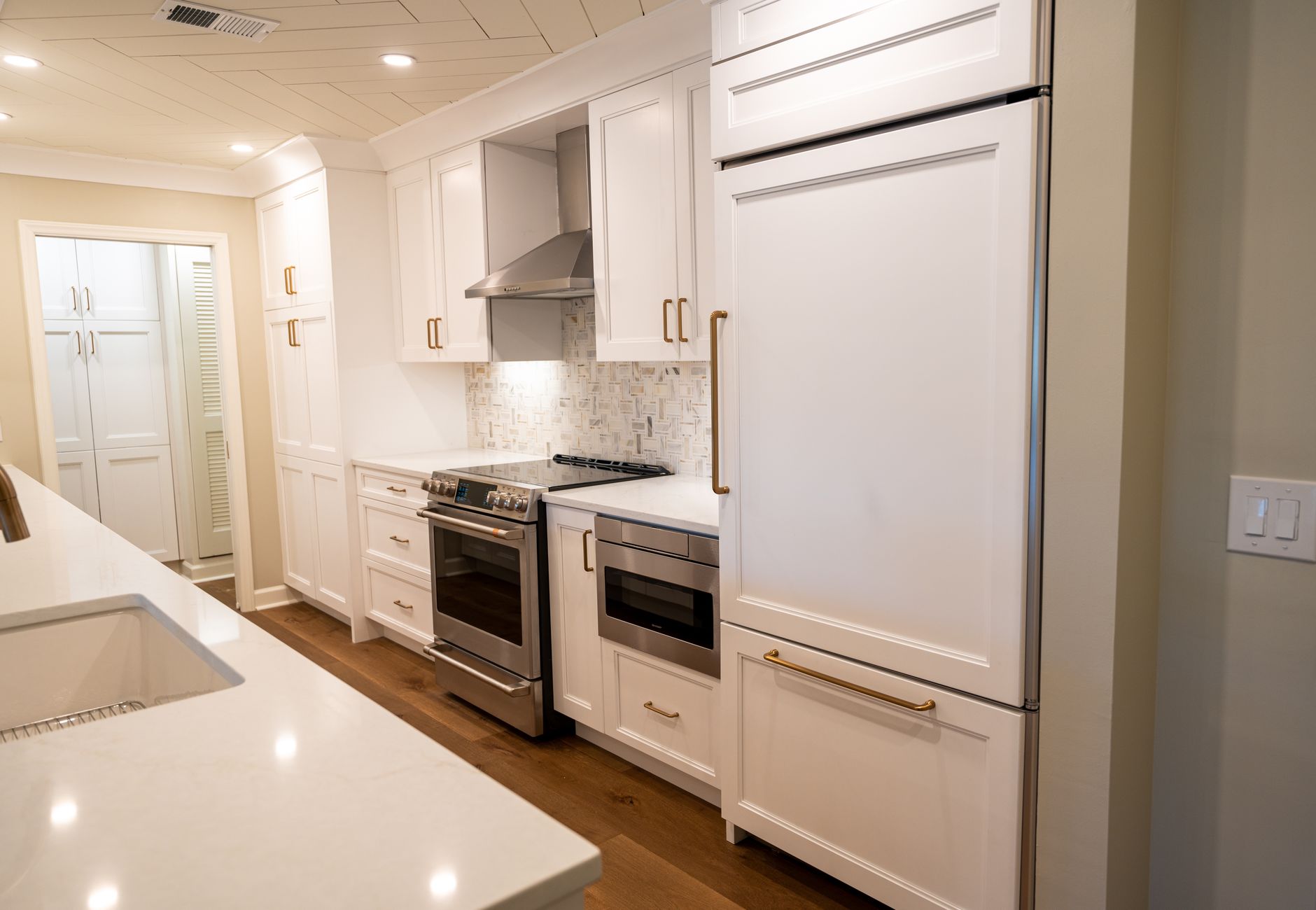
The new cabinets came on a Tuesday. White shaker style, with plain brushed nickel pulls. A sink under the window. A dishwasher. A counter in a pale stone pattern that cost more than I like to say.
The other wall they left alone. Bare studs, the old wiring capped off and coiled where the electrician had made it safe, a sawhorse Steve’s crew left behind and never came back for.
By the first week of February, it was done.
I remember the first morning I saw it finished. I’d come in from the early route with my reading glasses still pushed up on my head, and my red sweater on, because it was nine below. The sun was coming in low through the new window, onto the white cabinets and the new counter, and the whole half of the room just glowed.
And six feet away, there were the studs. The wiring. The sawhorse. The raw edge where the finished wall ended and the framing began.
Rod came in from the garage while I was standing there. He stopped in the middle of the room, right where the painted wall met the framing. He stood between the two halves in his flannel shirt, one hand hanging at his side.
He didn’t yell. Rod never yells. In six years of marriage I have never once heard him raise his voice at me.
He reached out and put his hand on the first bare stud, like a man patting a horse.
“Fair enough,” he said.
Then he went back out to the garage. Through the window, my window, I watched him go, his breath steaming, his shoulders up around his ears.