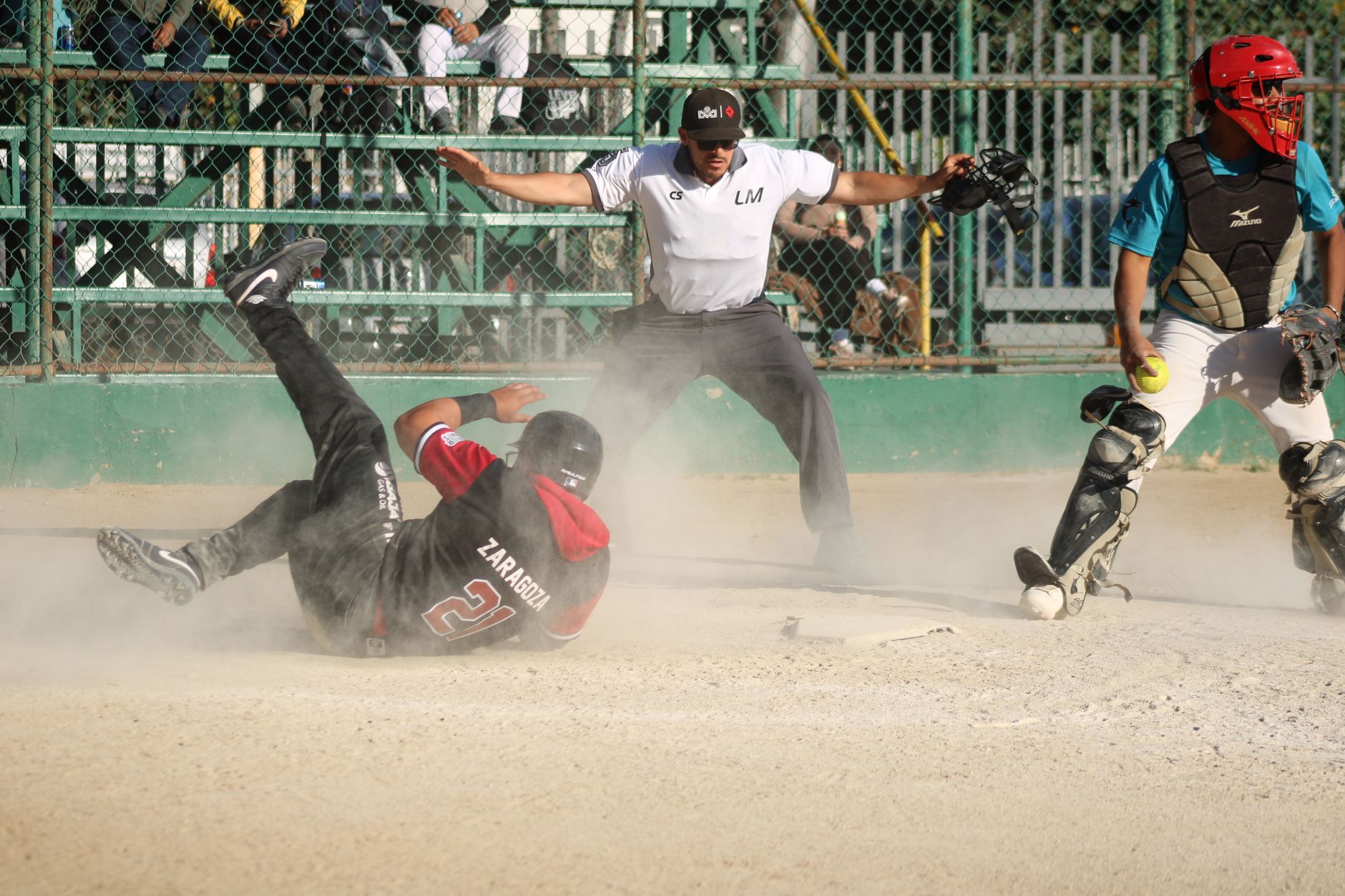
The Tournament I Called Behind the Plate
Then I sent Crystal one text. “Hayden’s fee is paid in full, both halves. You can tell your mother and mine that it’s settled.”
She did not answer for a day. Then she wrote back, “Where did you get it.” Not a question, the way she typed it. An accusation.
I almost did not answer. Then I thought about my mother in the lawn chair, and I wrote the truth, because the truth was not anything I was ashamed of.
“I earned it umpiring Saturdays at the county diamonds. Forty-five a game. Ask anybody out there.”
She did not write back. But I found out later that she had asked somebody out there, because word travels at a ballpark faster than a bad throw.
By the next weekend half the Bandit parents knew that the kid with the arm, the leadoff hitter, had a dad who was out calling eight-year-old games all summer to cover his half.
I want to be fair to Crystal, because Hayden is half hers and he is watching how we both act. She is not a monster.
She was twenty-three when we got married and twenty-eight when it fell apart, and she has had to be the one at the house with the homework and the bedtimes, and I think somewhere in her she was tired, and tired turns into mean when you let it.
Sending that bill to my mother was a cruel thing. But I have done my own tired, mean things over three years, and I was not going to stand in a ballpark pretending I was the only decent one in the marriage.
I just wanted it settled. I wanted it off my mother’s kitchen table.
Hayden’s Tournament
The last Saturday of June was Hayden’s first real tournament, a twelve-team bracket at the Boone County complex, and I had the day off from umpiring on purpose so I could sit in the stands and be his dad for once.
I was in the bleachers behind the Bandit dugout with a cup of bad coffee when Earl found me, and he had that look.
“Ross,” he said. “I am in a bind.”
The umpire assigned to Hayden’s field, a fellow named Gurley from over in Lebanon, had blown a tire on the interstate and was not going to make it.
The game was supposed to start in fifteen minutes. Earl had a man who could take the bases but nobody for the plate, and twelve teams and a whole bracket were about to back up behind one missing umpire.
“I can’t ask you,” Earl said. “It’s your boy’s game. That’s a conflict and I know it.”