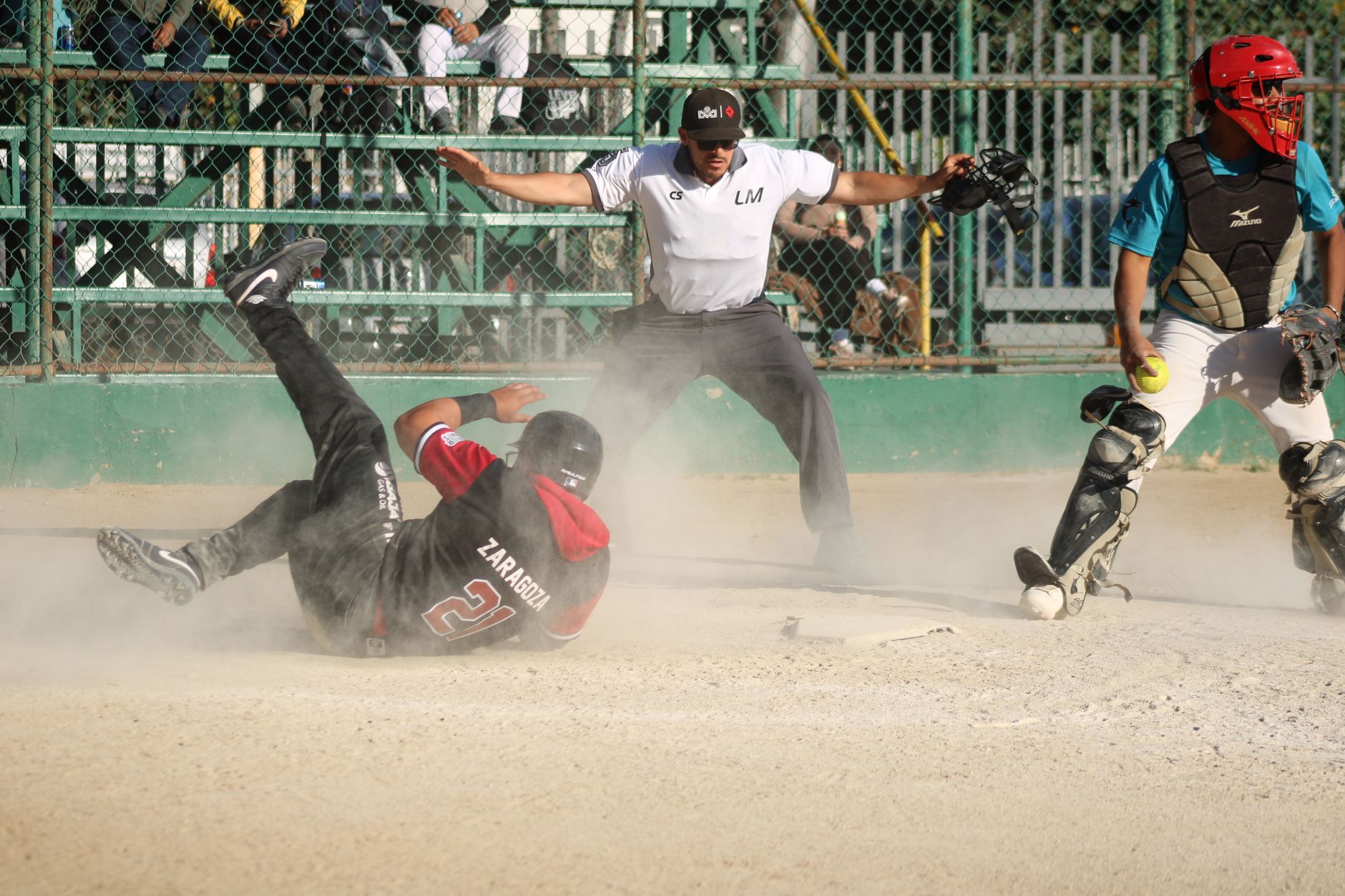
The Tournament I Called Behind the Plate
I did the math right there holding the phone. If I worked every Saturday, I could clear the four hundred and fifty I owed on Hayden’s fee in a month, maybe five weeks.
I could pay it myself, out of my own pocket, out of my own sweat, and nobody would ever send my mother another envelope.
“Sign me up,” I told Earl.
The gear cost me ninety dollars from the fellow who quit. A mask, a chest protector that had seen better days, shin guards, a plate brush, a ball bag, and a little steel indicator you click to keep the count.
I sat at my kitchen table that night and clicked it, ball, strike, out, learning the feel of it in my thumb, feeling like maybe for the first time in a while I had found a door that opened.
I passed Earl’s test with a ninety-one. The two things I missed were the infield fly rule and a balk, and I studied both until I could have recited them in my sleep.
First Saturday Behind It
My first Saturday I worked the eight-and-under diamond, which Earl does on purpose with new guys, because eight-year-olds do not argue balls and strikes and neither do their coaches, much.
I will be honest. I was terrible that first morning. I called a kid out at first who was safe by a step, and I knew it the second my arm came up, and the look on that little boy’s face about broke me.
But the coach just clapped and said, “Shake it off, Blue, we all miss one,” and something in my chest came loose.
Blue. That is what they call you out there. Not deadbeat, not behind, not Crystal’s ex. Blue.
The second game a grandpa in the stands rode me the whole three innings about my strike zone, and I let him, because he was right about half the time and a new man ought to listen.
By the third game I had found something. I stopped guessing and started seeing.
The ball would leave the little pitcher’s hand and I would know, before it ever hit the mitt, whether it was going to be a strike, and I would set my feet and wait for it and then call it loud and clean.
There is a settledness in it that I did not expect. For six innings at a stretch, the only thing in the whole world was the next pitch.
Not the bill. Not Crystal. Not the sixty-two dollars in checking. Just ball or strike, safe or out, and a man standing there to say which.
By noon I had worked three games and the sweat had soaked clean through the chest protector, and Earl handed me a hundred and fifteen dollars in cash in the gravel lot and said I did fine for a first day.
A hundred and fifteen dollars. I sat in my truck with the air running and counted it twice.
I was not going to tell Crystal how I was getting the money. It was none of her business. But I did call my mother that night.
“I found a way to cover Hayden’s ball,” I told her. “I am umpiring Saturdays.”
She was quiet for a second. “You’re doing what?”
“Calling games. Little kids, mostly. It pays cash.”
“Rossie,” she said, and I heard her voice change. “You are out there in that heat all day so your boy can play?”
“It is not that bad, Mom.”
“I am coming to watch,” she said, and there was no arguing with the way she said it.