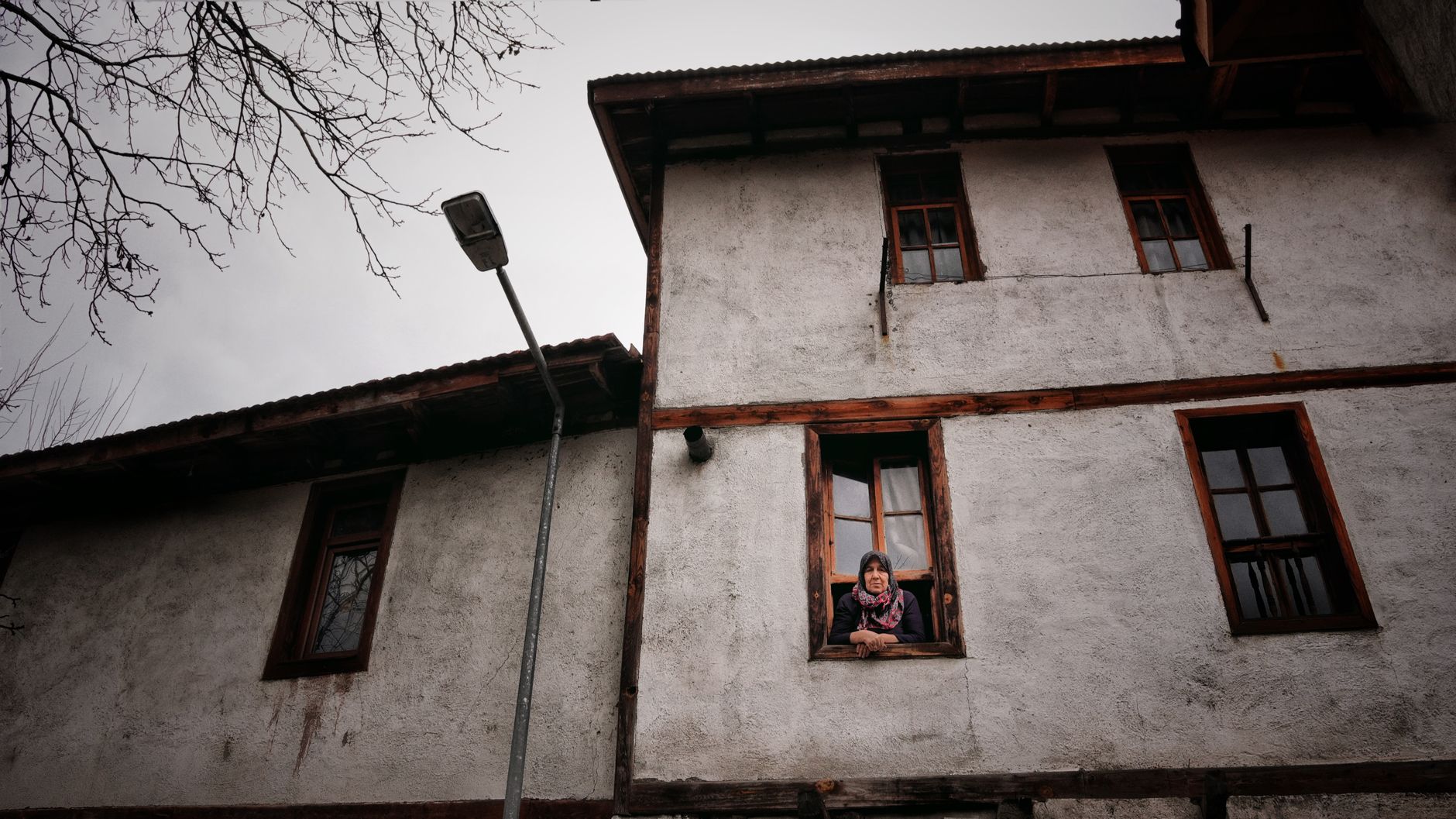
The Lamp I Left in the Window
The lamp goes on when the yard light behind the barn comes on by itself, a little before five in January, and in forty years I have never once needed anyone to remind me.
I cross the front room in my stocking feet, past Verner’s chair, and I turn the small brass key on the lamp base. It is a milk-glass lamp with blue cornflowers painted around the belly, and it wears a pleated paper shade gone the color of weak tea. It sits on a shelf Verner built across the front window, facing the road. The curtains stay tied back with two lengths of old baling twine. The bulb is forty watts. It does not light a room. It lights a window.
On the fourteenth of January I stood there with my hand on the key and did not turn it.
I want to tell you that straight, because the rest of this only makes sense if you know it. For the first time since I was thirty-six years old, I stood in my own front room at dusk and thought: maybe I will let it go dark tonight. Maybe I will let it go dark for good.
Nothing had happened. My left knee had been talking to me since breakfast, and it was nine degrees on the porch thermometer with a wind out of the northwest that had already started to pick the snow up off the fields and carry it sideways. A ground blizzard, they call it. No new snow falling at all, only the old snow on the move, so the whole county looks like a river running the wrong direction.
It was exactly the kind of night the lamp was made for. And I stood there tired in a way that had nothing to do with my knee.
Then I turned it. I will say that for myself. The little click, and the shade went yellow, and the window filled up with that soft, steady glow, and I sat down in the chair across from it with my afghan and my reading glasses. I told myself it was only to get through the winter, and that I would settle the rest in the spring.
I am glad now, down to the bottom of my shoes, that I turned that key. Because at a quarter past one the next morning, somebody knocked.