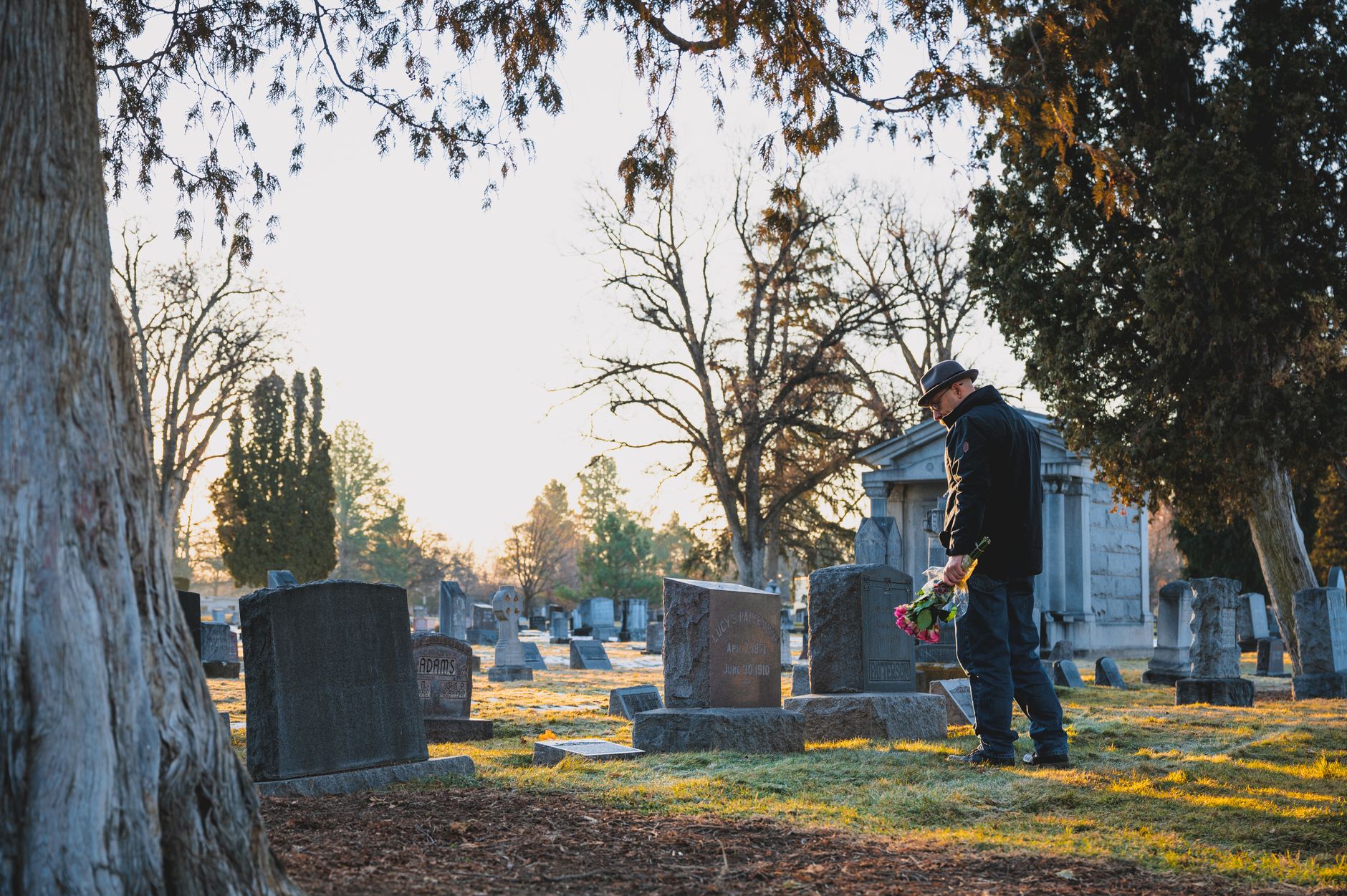
The Grave I Dug for My Father
Dad’s machine
There it was. An old yellow backhoe, the paint gone chalky on the hood, the loader bucket worn bright along the cutting edge, the seat patched with silver duct tape in the shape of my father’s backside. It smelled like diesel and hydraulic oil and cold iron.
I put my hand on the big rear tire. I hadn’t touched that machine in twenty years, and my hand knew exactly where to go anyway.
“Heater’s been on since nine,” Floyd said. “Give the glow plugs a good count before you crank it.”
I climbed up. I didn’t have to think about the step. I sat down in my father’s seat, and the springs gave under me in the same place they’d given under him, and I reached behind the seat for the lever that adjusts it, and my hand hit something round and cold.
It was his thermos. A green steel one, the paint worn off around the middle where his hand went, a dent in the bottom from the time it rolled off the fender onto the shed floor. His initials were scratched in the lid with a nail: E.H.
I unscrewed it. It was empty, but it still smelled like his coffee, the cheap stuff from the can with the red lid, boiled too long on the stove the way he liked it.
I sat there in the dark shed holding it against my chest.
I don’t know how long I sat. Floyd didn’t say anything. He just stood at the shed door with his back to me, looking out at the cemetery, and gave me whatever time I needed.
When I finally screwed the lid back on, he still didn’t turn around.
“He always had that full when he came up here,” Floyd said to the dark. “Every grave. Said he did his best thinking with a cup of coffee and a hole in the ground.”
I set the thermos on the floorboard by my left boot, where I could see it.
Then I counted to fifteen on the glow plugs and turned the key, and Dad’s backhoe coughed twice, blew a cloud of black smoke out the stack, and came to life on the second try.
The dig
Floyd had already done the layout the afternoon before. Four stakes and a string line, right beside my mother’s stone, measured off the plat book the way Dad taught him.
Four feet by eight feet. The outside of a standard concrete vault, with a few inches to spare on each side.
Before the machine touches a grave, you take the sod off by hand. Dad never let a bucket tear up the grass, because the family has to look at that grass for the rest of their lives.
Floyd and I cut it into squares with flat spades and stacked the squares, grass side down, on a sheet of plywood off to the side.
Then I backed the machine up to the foot end of the grave and put the stabilizers down on two more pieces of plywood so the pads wouldn’t mark up the ground.
I dropped the loader bucket in front to take the weight off the front tires. Floyd laid a big tarp out on the far side for the dirt.
I swung the seat around to face the backhoe controls. My hands were cold, and I flexed them a few times, and I thought about the first summer, Dad standing on the ground beside me with his arms crossed, saying, Easy, easy, you’re not mad at it.
I set the bucket teeth just inside the string at the head end and pulled the first bite.
Brown Kansas clay, heavy and wet with October, came up in the bucket in one big piece and steamed in the cold air. I swung it over to the tarp and dumped it, and swung back, and took another.
I took it down in layers, a few inches at a time, keeping the walls straight.
Floyd stood off to the side in his brown canvas coat, leaning on his shovel, watching every bucket.
He didn’t say a word for the first hour except once, when I got a little close to the string on Mom’s side, and he raised one finger, and I eased off.
Somewhere in there the sky started to change. It went from black to gray, and then the gray went pink behind the cedar windbreak, pink like the inside of a shell, over the old headstones and the cold ground.
I remember looking up at that sky, sitting at the controls of my father’s yellow backhoe in my white shirt, with Floyd leaning on his shovel beside a fresh grave, and thinking that I had never once in my life seen this hill at this hour. Dad had seen it four hundred times.