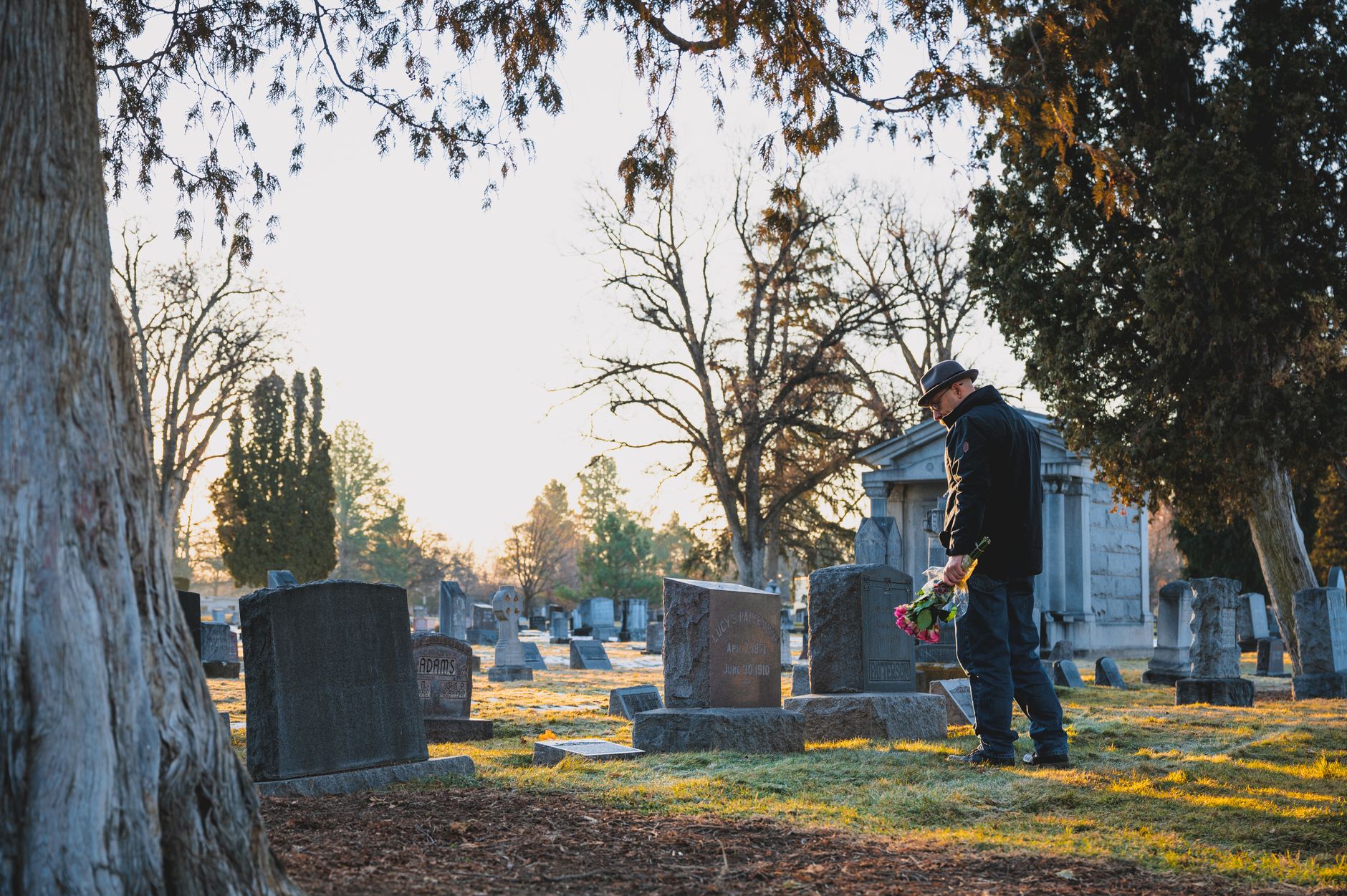
The Grave I Dug for My Father
Lisa says call him
Lisa had the truck warm. She’s forty-eight, and she’s known my family as long as she’s known me, and she can read my face better than I can.
She took one look at me getting in and turned the key off.
“What happened?” she said.
I took the card out of my pocket and handed it to her. She read it. She read it again, the same way I had, and then she put it face down on her knee.
“He can’t do that,” she said.
“He did it.”
“Rick, you paid for this funeral. You paid for most of it.” She wasn’t loud. Lisa’s never loud. She was just very clear.
“Call him. Tonight. Or go over there. You go over there and you tell him you’re carrying your father.”
I sat with my hands on the wheel and looked out at the grain elevator at the end of Main Street, the one Dad had hauled wheat to every July of my life.
“I’m not calling him,” I said.
“Why not?”
“Because it’s the day before we bury Dad,” I said, “and the only thing Dad would hate worse than me moving to Tulsa is his two boys fighting over who gets to carry his casket. I’m not going to stand in Lyle’s kitchen and have that fight. I’m not putting Dale in the middle of it either.”
She was quiet a long time. Then she reached over and put her hand on the back of my neck, the way she does, and left it there.
“Okay,” she said. “Then what are you going to do?”
I didn’t know yet. I didn’t know until about nine o’clock that night, sitting on the edge of the motel bed with my boots still on.
The call to Floyd
What I knew was this. Dad was going into the ground on Friday at noon, on the hill where he’d put four hundred of his neighbors, and somebody was going to have to dig that grave.
Floyd Mertz had been the sexton since Dad retired two years before. Floyd was sixty-nine, a retired county road man, quiet as a fence post.
He’d learned the job riding along with Dad for a year before Dad’s knees quit, and Dad had told me on the phone that Floyd was the only man in the township he’d trust with the plat book.
Floyd had his own little rubber-tracked excavator, a newer one, and I figured he’d planned to dig Thursday afternoon or early Friday.
I sat there with the phone in my hand for a good ten minutes before I called him.
He picked up on the fourth ring. “Mertz.”
“Floyd, it’s Rick Haldeman.”
“Rick.” I heard a chair creak. “I’m awful sorry about your dad. He was the best I ever saw at this.”
“Floyd,” I said, “I want to dig him.”
The line went quiet. It was quiet long enough that I took the phone away from my ear to see if the call had dropped.
“With what?” he said finally.
“With his machine. If it’s still there. If it’ll still run.”
“It’s still there,” Floyd said. “Still in the tin shed by the windbreak. I start it once a month and run it around the lot so the seals don’t dry out. Your dad asked me to. He couldn’t stand to sell it.”
I hadn’t known that. I sat with that for a second, a man who couldn’t climb up into the seat anymore paying another man to keep his backhoe alive.
“Township lets the family dig,” Floyd said slowly, “long as the sexton is standing there and it’s done to standard. That’s in the rules from way back. Your dad wrote half of them.”
He paused. “It’s going to be cold. Supposed to be thirty-four at daylight.”
“I don’t care about cold.”
“No, I didn’t figure you would.” Another pause. “I’ll go plug the block heater in tonight so it’ll start. Plot’s already staked, right next to your mother. Be at the shed at five.”
“Floyd,” I said. “Thank you.”
“Don’t thank me yet,” he said. “Your dad’s corners are a lot to live up to.”