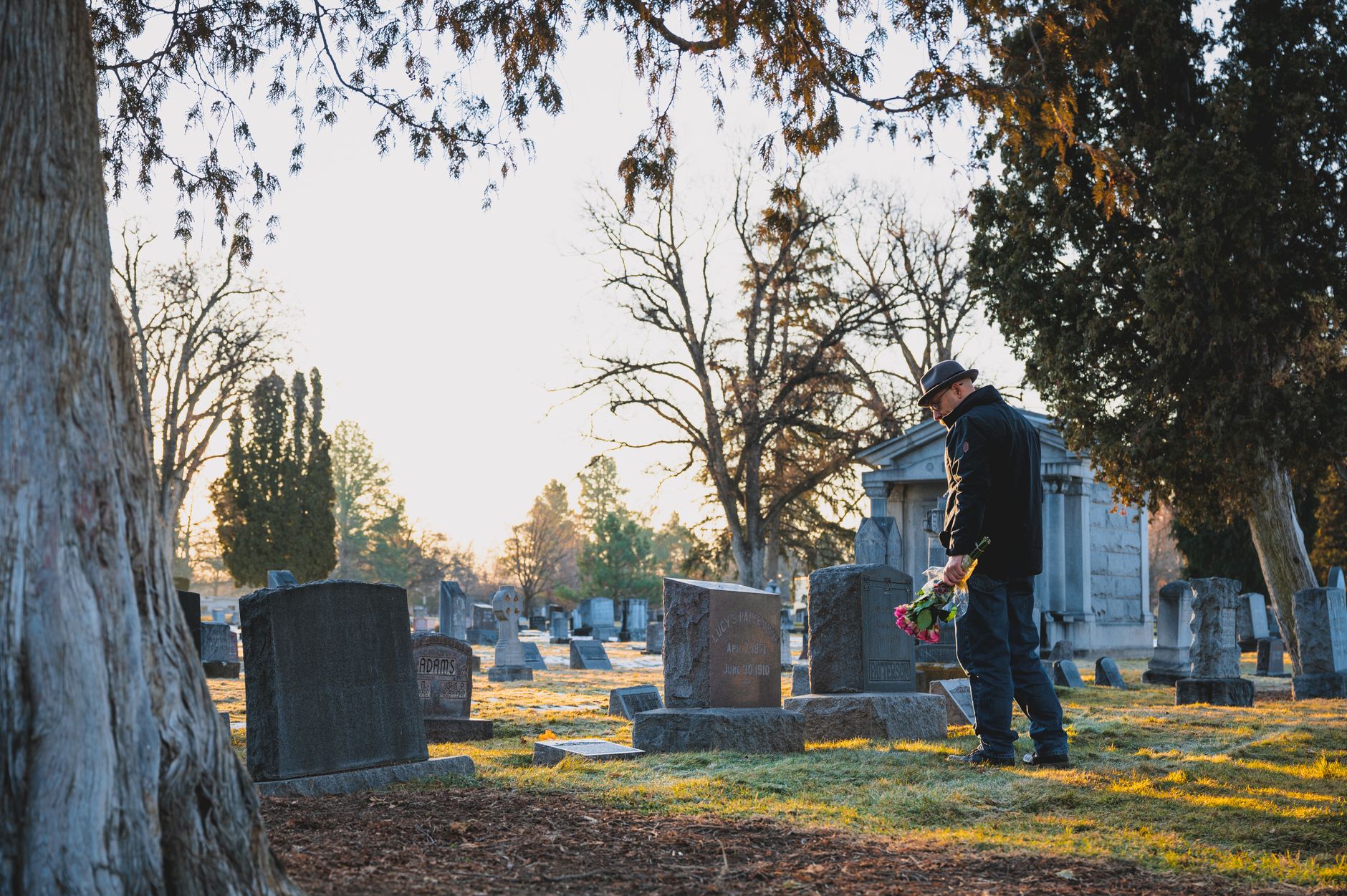
The Grave I Dug for My Father
Twenty years down the turnpike
My name is Rick Haldeman. I’m fifty years old, and I’ve been a pipeline inspector out of Tulsa for twenty years.
It’s a good job. It paid for our house and both our girls’ college and a truck I don’t have to worry about.
It’s also three hours down the turnpike from the place I grew up, and for twenty years that three hours was the whole argument between my brother and me, whether either of us said so or not.
I grew up on a quarter section of wheat and milo and a few cows on the hill country of south-central Kansas, a mile south of Spring Valley Cemetery.
My father, Ernie Haldeman, farmed it, and on top of farming it he was the township sexton for forty years.
If you didn’t grow up in the country you may not know what a sexton is. In a little township cemetery like ours, there’s no office and no staff.
There’s one man the township board pays a small fee to keep the plat book, mark the plots, mow when the mowing needs doing, and dig the graves.
For forty years that man was my dad. He bought a used yellow backhoe in 1983 with money he’d saved from custom hay baling, and he dug graves with it until he was seventy-nine years old and his knees finally gave out on the step up into the seat.
People used to say you could tell an Ernie Haldeman grave from across the cemetery. The walls went straight down like they’d been cut with a knife. The corners were square.
Not rounded like a bucket leaves them, but square, because he always got down in the hole at the end and finished them by hand with a flat spade.
And he had a rule, which he told me the first summer he let me run the levers, when I was fourteen. You dig a man’s grave dressed for church.
White shirt, clean jeans, boots blacked. He said the family might drive by early, and they ought to see that somebody was treating it like it mattered.
He went through a lot of white shirts. My mother used to soak the collars in a bucket of Biz on the back porch and shake her head at him. She never once told him to stop.
The one who stayed
I left when I was thirty. I’m not going to pretend I left for noble reasons.
The farm couldn’t carry two families, and there was work on the pipelines that paid three times what I could make anywhere in the county, and I had a wife and a baby girl.
But I’d be lying if I said that was all of it. My father was a hard man to work beside.
He was fair with everybody in the township and short with his own boys, and he had a temper that came up fast and went down slow.
Lyle stayed. Lyle was the oldest, and he’d always figured the place would be his someday, and he married Karen and moved into the trailer by the machine shed and later built the brick house next to the old one.
He farmed beside Dad for twenty years after I left, through drought and hail and two bad wheat crops in a row.
I came home at Christmas and for a week in the summer. I sent money when the combine needed a new engine.
I called Dad on Sunday evenings, and he talked about rain and cattle prices and never once asked when I was coming back.
When Mom died in 2014, I was on a job north of Williston. It took me two days to get home.
By the time I got there, Dad and Lyle had already dug her grave together, with the same yellow backhoe, on the same hill.
I stood at the edge of it in my good clothes and saw the square corners and knew I hadn’t been there for the one that mattered.
Lyle never said a word about it. Not then. I thought that meant he didn’t hold it against me. I know better now.