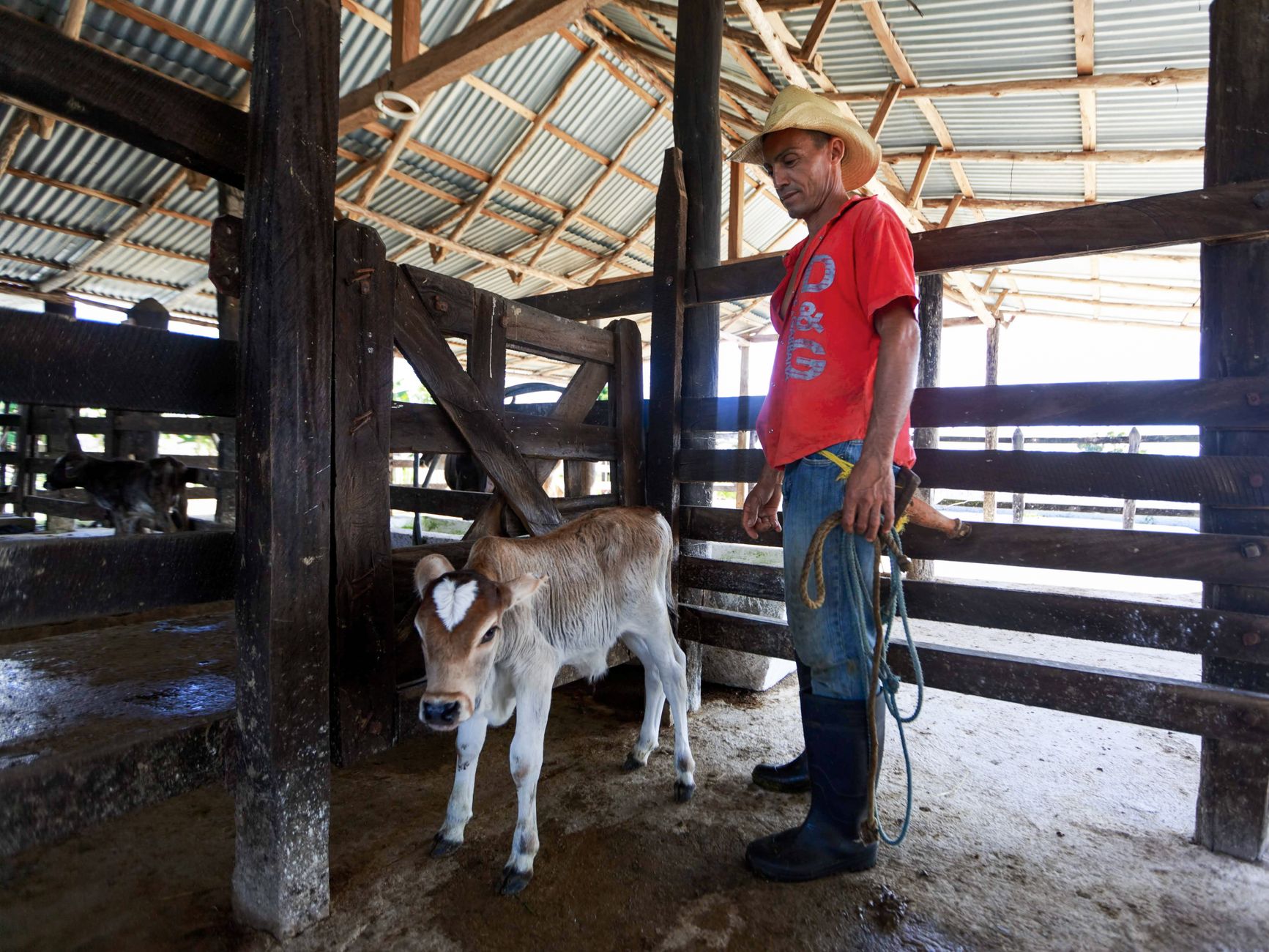
The Calf That Cost One Dollar
After a while Addie looked up. “What do I owe you for the milk replacer?” she asked. “And the starter. I have babysitting money. I can pay you back.”
Earl took his time with that. He took off his feed cap and turned it around in his hands once, the way he does at the sale barn before he bids.
“Nothing,” he said. “But there’s one condition.”
Addie stood up, with straw stuck to the knees of her jeans, and waited.
“Next July,” Earl said, “you lead this calf into the ring at the county fair. You show him the best you know how. And when he goes through the sale, I get to bid on him.”
Addie looked at the calf, and then at Earl, and then she put her hand out like a grown woman closing a deal. Earl shook it. His hand swallowed hers.
“Deal,” she said.
“What are you going to call him?” June asked.
Addie looked down at the calf, who was trying to eat her sweatshirt string. “Dollar,” she said. “His name is Dollar.”
Before they left, Earl took a folded paper out of his chore coat pocket.
It was a bill of sale he had written out at his kitchen table, one black bull calf, banded, sold to Addie Kerr for one dollar, signed and dated.
He handed it to me, not to her. “Put that somewhere safe,” he said quietly. “In her name. Nobody sells this one but her.”
The Receipt
Jenna called me Monday night at a quarter to nine. I knew by the way she said my name that she had found out, and I knew by how quiet she was that she had not found out from Rodney.
She had gone out to his truck to look for her sunglasses. In the console, under a stack of fuel receipts, was the sale barn ticket.
Seven hundred and four pounds at three dollars a pound, a little over twenty-one hundred dollars, less commission and yardage.
“Private,” she said. “To a family that shows. That’s what he told me, Dustin. I asked him Saturday night and he looked right at me and said it again.”
I did not say anything. There was nothing in it I could add that would help her.
She told me the rest the way you tell something you have been holding all day. The pool loan had come in higher than Rodney told her.
A lot higher. The payment he quoted her in the spring was three hundred and ten dollars a month less than the real one.
The first real payment came due on the first of October. He had panicked.
He had looked around the place for something to sell, and there was a seven hundred pound steer standing in the pen eating feed.
“He said he really thought she’d get over it,” Jenna said. “He said he thought a kid would cry for a week and then want a kitten. He said he didn’t know.”
Her voice broke a little. “I wrote her name on that bucket, Dustin. I wrote it.”
“I know you did,” I said. “She brought the tape with her. It’s on the new bucket.”
There was a long silence on the line. Then Jenna said, very quietly, “What new bucket?”
So I told her about the pen and about the Hendersons and about four quarters and a calf named Dollar.
She cried the whole time, but by the end of it she was laughing a little too, the way you do when you are too tired to pick just one.
Before she hung up, she said something I did not expect. “That calf has to eat twice a day. She can’t do that from my house. I think she should catch the bus from your place this year, Dustin. School nights with you. Weekends and Wednesdays with me.”
We had been fighting over a schedule for four years. She gave that to me in one sentence, and I knew what it cost her to say it.
“Are you sure?” I asked.
“No,” she said. “But it’s right. And Rodney can explain to me why our daughter doesn’t sleep in our house anymore. He can explain it to me every night.”