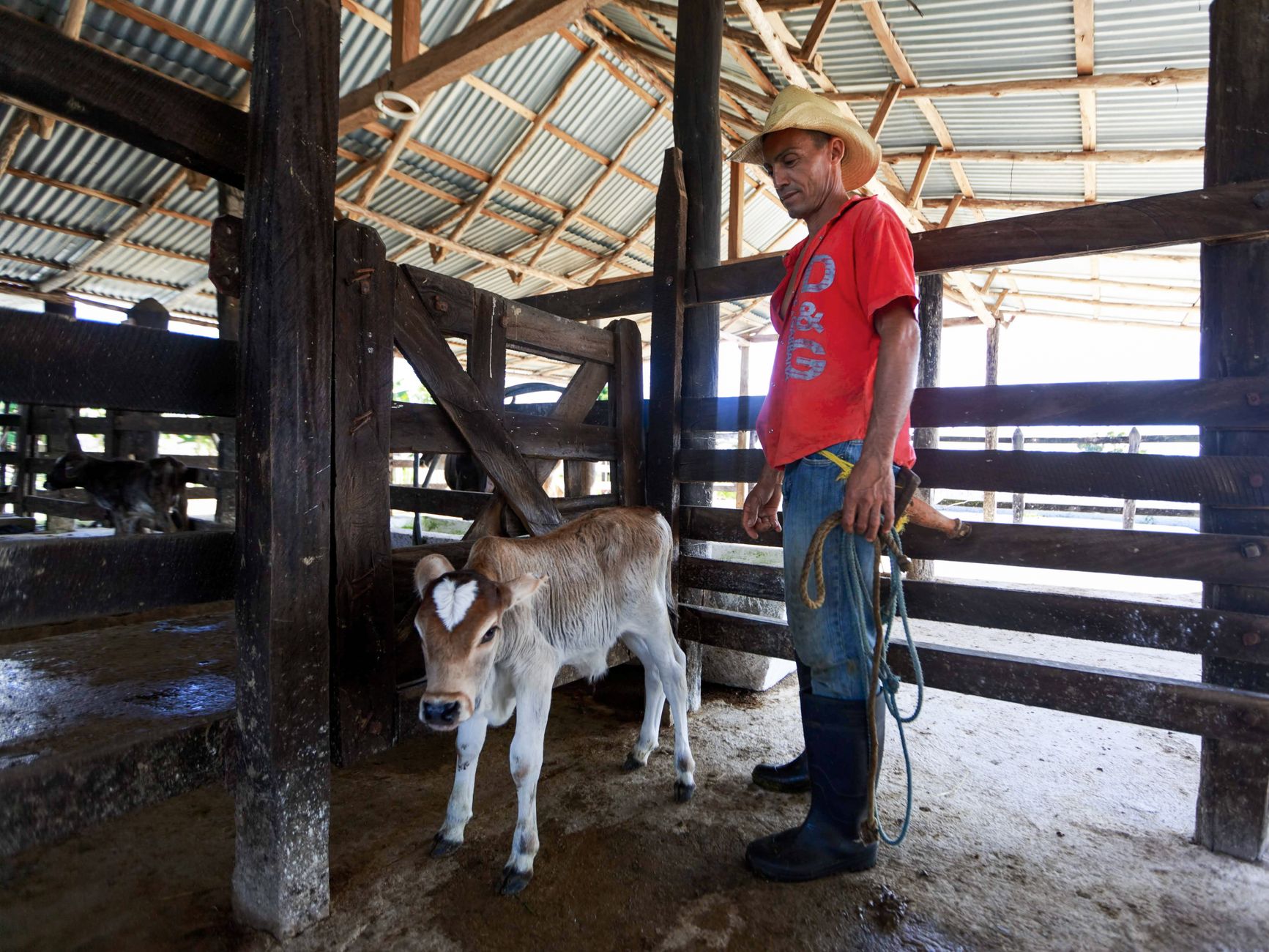
The Calf That Cost One Dollar
The Ice Storm
The worst week of that winter came in the middle of January.
An ice storm came through on a Tuesday night and laid an inch of glaze over the whole northeast corner of the state.
By midnight I was in a bucket truck with a crew on the county line, and I did not come home for thirty-six hours.
When the lines are down, that is the job. You do not get to pick which nights.
Addie was at Jenna’s because of the storm. Jenna was stuck at the hospital, working a double.
Which left one adult at that house to get a twelve-year-old to a calf three miles away on roads like glass.
I did not know any of it until I got home Thursday around noon. Dollar’s tank was clear. His hay was fresh.
There were footprints in the ice all around the pen, a big set and a small set, and somebody had broken the ice on the tank with a hatchet.
Addie told me later. Rodney had gotten her up at five both mornings, put chains on his truck in the dark, and driven her over at fifteen miles an hour.
He chopped the tank open while she fed. He came back at night and did it again.
“Did he say anything?” I asked her.
She thought about it. “He said Dollar was a good-looking calf,” she said. “And he said he was sorry about the steer. He said it real fast, like it hurt.”
“What did you say?”
“I said thank you for the ride,” she said. “I don’t know what else to say yet, Dad. I’m not ready to say the other thing.”
“You don’t have to be,” I told her. “Not yet. Maybe not ever. That part’s yours.”
That night I called Rodney myself. It was the first time I had ever called his phone. He picked up on the second ring and did not say hello, just waited.
“Thank you,” I said. “For the tank. For getting her over there.”
He was quiet a long time. “It doesn’t fix it,” he said finally.
“No,” I said. “It doesn’t. But it was the right thing to do, and you did it. I wanted you to hear that from me.”
Spring and Summer
When the ground thawed, Addie started halter breaking Dollar. She tied him short to a post for an hour every evening until he quit fighting it, then walked him around the pen, then out on my lane, then down the gravel road.
By May she was walking him the whole mile to the Hendersons’ and back on Saturdays.
Earl would be waiting on his porch steps with a cup of coffee. He would walk all the way around Dollar twice and say the same thing every time.
“He’s coming,” Earl would say. “Keep him on that hay. Don’t let him get soft. And keep his head up when you walk him, he’s not a dog.”
June taught her to wash him with a hose and a stiff brush, and to blow his hair dry and train it forward, and to clip the long hair off his tail head without nicking him.
Addie came home smelling like cattle and show adhesive and so happy she could hardly stand it.
He was never going to be a fifteen hundred pound fat steer by July. He was a fall calf.
By fair time he would be a feeder steer, eleven months old, and our county fair has a class for those.
He weighed in at the fair at eight hundred and twenty pounds.
He was long and deep and black as a church shoe, with that cowlick on his forehead, and he walked into the barn like he owned it.
The night before the show, the 4-H kids slept in the beef barn on cots, the way they always have.
Jenna drove up after her shift to bring Addie a clean show shirt she had ironed.
I watched her walk down the aisle to Dollar’s stall and stop. Hanging on the gate was the feed bucket.
On the side, gone grayer and softer and still holding on, was her own handwriting from four years ago.
Jenna put out one finger and touched the tape. She did not say anything.
Addie came up and put her arm around her mom’s waist, and they stood there together looking at it, and I went and found something to do at the other end of the barn.