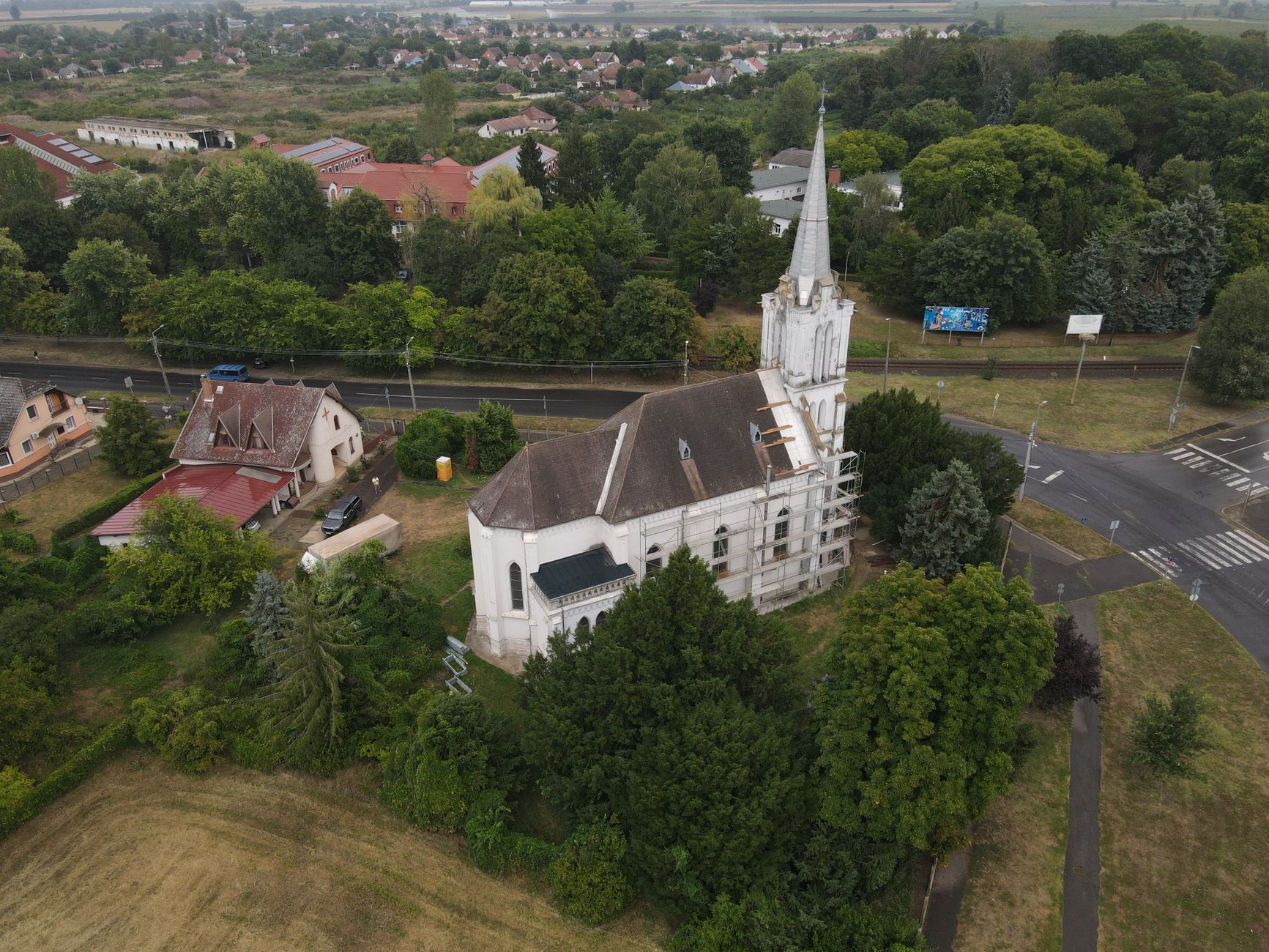
The Steeple I Painted Every Ten Years
Jesse
It was Jesse Kincaid.
You will not know who that is, so I will tell you. Jesse is thirty-three years old now, a journeyman lineman with the Spring Valley co-op, a quiet, sandy-haired fellow from over by Edgar Springs who barely said ten words at a time.
I had broken him in my last year on the line, the year he was twenty-one. He was a green groundman, scared half to death of heights.
I remember the first pole I ever took him up. I put him in his belt and his hooks, and I stood below him and said the things my own foreman said to me. Three points of contact. Look at the work, not the ground. And never let a man go up alone.
He did not look at the ground once. Twelve years later, he was up on top of my steeple in a harness, waving at me with a brush.
“Mr. Pruitt!” he shouted down. “You’re early! We had it figured for four o’clock!”
Somebody laughed in the lot, and then they all started laughing, and I stood there with my mouth open like a man in a dentist’s chair.
“Harlan,” Darlene said, “I have something to tell you.”
“I figured that.”
“I started it in June.”
She told me the rest standing there in the gravel, with the whole church listening. In June, on the day I dropped the coffee cup in front of the Sunday school class, she had gone to Pastor Glen. She said she did not know what to do about a man who would sooner die on a ladder than let somebody help him.
Glen told her he had been thinking about it since spring.
Between the two of them, they made a list. They called the co-op manager first, and then they called Ray Tolliver, who runs the line crew, and Ray said he had two bucket trucks and a bunch of young fellows who owed Harlan Pruitt a favor. Glen asked for the quote from Rolla anyway, so there would be a real number on the table if the whole plan fell through.
Ray was standing right there at the edge of the lot, a thick-armed man with a gray mustache, and he took off his cap. “I couldn’t have kept ’em home with a chain, Harlan.”
“I trained half of them,” I said.
“And they never stopped telling me.”
The fire department brought the scaffold. A man named Bud Garrison had run his own construction outfit in Rolla before he retired, and he talked a rental yard into letting the church have the frames for the cost of the trucking.
The Hobbs boys put it up Wednesday morning, an hour after Darlene and I drove out of the county, while Marlys Hobbs stood at the church door with a clipboard and said a name every time somebody walked up.
Forty-four people turned out, in all. I counted later, off Marlys’s list.
They had wet-scraped every board, with plastic laid out below to catch the old paint, because Ray had read up on what was in the coat from before the seventies, and he did not want the children’s Sunday school wing eating lead.
I had not given it a thought in forty years of scraping without so much as a bandanna on my face, and I was ashamed of that, and then grateful.
They had primed on Thursday and put on the first coat Friday, working the lifts in shifts, and Saturday morning they put on the second. The Cobb Springs high school shop class had scraped the louvers, three kids with headlamps strapped over their ball caps who said they’d never had so much fun being told what to do.
The ladies had fed them. I could smell it now, ham and green beans, and somewhere under it a pan of cinnamon rolls.
And at the foot of the scaffold, in a folding lawn chair with a plaid blanket across his knees, sat Eldon Teague.
He was ninety-one years old. He had been a boy of twenty-one in 1956, when he held the foot of my father’s ladder at the church because Daddy asked him to, and he had been the only one who ever did before me. He had told his daughter he did not intend to miss this.
“Orville’d be tickled,” he said to me when I got close. His voice was thin and dry as paper.