The Steeple I Painted Every Ten Years
Saturday
We left Sullivan a little after one. Lois cried at the door, which she does, and Darlene held her a long time. Then we pulled out of the drive, and I drove the interstate home with the radio low and my wrapped hand on my knee.
At the Cobb Springs exit, Darlene put her hand on my arm.
“Do me a favor,” she said. “Go by the church.”
“What for?”
“I told Marlys Hobbs I’d bring her casserole pan back. I left it in the fellowship hall Sunday.”
“We can do that tomorrow.”
“I’d like to do it now, Harlan.”
She almost never asks me for something twice. I turned onto Church Road. The chert gravel popped under the tires, and the sumac in the ditches was red as a stoplight, and the first thing I noticed was the trucks.
They went all the way down both shoulders. Pickups, mostly, and cars, and a horse trailer for some reason. At the turn into the church lot, there was a Spring Valley Electric Cooperative bucket truck with its boom folded down, and behind it a second one, and the Cobb Springs volunteer fire department’s brush truck with the lights off.
I stopped the Buick in the road.
“What in the world,” I said.
Darlene did not answer. She had her purse in her lap and she was looking straight through the windshield.
I pulled into the lot and found a spot between a hay truck and Pastor Glen’s Chevy and turned the engine off. I sat there. Then I got out of the car, slowly, because my hip had stiffened up on the drive, and stood on the gravel and looked up.
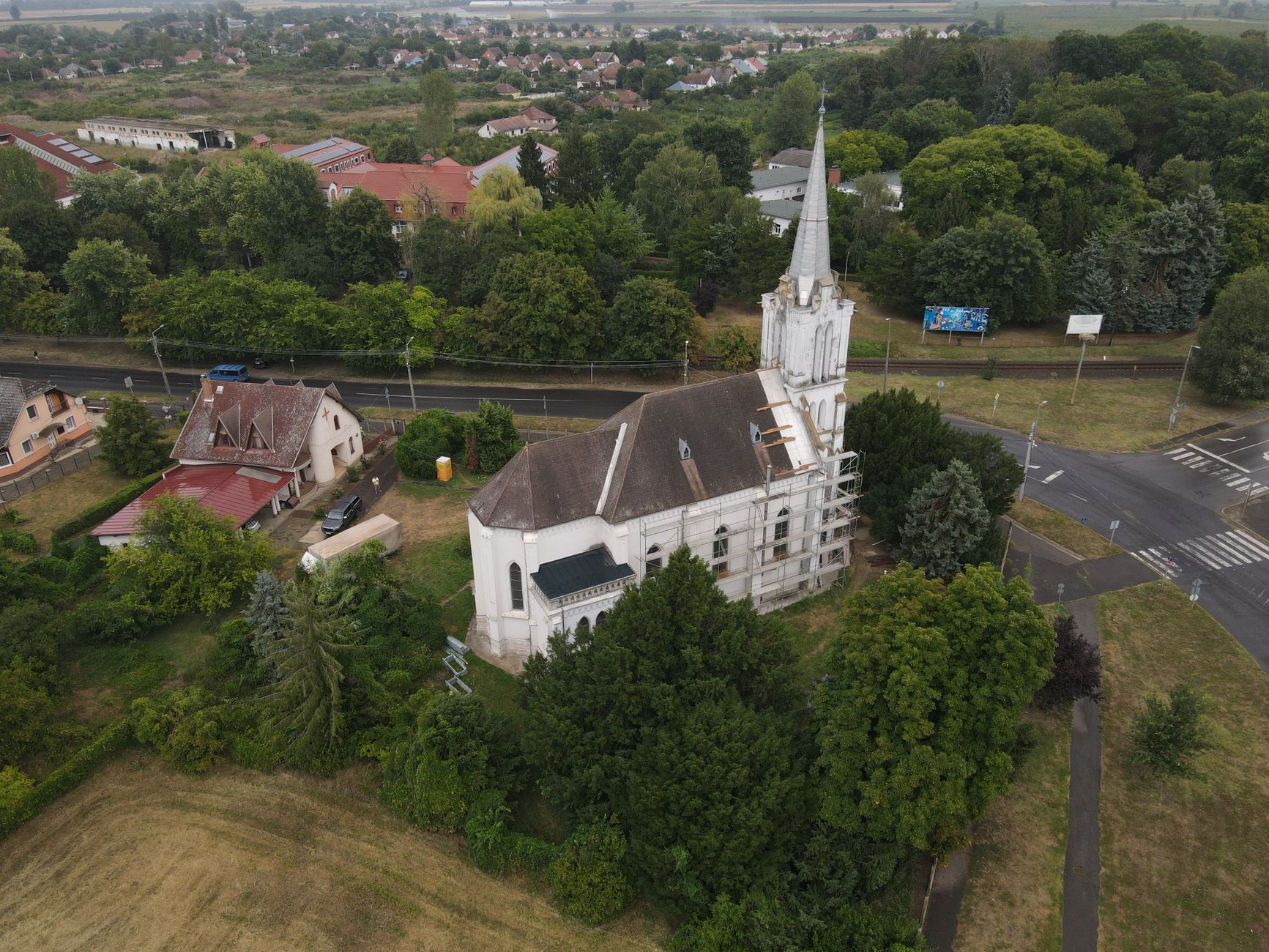
The steeple was white.
I do not mean that it was better. I mean it was white, from the roofline to the cross, as white as a bedsheet, the way it had been the October my father stood on those steps with a glass of tea. The south face, which on Wednesday morning had looked like a field of old bones, was clean and new from the base to the belfry.
There was scaffolding on it. Pipe scaffolding, on all four sides, going up in stairstep platforms from the roof ridge, tied to the building with cables, with plywood walkways laid across and orange safety netting hung along the rails. Above the scaffold, up where the spire narrowed, the bucket trucks had reached in with their booms.
The lot was full of people. I knew nearly every one of them. They were standing around in work clothes with paint on them, drinking from paper cups, and they were all looking at me.
Nobody was saying a word.
I put my good hand over my mouth. I think I made a noise. Darlene had come around the car, and she took my elbow.
On the very top platform, up under the cross, a man in white coveralls was working with his back to the ground. He had a brush in one hand. He had not seen us yet.
Then somebody in the crowd called up to him, and he stopped, and turned around.