The Fence Line Between Two Brothers
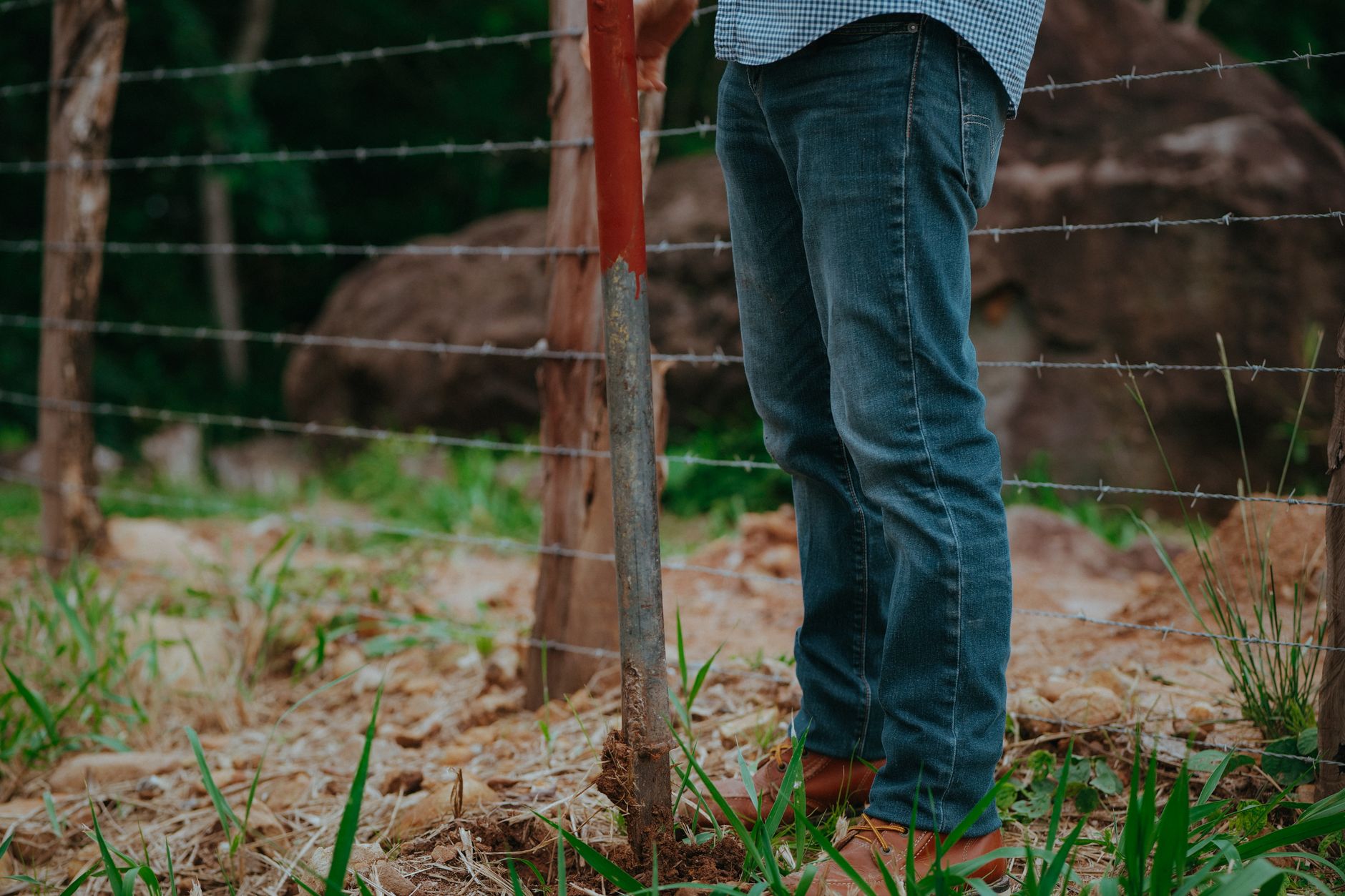
We walked the line from the creek gate east without speaking. He took the south side of the fence and I took the north, because that was how it fell, and we put orange tape on every spot Dad had listed and four he hadn’t. By ten o’clock we had counted seven places where the wire was down, not five. The posts were hedge, mostly, Osage orange that Dad had cut off the old windbreak, and hedge lasts fifty years in the ground and then goes to nothing in about a week. Every one we pulled came out in two pieces, the top half pale and sound as the day it was cut, the bottom half gray and soft as a wet cardboard box.
The words we used that day, all of them, were these. “Pliers.” “Hold it.” “Staples.” “Back.” “Okay.”
At noon I went to my truck. He went to his. We ate our sandwiches with the windows up, forty feet apart, each of us looking out the windshield at a different part of the pasture. Marilyn had packed two sandwiches in my lunch cooler. When I asked her why, she had said, “Pack the other one anyway,” and gone back to her coffee.
I ate one. I did not know what to do with the other. I put it back in the cooler.
At four o’clock we had pulled six posts and set four steel ones. When I got home, Marilyn took one look at me and put the kettle on and did not ask a single question. She is the kind who packs the second sandwich.
Names of tools
The next Saturday, I took Dad’s thermos.
It was a green Stanley, the kind with the steel cup for a lid. He took it with him on every job on this farm from 1962 until the day he died. It had been sitting on the shelf above his workbench in the machine shed, and when I took it down, the smell of the inside came up at me, old coffee and oil and something like pipe tobacco, though he had given up the pipe before I was out of grade school. I scrubbed it out and filled it with Marilyn’s coffee and told myself that was just practical.
At ten o’clock, when Curtis had gone to the back of his truck to find a new box of staples, I poured a cup, set the lid on the next fence post, and walked away to dig.
I did not look to see what he did.
When I came back around at noon, the lid was where I had left it. It was empty. It had been rinsed, I could tell, because the inside of it was clean and wet, and he had set it back on the post upside down, the way you leave a cup to dry.
I did not know what that meant. But the next time I poured, I filled it nearly to the top, and when I came back, he had moved it a foot closer to where I would be working.
I will tell you something I noticed about my brother on that second Saturday. He counted. Every time he turned the crank on the stretcher, his lips moved. He was counting the clicks. I asked him once what he was doing, and it was the longest sentence I had said to him in a decade, and it was “What are you counting?” and he looked startled, like I had caught him praying, and said, “Tension. Same on every span. Eleven clicks, then the staples.”
“Dad just did it by feel.”
“I know,” he said. “I’m not Dad.”
Then he went back to counting. Thirty-four years he spent hanging off the undersides of bridges with a clipboard, and here he was measuring a fence by the click.