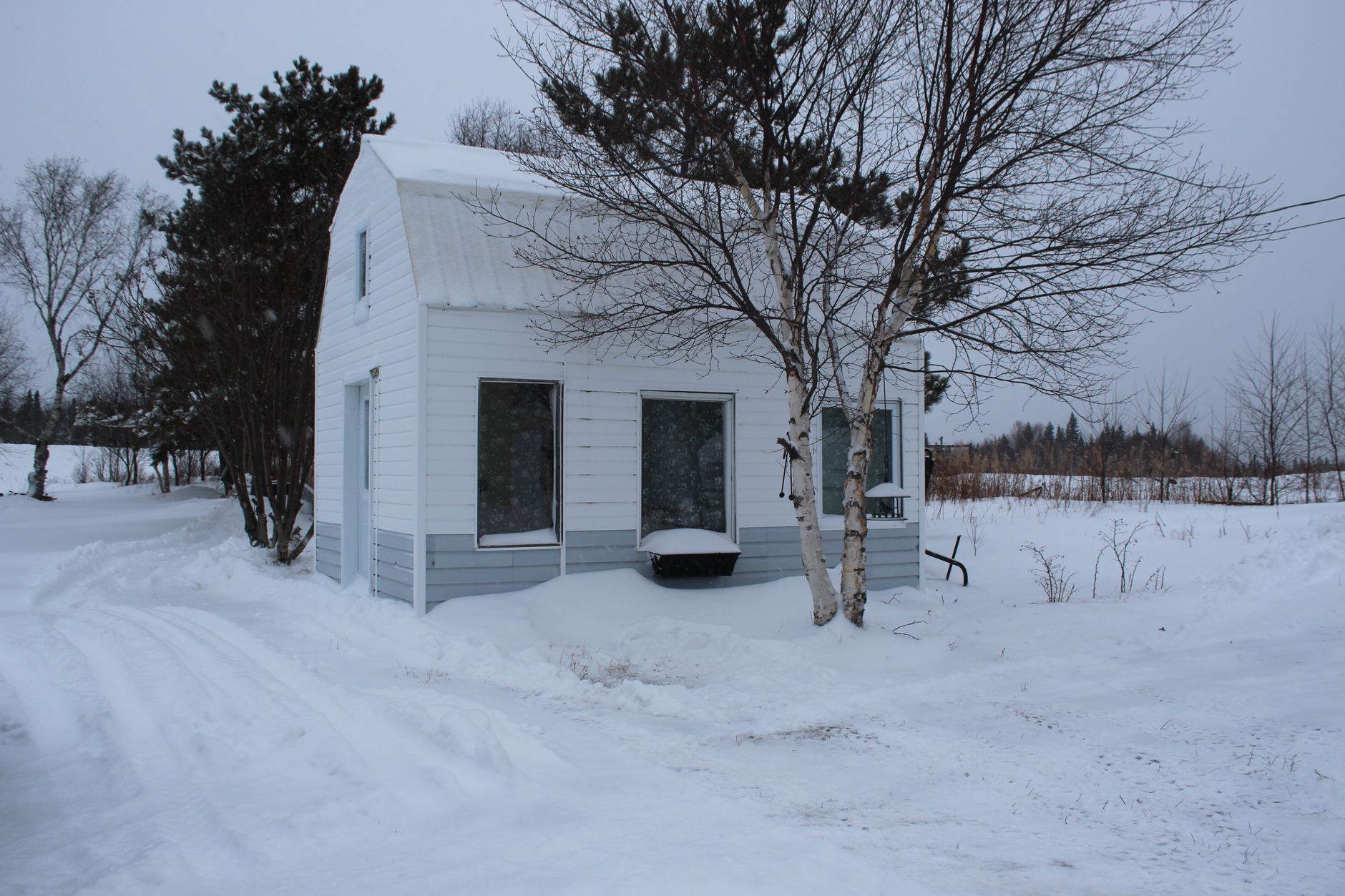
The House on Elm Street
Then she tore it in half.
It wasn’t dramatic. She didn’t throw the pieces at him. She just tore it once, neatly, the way she’d tear a page out of a notebook, and she came down two steps and held the two halves out to him.
“Thank you,” she said. “I know you meant something by it. But I’m not putting my husband’s name in a drawer to make you feel safe.”
Rod took the pieces. He looked at them in his hand. For a second I thought he was going to say something hard, because his jaw went tight the way it does when a customer walks off the lot.
“I was trying to take care of you,” he said.
“I know you were,” Hannah said. “And you said it in front of everybody like he was something I’d have to survive. You can come back to this house any time you can sit at a table with Cody and say his name like you mean it. Not before.”
That was the real consequence, and Rod knew it. Hannah is his only daughter. He had never once, in twenty-nine years, been on the wrong side of a door she was standing in.
He put the halves of the check in his overcoat pocket. He looked at the house one more time, the shutters and the porch and the frost, and I watched him take in every bit of it the way he takes in a trade-in, the roof and the windows and the foundation.
“It’s a good little house,” he said. That was all. Then he walked back to the Tahoe and drove away.
Hannah stood on the porch until the truck turned the corner. Then she came inside and shut the door and leaned on it.
“Did I do that right?” she said.
“I don’t know,” I said. “I don’t think there’s a right way.”
We didn’t hear from Rod for three weeks.
He didn’t come to church the first two Sundays. Joyce came alone and sat with her sister. On the third Sunday she found me in the fellowship hall by the coffee urn while Hannah was talking to the pastor’s wife.
“Can I talk to you a minute, Cody?” she said. “Not Hannah. You.”
We went out into the hallway by the coat racks. Joyce is a small, neat woman who taught third grade for thirty years, and she doesn’t waste words.
“Has he ever told you about the farm?” she asked.
“No, ma’am. Just that his folks lost it.”
She nodded like she’d expected that. “It was his dad’s. Walt’s. Walt’s name alone on everything, the deed, the notes, all of it. That’s how it was done then. Rod’s mother never signed a single paper in thirty years of marriage.”
She told me the rest standing by the coat racks. In the early eighties, Walt borrowed against the land to buy more ground and a new combine, when land was high and everybody was doing it. Then the interest rates went to eighteen percent, and land prices fell by half.
By the fall of 1985, the bank took it all. The house, the ground, the machinery. Rod was nineteen. He watched his mother pack forty years of her life into a rental in town, and the day they moved, she sat in the empty farmhouse kitchen and said she’d never owned so much as a single board of it.