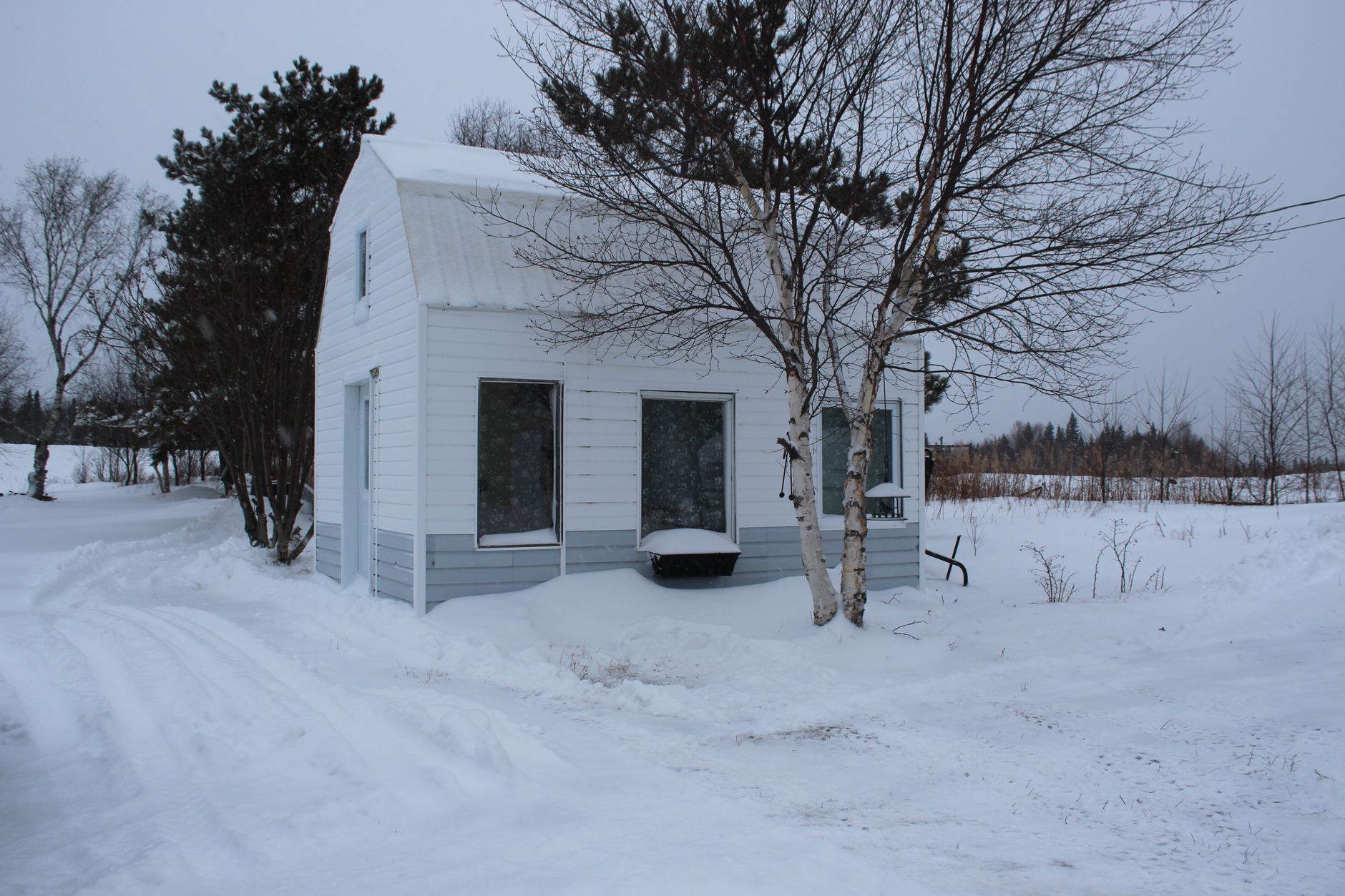
The House on Elm Street
She pried the lid off. It was packed nearly to the top with deposit slips from the credit union, one hundred and four of them, folded once each. She took the first one out and turned it over.
On the back, in my handwriting, it said: Christmas Day. Worked a turn to North Platte. Missed your mom’s ham. $412.
She took out another. Your birthday dinner at the steakhouse. You ate with your sister. $356.
Another. Easter. Called at 4 a.m. Heard you singing in the shower when I left. $298.
Another. The night you lost Mr. Peterson on your floor and called me crying and I was in a siding in Gothenburg. $318. I am sorry I wasn’t there.
She stopped reading after that one. She held it against her chest and sat down right on the kitchen floor with her back against the cabinets, and she cried the way she hadn’t let herself cry the night before, loud, with her whole body.
I sat down next to her. We stayed there on Mrs. Hall’s linoleum for a long time with the can between us. I’d thought I’d say something good when this happened. I didn’t say anything. I just held her hand.
“You wrote down every one,” she said finally.
“Grandma Ida said I needed to be able to hold it.”
“She knew?”
“She’s the only one who knew. She’s better at secrets than the Pentagon.”
Hannah laughed, wet and surprised, and wiped her face with the sleeve of the maroon sweater. Then her hand went to her back pocket, and she was quiet again. She took out the folded check and looked at it.
“Cody,” she said. “I need to call my dad.”
She called him standing on the front porch. I stayed inside the door. I could hear her through the glass.
“Daddy,” she said. “Come to 412 Elm Street. Right now. No, I’m fine. Just come.”
He got there in eleven minutes. He came in one of the demo trucks off his lot, a silver Tahoe with the dealer plate frame on the back, and he parked behind my Silverado and sat in it for a second with the engine running before he shut it off.
Then he got out and came up the front walk, slow. He saw the sign first, the sold sign on its post. Then he saw me in the doorway. Then he saw his daughter standing at the top of the porch steps in her maroon sweater with her arms crossed against the cold.
He stopped at the bottom of the steps. He was in his overcoat and his good shoes, dressed for Black Friday at the store, and the frost had already wet the toes of them.
“Hannah,” he said. “What is this?”
“This is our house,” she said. “Cody bought it. He’s been saving for two years. Both our names are on it. I’m signing on the eighteenth.”
Rod looked at me. I didn’t say anything. It wasn’t my turn.
“Two years,” Rod said.
“Two years of every holiday he worked, Daddy. Every Christmas you sat at the head of the table and asked where he was. He was out making this.”
She reached into her back pocket and took out the check. She unfolded it. She held it up so he could see it was his, with his bank’s name across the top.