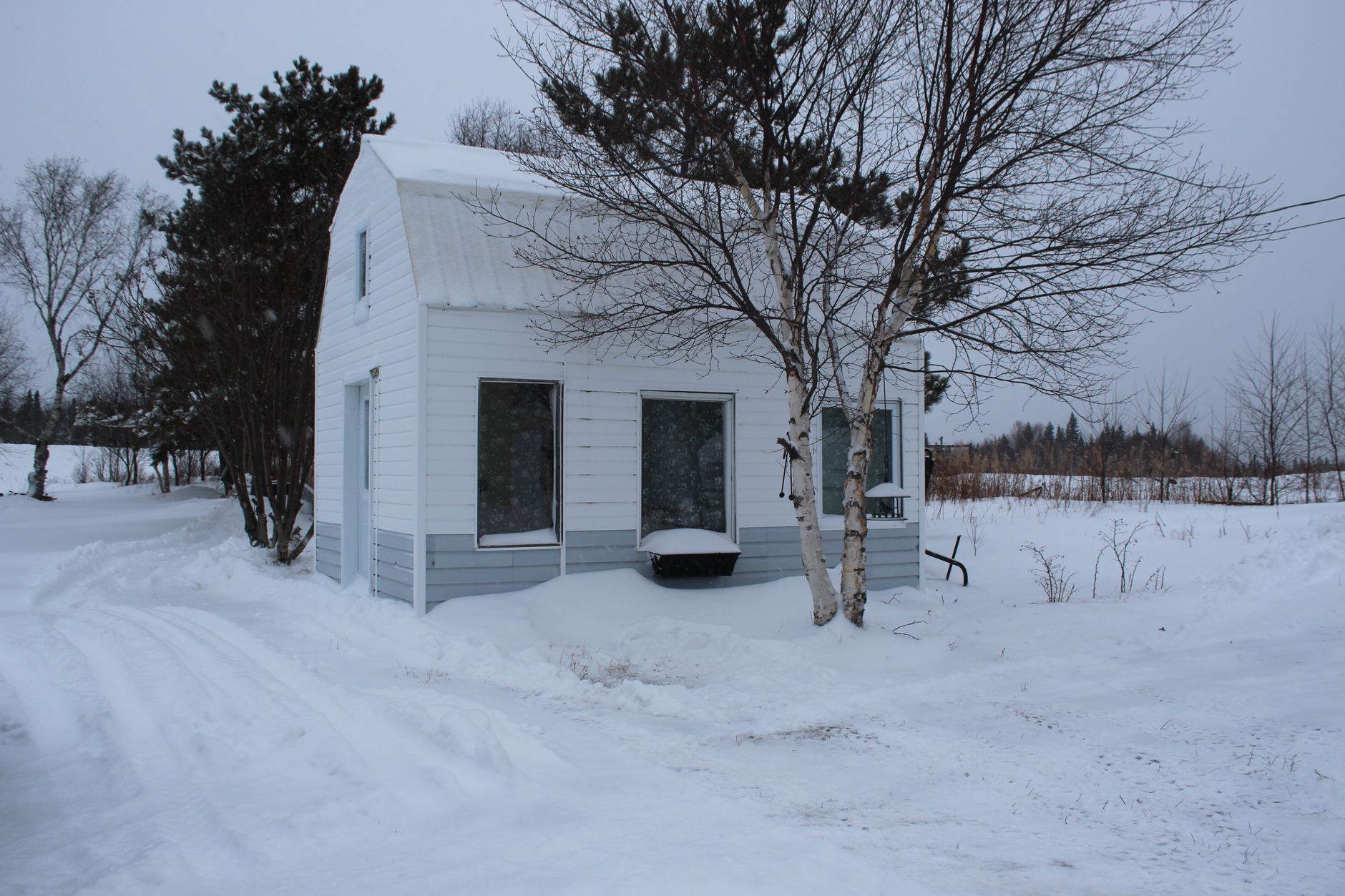
The House on Elm Street
“Cody. He said that to your face. In front of my whole family. And you just drank your coffee.”
“I know what I did.”
“Do you want me to take it?” She touched her pocket where the check was. “Is that it? You think I should take it, because he’s right?”
“No,” I said. “I don’t think he’s right. I just need you to give me till morning.”
She looked at me for a long time. Then she went to bed. I heard her crying through the wall, quiet, into the pillow so I wouldn’t hear. I sat at the kitchen table until almost one in the morning.
That’s the part I still carry, if I’m honest. I could have stopped her crying in about ten seconds that night. I didn’t, because I wanted her to see it instead of hear it. I’m still not sure I was right about that.
Here’s what Hannah didn’t know.
Two years before that Thanksgiving, in the fall, I sat in my Grandma Ida’s kitchen in her little house on Third Street and told her I wanted to buy my wife a home. Ida was eighty-three then. She was eighty-five that Thanksgiving, still driving to church, still canning tomatoes every August.
“Then you’ll need a coffee can,” she said.
She got up from the table and took a red Folgers can down from the top of her pantry. It was the same can she and my grandpa used when they saved for their first place, a two-bedroom on a gravel road in 1962. They put every spare dollar in it for three years.
“I’m not keeping cash in a coffee can, Grandma,” I said. “I’ll put it in the credit union.”
“Put the money in the credit union,” she said. “Put the slips in the can. You need to be able to hold it in your hands, Cody. A number on a phone isn’t the same thing.”
So that’s what I did. Every time I worked a holiday, every time I took an extra call on the board, every time I caught a turn I could have laid off, I took the overtime and put it in a savings account Hannah didn’t know about.
And every time I made a deposit, I took the slip the teller gave me, and on the back of it I wrote down what I’d missed to earn it. Then I drove it to Grandma Ida’s and dropped it in the can.
I’m not proud of the secret part. Hannah and I don’t keep secrets as a rule. But Hannah grew up in a two-story brick house with a basketball hoop and a three-car garage, and I knew if I told her, she would start helping, and she’d start cutting her own corners, and I didn’t want that.
She works twelve-hour shifts on the medical floor at the county hospital. She already gives enough. I wanted one thing in our life to be something I handed her, finished.
It took two years. It was $26,000. The house on Elm Street came on the market in September. A widow named Mrs. Doris Hall was moving into a care home in Kearney to be closer to her daughter, and she wanted it sold to a young couple who would keep up her lilacs.