The Honor Stand The Whole Road Kept Full
The morning I went down to fold the table away
I was sure the stand was finished.
My mother had run it for forty years, and that June she could not get out of the bed by the window, so the stand belonged to me now, and I did not want it.
I am not proud to write that. But it is true, and this is a true story, so I will tell it the way it happened.
Her name is Opal. She is eighty-one. I am Nora, her only daughter, and I came home to Linn County that spring to nurse her through what the doctors would not promise she would come through.
The stand sits at the end of our gravel lane, where the county road bends toward town. A folding table under a little tin roof my father nailed up in 1985, the summer before he died.
There is a coffee can on the table with a slot cut in the plastic lid, and a sign my mother lettered herself in house paint on a scrap of barn board.
Take what you need. Pay what it is worth. The Lord watches the can, not me.
That first morning, I walked down the lane in my robe to fold the whole thing away for good. I had a speech ready for my mother about how we could not run a vegetable stand with her flat on her back and me not knowing a bush bean from a pole bean.
I came around the lilac at the bend, and I stopped.
The table was full.
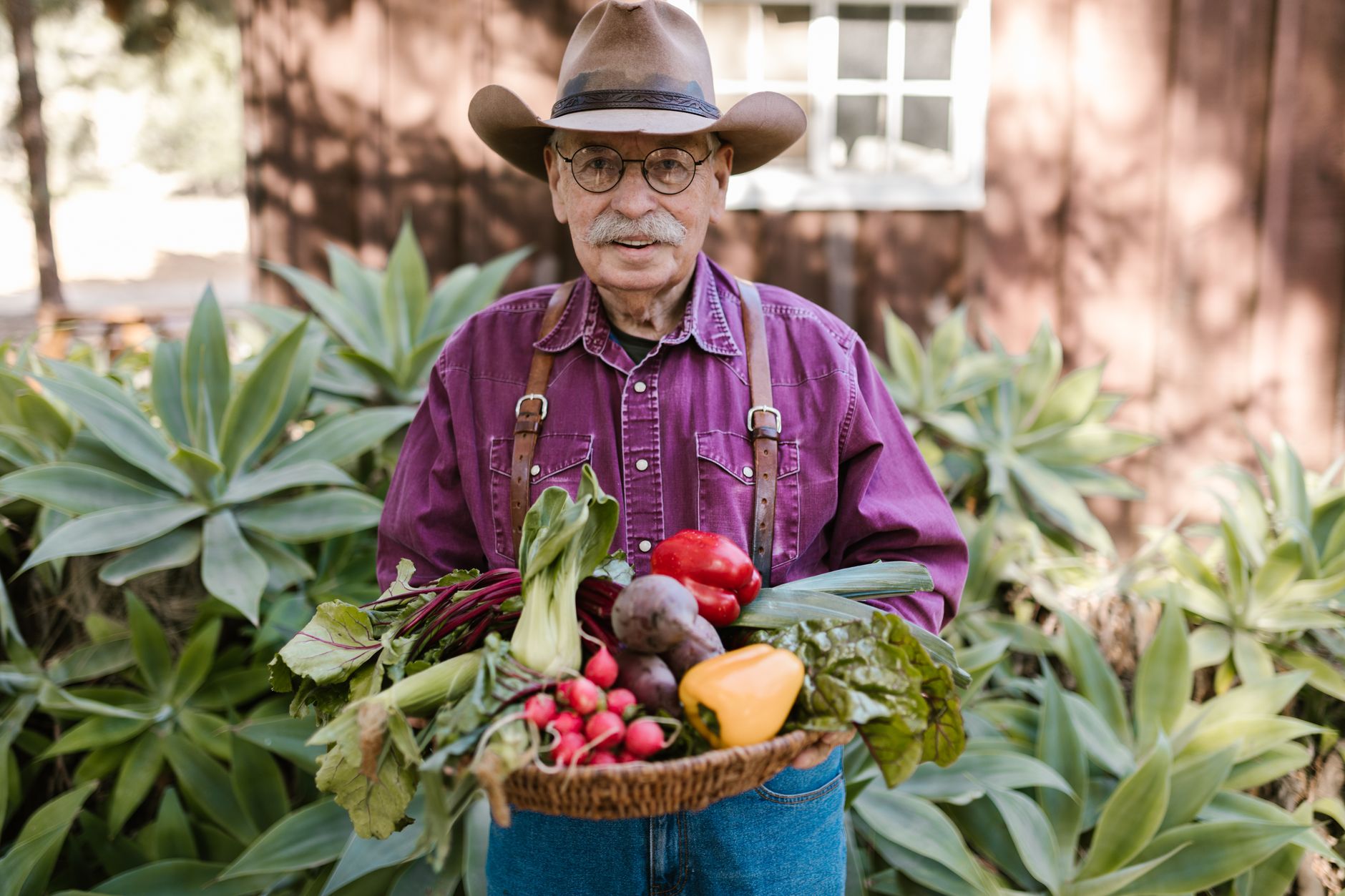
Sweet corn, still wet with dew, stacked in a pyramid the way she liked it. Tomatoes sorted by size. A row of green beans in brown paper sacks. A jar of somebody’s bread-and-butter pickles with a ribbon on the lid.
I had put nothing out. The garden behind our house was a tangle of weeds because neither of us had touched it in a month.
I stood there in my robe and I lifted the coffee can, and it was heavy. Heavier than I had ever felt it in my life.