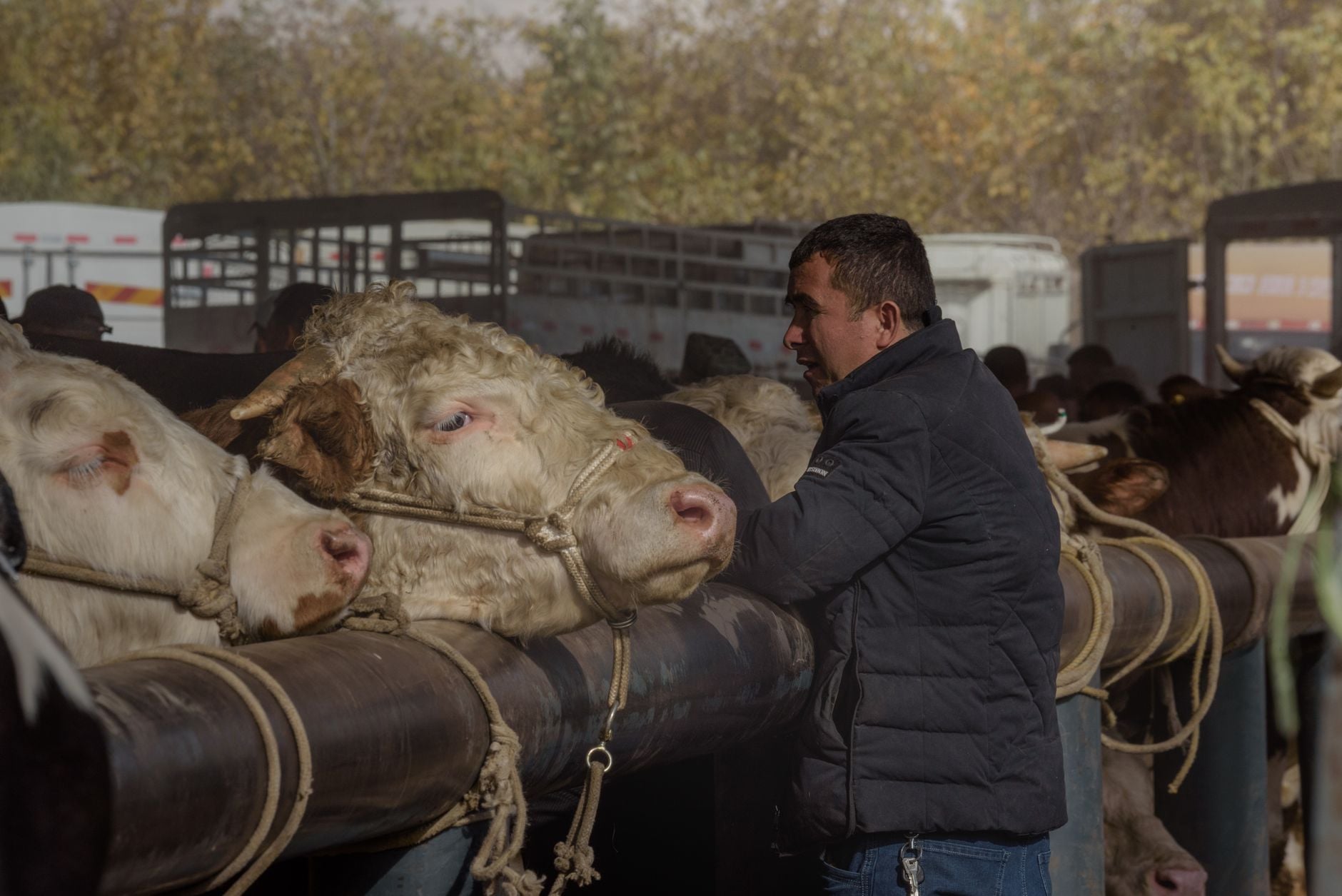
The Calves That Topped the Fall Sale
I laughed at that, and Ella laughed because I laughed, and she got cherry filling on her sign, which she had brought into the cafe and leaned against the window.
Then the bell on the cafe door rang.
Roger came in. He went to the counter and got a cup of coffee in a white mug and stood there with it for a second. Then he turned around.
The room got quiet. Not all the way quiet. Just the way a room does when everybody in it is pretending not to listen and listening as hard as they can.
Roger has a table in that cafe. Everybody knows it. It’s the one in the corner by the pie case, where he and his neighbors have eaten on sale day since before I was born. Two of those neighbors were sitting at it right then, with a chair saved.
He walked straight past it.
He came across the room and stopped at our table. He looked down at Ella’s sign with the cherry filling on it. Then he pulled out the chair across from me and sat down and set his coffee on the table.
“Tyler,” he said.
“Roger.”
He turned his mug around once on the table, by the handle. I’d seen him do that at Sunday dinners when he was thinking.
“What’d you feed them?” he said.
He didn’t say it quietly. He said it in his regular voice, the one he uses at the head table, the one everybody in the room could hear.
I told him.
I told him about the creep feed in August and the pellets and the bunks out of belting. I told him about the fence-line weaning and the hay and the grain, and the two rounds of shots and the dates, and the bull. I told him about Harold at the co-op telling me it takes five years for the buyers to remember.
Roger listened to every bit of it. He asked me two questions about the ration. He asked me what I’d paid for the bull and nodded when I told him.
Then he said, “Harold’s right. Takes about five years.”
He took a drink of his coffee. The men at the other tables had gone back to their sandwiches, mostly, or were pretending to.
“My dad ran 200 cows on the place my granddad homesteaded,” he said, still in that same regular voice. “Sold his calves at this barn. In 1985 the bank called his note. Interest was eighteen percent. Calves weren’t worth what they cost to raise.”
I knew the farm crisis was bad. Everybody does. I didn’t know that about Roger’s family. Kelsey’s hand found my knee under the table. She hadn’t known either. I could tell.
“I was 22,” Roger said. “I watched them sell his cows in that ring right there. I sat about where I sat today. Dwight’s dad was calling it.” He looked out the window at the pens. “Took us eleven years to buy our way back onto part of that ground.”
Nobody at our table said anything.
“When Kelsey was little,” Roger said, “I told her mother she would never marry a man who’d gamble the house on cattle. I meant it. I said it every year.”
He looked at Kelsey then, for the first time since he sat down. “And then you went and married a mechanic with a good steady job, and I thought, well, thank God. And then he told my head table he wanted cows.”