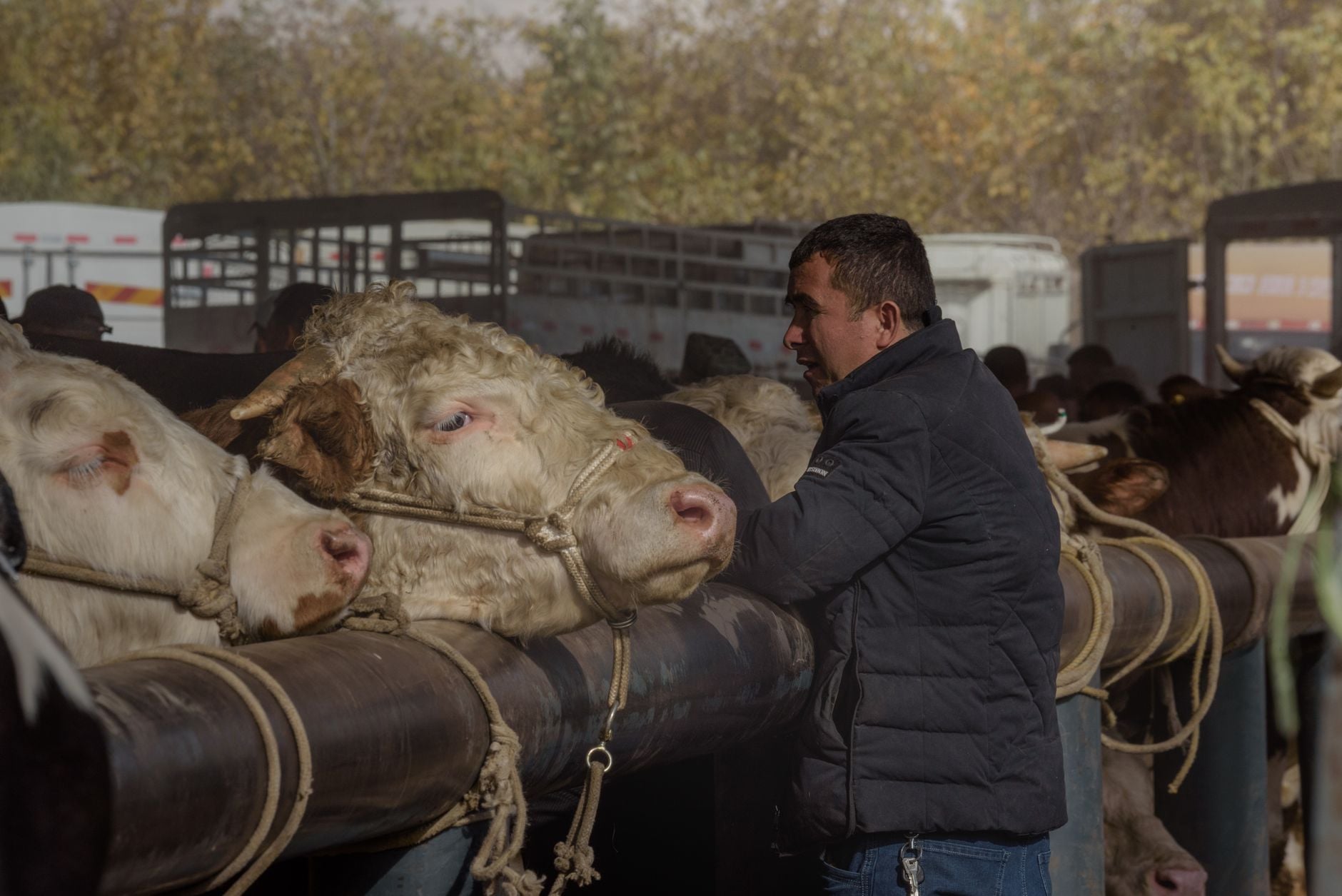
The Calves That Topped the Fall Sale
“I know. I’m still sorry.” She looked out the window at the dark. “He’s been like that since I was little. Nobody’s ever good enough to be near his cows. Not even me.”
That surprised me. Kelsey grew up on that ranch. She could rope better than either of her cousins.
“He never let me run any of my own,” she said. “Not one heifer. My cousins got heifers for 4-H. I got told to study hard and marry somebody with a pension.”
“Well,” I said. “You married a mechanic.”
She laughed, which was what I wanted. Then she was quiet for a long time, and then she said, “Are you really going to do it? Run cows?”
I hadn’t decided until she asked me. I decided right there, at the stop sign on Main Street, with the cans still tied on.
“Yeah,” I said. “I think I am.”
Roger Fischer runs about 300 cows on ground about twenty miles northwest of town, out where the Sandhills start to roll. He’s a good cattleman. I want to say that up front, because nothing in this story is about him being bad at what he does.
He calves in March. He sells his steers at the big fall sale every October and keeps back his best heifers. His calves are black, good-framed, and the buyers know his name. He’s been selling at that same sale barn for forty years.
And he had decided, for reasons I didn’t understand for five years, that I had no business on the same side of that sale ring as him.
The first thing I learned about cattle is that you can’t start without grass, and you can’t get grass in Nebraska unless somebody trusts you.
Ranchers don’t rent ground to strangers. They rent it to their nephews and their neighbors and the man their father rented to. I asked around all that winter after the wedding and got told no, politely, about eleven times.
Then one of the older guys who came into the shop, a retired rancher named Walt who brought in his old Ford every few months for things it didn’t need, told me about Marge Olson.
Marge was a widow about fifteen miles north of town. Her husband had died two years before, and she’d been renting their 600 acres of pasture to a big outfit that ran yearlings on it and didn’t fix fence.
“She’s sick of them,” Walt said, leaning on the counter. “Go see her. Take her a pie. Don’t talk too much.”
So I bought a cherry pie at the bakery and drove out on a Sunday afternoon in February, and sat in Marge Olson’s kitchen for two hours while she told me about her husband, Earl, and her grandkids in Omaha, and how the yearling outfit had left a gate open and she’d found steers in her garden.
Near the end of the second hour she said, “And what do you do, Tyler?”
“I’m a diesel mechanic.”
She looked at me over her coffee. “Can you fix a windmill?”
“I can learn,” I said. “And I can fix your pickup. I heard it’s been making a noise.”
She rented me the pasture that afternoon. Ten-year lease on a handshake and a sheet of notebook paper, at a fair rate, and I was out there that next Saturday replacing the leathers in her windmill pump with Walt standing at the bottom telling me what I was doing wrong.
The cows were harder.