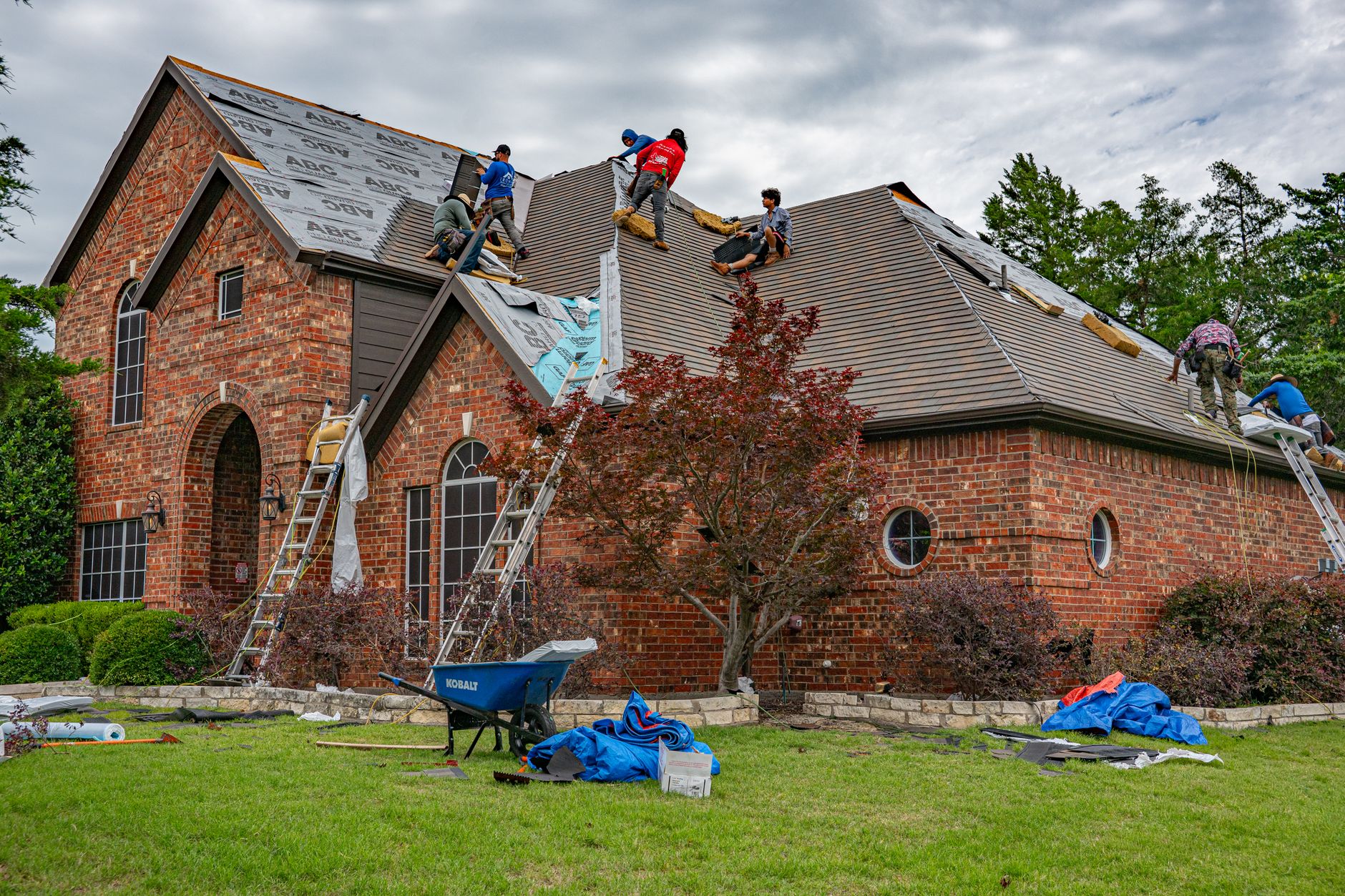
The Roof We Closed in One Day
I had forgotten. Mel wrote it that Saturday afternoon on the last rafter before we laid the sheathing, grinning, saying every roof ought to say who built it even if nobody ever reads it. I wrote my initials beside his because he made me. Twenty-nine years under a sheet of strand board, and the rain had found it.
I took a photograph. I set the sheet back down over it and the tarp over that, and I called my sister that evening and sent her the picture.
She did not say anything for long enough that I checked the phone.
“Is it still there?” she said.
“Under the sheet. I put it back.”
“Don’t let anybody pry that up. Not the crew, nobody. I want to be there when it comes off.”
“It’s not going to go anywhere.”
“Saturday,” she said. “Early. Before they come.”
By Wednesday evening Pastor Barry Mueller had called to ask whether the Methodist women could bring dinner on Saturday, because somebody at the lumber yard counter had said something, and word goes through a town like Corley the way smoke does. I told him I did not know how many we would be. He said, “They’ll feed whoever shows up. That’s what they do.”
I made the other calls from my kitchen. Vera Gerber cried on the phone, briefly and angrily, and then asked what time and whether she should bring chairs. Monte Pelzer said he had assumed he would never see the money, and that he was too old to climb anything but he could sweep. Josie Nagel said, “I can hold a ladder. I can carry things. I just want to be there.” The cousin in Vinton said Floyd had already called him.
Floyd called back Thursday night. “I got eight men,” he said. “Four are retired and I’m not asking them to go up. Three of the young ones used to work for me, and my grandson Duane is coming. He’s twenty-four and he can lay fifteen squares in a day without breathing hard. And Dirk Ostrow’s got a coil nailer and a compressor.”
“Floyd, I don’t know how to thank you.”
“You don’t. I’m tired of reading about these fellas, that’s all. A man in this trade ought to answer his phone.” He cleared his throat. “Bring a legal pad. I’ll want that list.”
I told him I had it in my shirt pocket.
“Then bring that,” he said.
The forecast said partly cloudy, high of 43. It would do.
Saturday, October 25, began for me at five-thirty, with my truck in my sister’s driveway and a gray edge to the eastern sky.
Rosalind was already on the porch in Mel’s flannel, with a carpenter’s pencil in her hand. I do not know where she got it. Mel had a hundred of them in his shop.
“Show me,” she said.
I footed the ladder at the back corner and pulled the tarp off the addition. It was cold enough that the plastic crackled. The sheet I had set back over the rafter was where I had left it, with a cinder block on top. I took the block off and tipped the sheet up against the eave, and there it was, plain in the first light.
She did not go onto the roof. I would not have let her, and she did not ask. She went up six rungs and stopped with her chest against the ladder and her arm laid along the top of the rafter, where she could reach, and she read it.
Keep Roz dry.