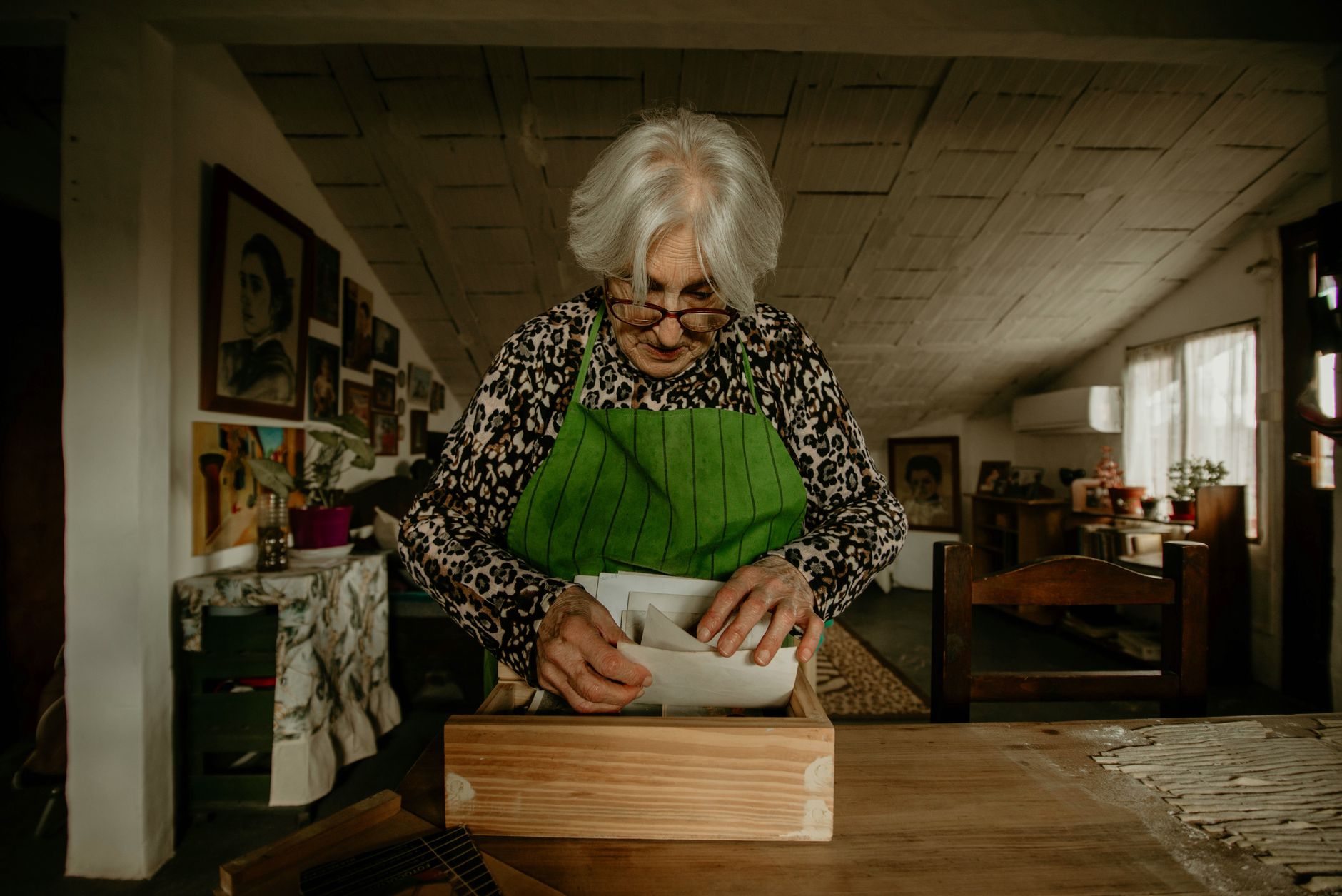
The Recipe Box That Came Back
Thick board, thin blade. A quick, even rhythm, tock, tock, tock, the knife riding the edge of her left forefinger and never once touching it. The same sound that came up the stairs on Sunday mornings, from the other side of a childhood. I had not heard it in three years. I had not known how badly I’d missed it until my sister did it with my mother’s hands.
I turned to the stove so she wouldn’t see my face. I put my hands on the pot of broth and stirred it, once, though it didn’t need stirring.
The knife stopped.
“I know,” Jodi said behind me. “I heard it too.”
She did not come over. She let me stand there. Then she started again, and the sound went on, and we made noodles for the rest of the morning without saying a thing that mattered, which is how the best conversations in our family have always gone.
At noon we ate at the kitchen table, the two of us, with the box open between our plates. Dean ate his in the garage with the door cracked. I think he was giving us room.
Jodi said grace. She said it the way our mother always had, with her eyes shut tight and her hands out. Come, Lord Jesus, be our guest, and let these gifts to us be blessed. Then she stopped. She said, her eyes still closed, “And thank You for that man on Mill Street, whoever he is. Amen.”
“Amen,” I said.
The noodles were not as good as Mom’s. They were too thick on one end and a little salty. They were also the best thing I have eaten in my life.
We took a jar of them to Mill Street that afternoon, in the cooler, still warm in broth. Number 412 was a small white house with an iron railing and a porch light on at three in the afternoon, which made me laugh and then made me want to cry again.
Calvin answered in his sock feet. He had been napping, I think. He stood in the doorway with his reading glasses pushed up on his forehead and looked at the two of us, side by side on his steps, and I watched his face understand.
He didn’t say anything. He took off the glasses. He folded them and put them in his shirt pocket and buttoned the pocket.
“Jodi,” I said. “This is Calvin Stoddard.”
“Mr. Stoddard,” my sister said. She held out the jar with both hands. “It’s noodles. We made them ourselves. They’re a little thick.”
“Ma’am, they’re perfect.”
“You haven’t tasted them.”
“I don’t need to,” he said.
He wouldn’t come in to the kitchen, being a porch man. We sat on the steps. He did not ask what we’d said to each other or how it had gone. He asked, instead, whether the hook on the box had stuck, and when Jodi said it had, he nodded and said, “That’s the original brass. You can oil it, but I wouldn’t.”
We stayed till dark. He told us about Floyd, mostly, and a little about Clarice, who died four years ago in the spring of a long illness he described in about six words. Floyd and the baler had been the whole of the quarrel. Their father had bought the baler used in 1971. After the old man died, each brother believed the other had been left the better half of the farm, and Floyd said something at the funeral lunch and Calvin said something back. And then it was nineteen years.