The Recipe Box That Came Back
Neither of us said a word for a while. Dean, who is not stupid, found something to do in the garage.
When we finally stepped back, she looked at the box on the kitchen table through the screen door.
“May I?” she said.
“It’s yours as much as mine. It’s more yours. You asked for it.”
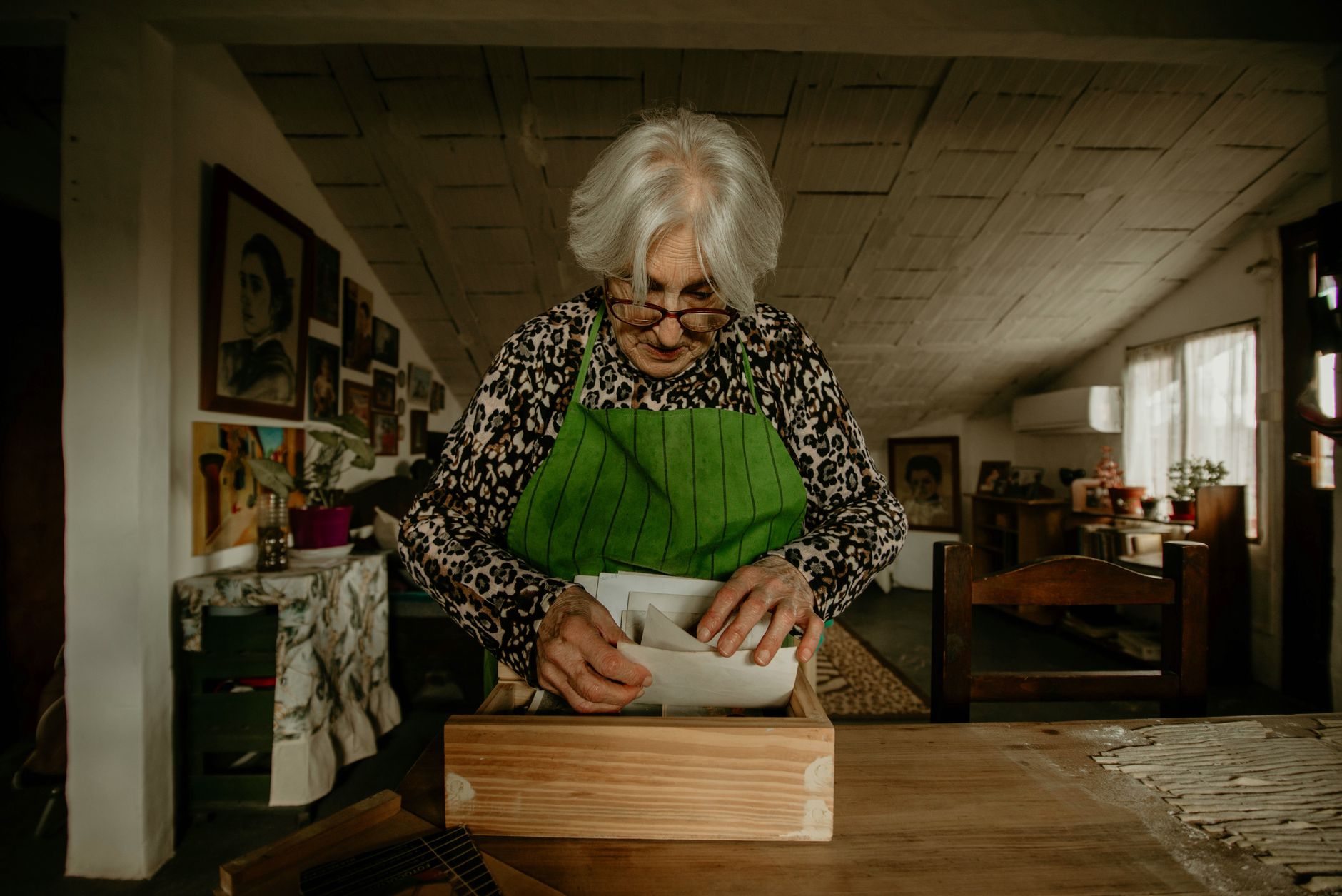
She went to the table the way you go to the front of a church. She didn’t open it right away. She laid her hand flat on the lid, over the burn ring, and held it there.
Then she undid the brass hook, and it stuck for her too, and she said, “Oh, Dad,” so softly I almost missed it.
I showed her Calvin’s card. She read it standing, at the counter, front and back, and then read the back again.
“Where does he live?” she said.
“Mill Street.”
“We should take him something.”
“We should take him noodles,” I said.
I’ll tell you how it went, and I will not make it prettier than it was.
We were terrible at first. We bumped into each other at the counter. I kept reaching for the flour sack, and she kept reaching for it too. We said “sorry” so many times Jodi finally set down the bowl and said, “We cannot say sorry through the entire dinner. Let’s agree we are sorry and cook.”
We set the card against the sugar bowl, propped like a picture. The mound of flour. The well. Four eggs. A pinch of salt. I did the water, a little at a time, in the old way, with my hand like a spoon. Jodi worked the dough on the board, and I watched her heel of the hand come down and push and fold, and I thought: that is exactly how Mom did it. Not similar. Exactly.
“It’s stiff,” Jodi said.
“It’s supposed to be. Don’t add water.”
“Mom added water.”
“Mom added a lot of things. She never wrote them down.” I smiled. “It rests.”
We let it rest under a damp towel, standing in the kitchen with nothing to do with our hands. In that quiet, I told her about the Christmas table at the Care Center, and how I’d sat at the far end and not dared look down the length of it. And Jodi said she hadn’t dared either, and then confessed that she’d looked, once, and our mother had been looking at her, and had winked.
“She winked?”
“She knew exactly what she was doing.”
“She did not.”
“She knew,” Jodi said. “She just wasn’t going to tell us what.”
When the dough was ready, I rolled it thin on the floured board, until the grain of the oak showed through it the way a hymnal does through a page, and I laid it out to dry on one of Mom’s old dish towels on the kitchen table. We stood over it for twenty minutes, waiting for it to leather over, and drinking coffee out of the cups with the roosters.
Then Jodi picked up the good knife, the one with the black handle and a nick in the blade that Mom always blamed on my father, and she began to cut.
I have heard that sound my whole life.