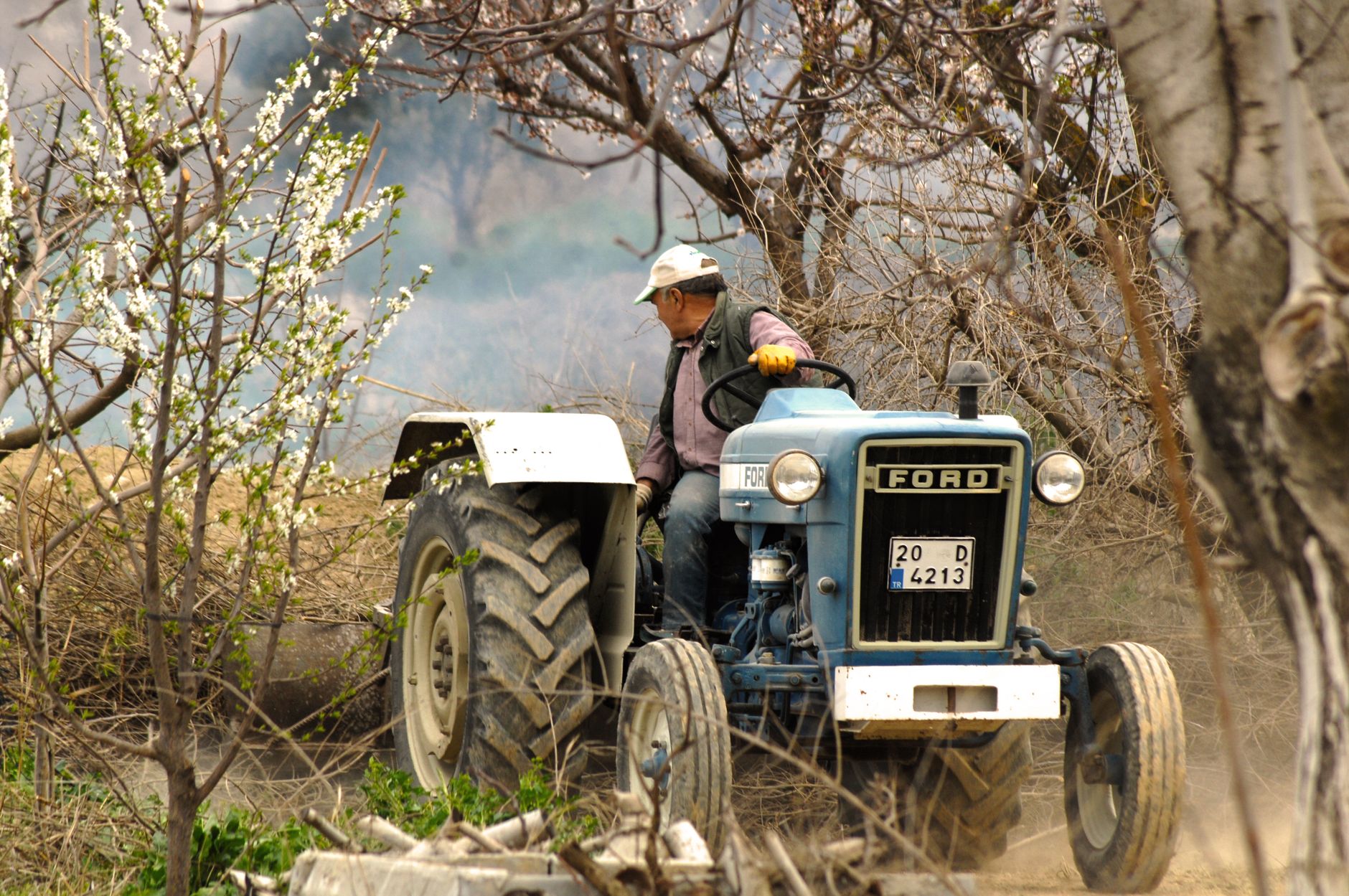
The Little Ford That Pulled the Excavator Out
Then he said, “My dad had one of those.”
I turned and looked at him. In nineteen years he’d never once talked to me about his father.
I knew the man had died when Brent was in his twenties, and I knew they’d lived in town, and that was all I knew.
“We had a farm up by Parker,” Brent said. “Three hundred and twenty acres. My dad lost it in 1985. I was four years old.”
He was quiet for a while. The rain was picking up again, just a little, ticking on our caps.
“I don’t remember much about the farm,” he said. “I remember the auction. I remember all the cars parked along the road. And I remember a little gray Ford going up on a trailer, and my dad standing in the yard watching it go, and he didn’t say anything. He didn’t say one word.”
I didn’t say anything either. Sometimes there isn’t anything worth saying.
“After that we lived in town, and he worked at the elevator, and he never farmed again,” Brent said. “I swore when I was a kid I’d never be the guy standing in the yard watching his stuff go up on a trailer. I’d have the biggest machine on the job. I’d be the one with the iron.”
He looked over at the excavator sitting up on the field road, mud all over it, safe.
“And every time I see that tractor of yours, Harold,” he said, “it’s like I’m four years old in that yard.”
“So you called it a lawn ornament,” I said.
“So I called it a lawn ornament.” He let out a breath that was almost a laugh. “In front of my whole crew. And then it pulled my machine out of a creek in front of my whole crew.”
“Your machine pulled itself out,” I said. “I keep telling you.”
“Yeah,” he said. “You do keep telling me that.”
We stood there a while longer. Then I told him what I’d been thinking since he started talking.
“Your dad didn’t fail, Brent,” I said. “Nineteen eighty five took good men all over this state. I sat in a church basement with a lot of them. Your dad stood in that yard and watched it go and didn’t say a word, and he went to work at the elevator the next morning. That isn’t a man who failed. That’s a man who carried it.”
He didn’t answer. He put his hand on my shoulder, just for a second, and then he took it off and went to help his crew load up.
Jenny drove out from Yankton after her shift, still in her scrubs, because one of the young guys had texted his girlfriend, and his girlfriend worked with Jenny.
That’s how news travels in a county our size. It doesn’t need a newspaper.
She came into my kitchen at eight o’clock with her coat still on and found her husband and her father and her son at the table eating fried egg sandwiches, with the feed store notepad open between the plates and Brent drawing a dead-man on the back of it.