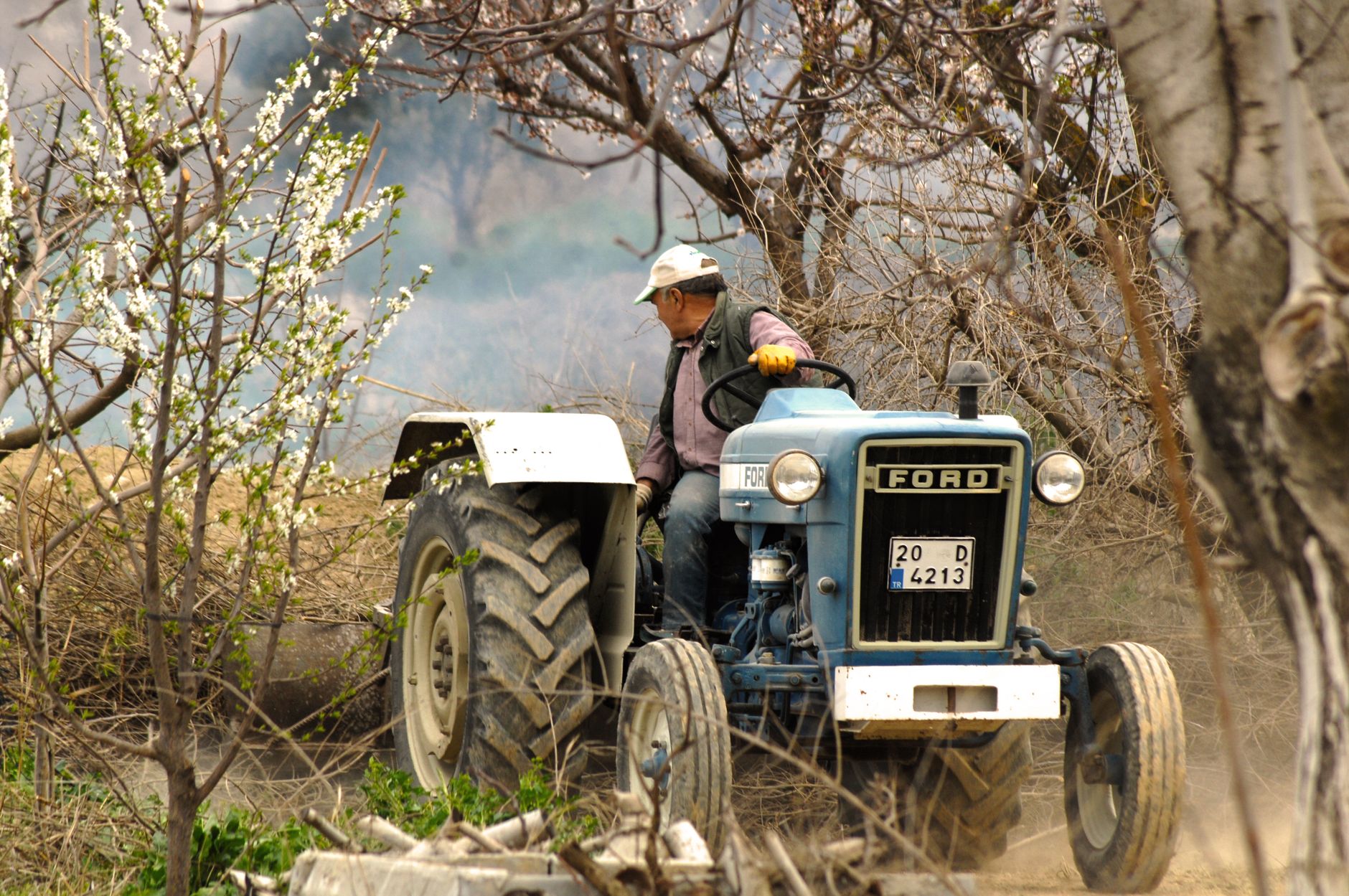
The Little Ford That Pulled the Excavator Out
The first thing we needed was an anchor. There’s a big cottonwood on the high ground, but it was off at the wrong angle, and I didn’t want to pull sideways on the machine and roll it.
So I had the crew dig a dead-man. That’s an old word for an anchor you bury in the ground.
We picked a spot on firm ground about sixty feet up the slope from the excavator, straight in line with where the machine needed to come out.
The two young guys dug a trench about eight feet long and four feet deep with spades, across the line of pull, and then a narrow slot coming out of it toward the creek.
They dug fast, too. I don’t think they’d ever dug a hole by hand that their boss was waiting on.
I had an old creosote railroad tie on the place that I’d been meaning to make into something for twenty years.
We wrapped the cable around the middle of it twice, laid it in the trench, and the boys shoveled the dirt back in and stomped it down.
“How much will that hold?” Brent asked.
“More than the 8N can pull,” I said. “That’s all it has to do.”
Then I rigged it. I hooked the end of the cable to the dead-man.
I ran the cable down the slope to the excavator, and Shane shackled one snatch block to the tow eye on the track frame, the one built into it for exactly this.
I ran the cable through that block and back up the hill, so now there were two lines between the machine and the top of the bank.
Then I hooked the logging chain to the end and laid it out toward the 8N.
That’s a two to one. It’s the oldest trick there is. For every foot the excavator moved, the tractor had to travel two, but every pound the tractor pulled showed up as two pounds on the machine.
My father taught me that at about Cole’s age with a block on a barn beam and a sack of feed.
Cole had been watching all of it without saying anything. He was standing a little too close to the line, so I walked over and moved him with my hand on his shoulder.
“Cole, you see where the cable makes a bend around that block?” I said. “You never stand inside that bend. Not ever. If anything breaks, everything inside the angle gets hit.”
He nodded. He looked at the block, and then at me, very serious.
“And if that cable ever goes, it comes back like a whip,” I said. I took my old canvas coat off the wagon and hung it over the middle of the cable, so if it broke the weight of the coat would drag it down. “That’s what the coat’s for.”
“Okay,” he said.
“You’re my eyes,” I said. “You stand off to the side, out where you can see Shane and see me. Fist in the air means stop. Wave means come ahead. Anything looks wrong, you stop me. You don’t ask first.”