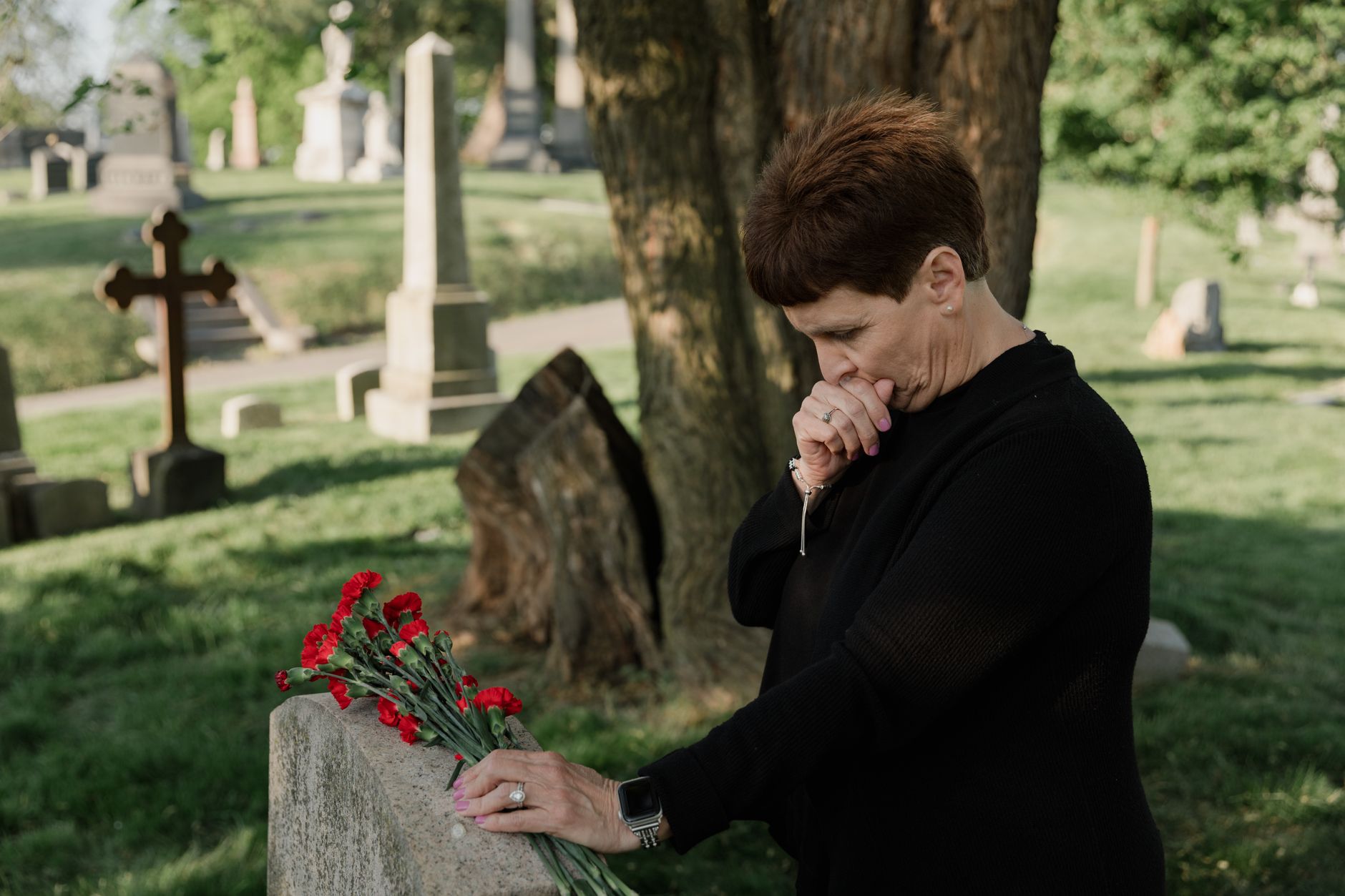
The Grave Beside My Husband
“Iris,” he said.
“Chester.”
“I’m sorry I wasn’t home.”
He turned to Brent.
“Son,” he said. “Did anybody ever show you the lot book?”
Brent said, “The what?”
“The lot book.”
“I thought that was the old burial register. They told me everything was scanned into the system when the software came in.”
“Everything with a deed was,” Chester said. “Anything that was paid up and signed. That’s all the board wanted put in.” He shifted on the cane. “Iris never got a deed. She hadn’t finished paying. Neither did a few others.”
Elwood Boyce did not look at him. He looked at the ground, and I saw something go across his face that I had not seen on it at Doris’s funeral.
“I told you in 2019, Elwood,” Chester said. It was not an accusation. He said it the way you’d mention the weather last week. “When that woman came out with the laptop. I said, the ones on payments aren’t in there. You said we’d get to it.”
“I did say that,” Elwood said.
“Well. Nobody got to it.”
“Where is the book?” Elwood said.
“Where it’s always been,” Chester said. “The closet in the back room. Behind the water heater. Anybody could have opened the door. I figured somebody had shown him.”
He looked at Brent when he said it, and Brent shook his head slowly. “I have the key. I never went in it. I thought it was the mower manuals.”
“It is mostly the mower manuals,” Chester said.
We went into the office, the six of us, Chester on Roscoe’s arm and Elwood behind, Cora and Mark and me, and Brent holding the door because he did not know what else to do with his hands. The Ahrens stayed by the car. Dottie had a hand on Ralph’s sleeve.
The back room smelled of paper and old coffee and the fertilizer somebody stored in the corner. The mowing schedule hung on a nail. There was a steel closet behind the water heater, painted the same green as the filing cabinets in a county courthouse, and Brent opened it with a key off his ring. On the bottom shelf, under four years of mower manuals and a case of trash bags, lay a ledger bound in dark cloth with a leather spine, the size of a church hymnal, the corners worn to the card.
Chester could not bend to it. Mark knelt and lifted it out and laid it on the steel desk, and Chester opened it with a thumb as thick as a hammer handle. The pages were ruled in columns, in pencil, in that square hand. He turned past the front, past Lot 3, past Lot 9, to the middle.
Lot 14.
Space 1, the Ruud name. Space 2, Tolbert, Calvin, with a date eleven years back. Space 3. Tolbert, Iris. $1,320. $120 a year, on account. And in the margin beside it, ten small pencil ticks in a row, one for every October, and an eleventh waiting, a tick not yet drawn.
Under the last tick, small and square: Held for her at the grave. Do not sell. C.P.