The Grave Beside My Husband
“I’m here, Mom.”
“I know you are.”
The grass was white with frost, and the oaks stood over the old section with their tops gone gold. The sun was low and clear. From the gate you could see all the way down the gravel lane to Lot 14, the Ruud family stone on one side, and Cal’s plain gray granite in the middle, and then, to the right of Cal, a square of mown grass that was nothing at all, and was everything.
Somebody had already staked it, four wooden stakes with orange flagging and a string between them.
Colin’s backhoe sat idling by the gate. He was a young man with a thermos, and he lifted a hand to me and then looked away, embarrassed.
Elwood Boyce stood at the edge of the lot in a barn coat and a feed cap with the earflaps tied up. Cora Ness stood next to him with her purse held in front of her in both hands. The Ahrens family pulled in behind the backhoe in a gray Mercury, Ralph in a dark suit coat over his work shirt and Dottie in her church shoes, and they stood by their car and did not come any closer, which I understood.
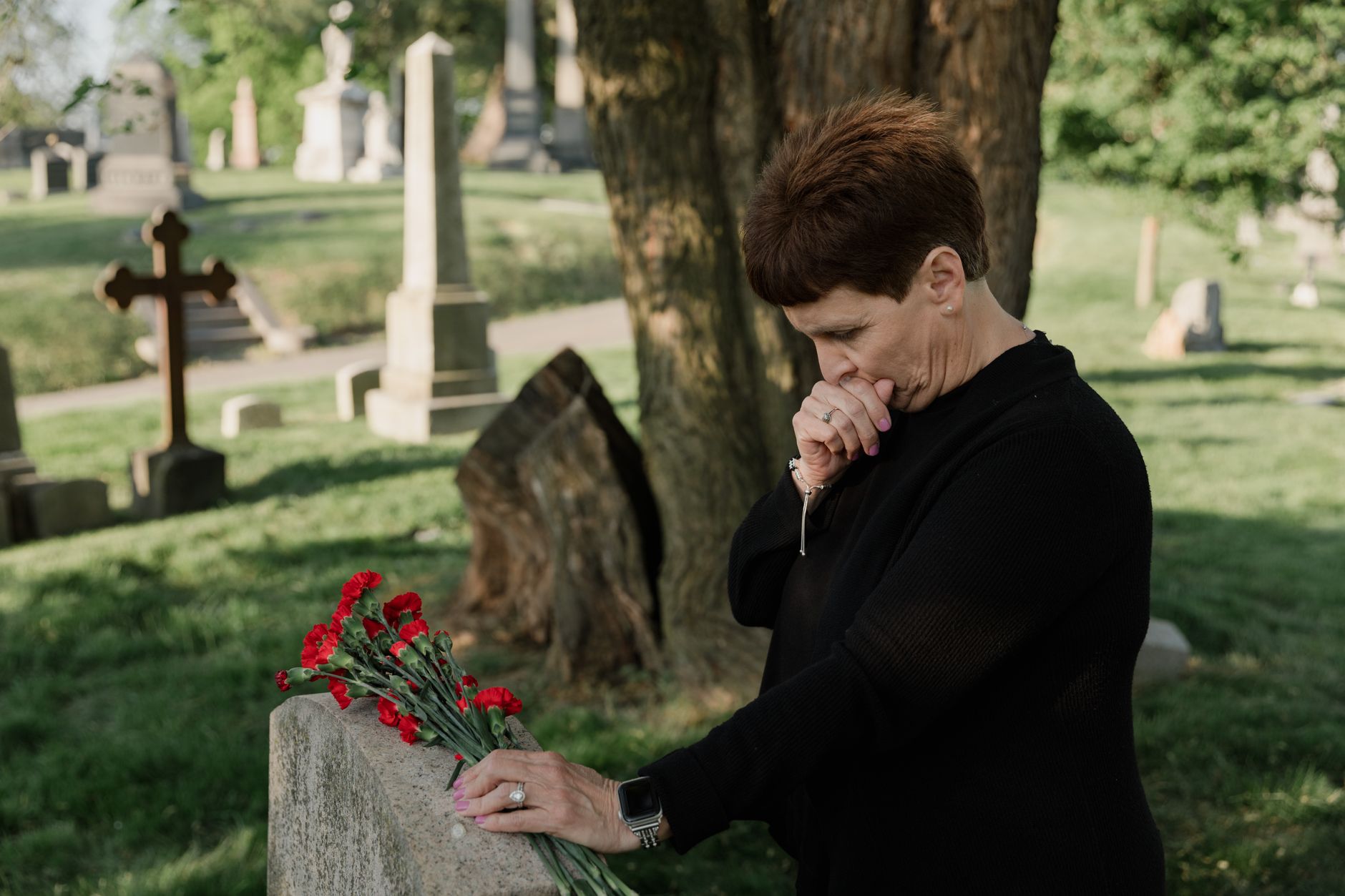
I did not say anything. I stood by Cal’s stone with my gloved hand on the top of it, as I have stood a thousand times, and I watched the office door.
Brent Dempsey came across the lawn with his lanyard flapping. He slowed when he saw the board. He slowed more when he saw me.
“Mr. Boyce,” he said. “Is something wrong?”
“That’s what we’ve come to find out, son,” Elwood said. “Colin, shut that thing off.”
The engine quit. In the quiet you could hear crows in the oaks.
“Brent,” Elwood said, “Mrs. Tolbert says she’s been paying on this space for eleven years, and she says you told her those payments don’t count.”
“The system showed no contract, Mr. Boyce.”
“And you didn’t think to call Chester.”
“He’s retired. He had the hip. I didn’t want to bother him.”
Then Roscoe’s truck came up the lane.
It came slowly, the way a man drives with somebody beside him who is sore. It stopped at the edge of the lot. Roscoe got out and walked around and held the passenger door, and it took Chester Pugh a long time to get down.
He is 79 now and the hip has been bad for two years. He came down off the running board an inch at a time with one hand on Roscoe’s shoulder, in his old Carhartt jacket, in the cap I had last seen in his hands at the graveside eleven years ago. He had a cane. He had nothing else. I noticed that, because I had half expected him to be carrying something.
Brent went the color of a bedsheet.
“Chester,” he said. “You shouldn’t be out in this.”
Chester Pugh did not answer him right away. He stood there getting his breath and looked first at the stakes and the orange flagging, and then at the Ahrens family by their car, and he took off his cap to them. Then he looked at me.