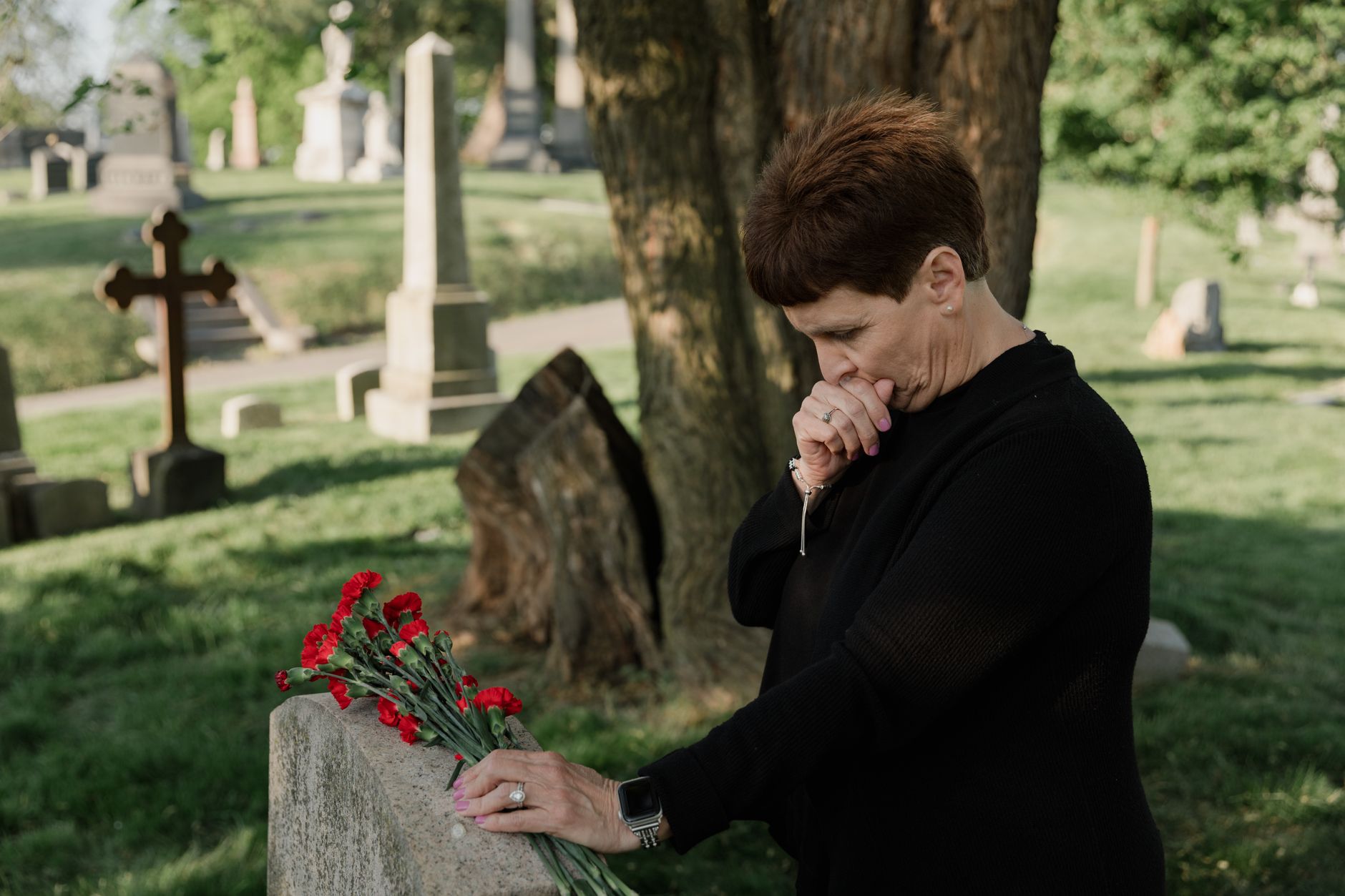
The Grave Beside My Husband
My son Mark called at noon from Lansing. I had left a short message, but he can hear a whole mother in two sentences.
“Mom, I’ll leave tonight.”
“Come in the morning. Early.”
“Why don’t you let me call somebody? There’s a guy at my firm whose brother-in-law does this kind of thing. We could have a letter out by Monday.”
I thought about that most of the afternoon, standing at the kitchen counter with the box open.
There is one lawyer in Larkin, and he does wills and the occasional property line. The next is 38 miles away in the county seat. A letter by Monday would be a letter after the funeral. The grave would be opened Friday morning.
And there was a family out there. Somebody had died that week. Somebody had stood at that same window with their hands not quite steady and written a check for the one piece of ground they were shown, because the man told them it was the last.
They had not stolen anything from me. They had lost their mother. I was not going to meet them in a courtroom. I was going to meet them in a kitchen.
“Mark,” I said, “don’t call anybody. Just come in the morning. And bring your good shoes.”
“What are we going to do?”
“We’re going to go find out who they are.”
There is a way to find out anything in a town of 1,400 people, and it is not the computer. It is the telephone, and the person you call is the funeral director.
Roger Sieck has buried everybody in Larkin for 26 years. He buried my father. He has a way of speaking low, as if the whole world were a viewing room. I told him who I was and I told him what had happened at the cemetery office, and he was quiet so long I thought the line had dropped.
“Iris,” he said, “I can’t give out the family’s address. You know that.”
“I know it.”
“But I can make a phone call.”
He called me back in six minutes.
“The widow’s daughter-in-law says come over,” he said. “The Ahrens house, on Elm Street. The white one with the ramp. She says come anytime.”
I made a pound cake, Cal’s mother’s recipe, a pound each of butter, sugar, eggs and flour, and nothing else. I wrapped it in a dish towel and drove into town in the last light with the yellow box on the seat beside me, and I could not think of one thing to say.
The Ahrens house had a ramp running up the front steps, long and shallow, built from fresh lumber and not yet painted. A woman answered the door in slippers with a pair of reading glasses in her hand, and her eyes were so red they looked scrubbed.
“I’m Iris Tolbert,” I said. “I believe we bought the same piece of ground.”
She looked at me. She looked at the cake. She was about 65, a short, solid woman, the kind who has run a church kitchen and been right more often than she would like.
“I’m Dottie Ahrens,” she said. “Come in, Mrs. Tolbert.”
The kitchen was full of casseroles, four on the counter and two on the stove and a ham in a roaster pan, and on the table lay a funeral program with a photograph of a very old woman in a church dress, laughing at somebody off to the side.