The Folder My Cousin Could Not Lose
“Uncle Eldon,” she said. “Would you let me?”
My father stopped. He turned slowly with his cane. He looked at her, and I saw something go through his face that was not anger and was not quite forgiveness, but was in the family of both.
“My arm’s the other one,” he said, and held it out.
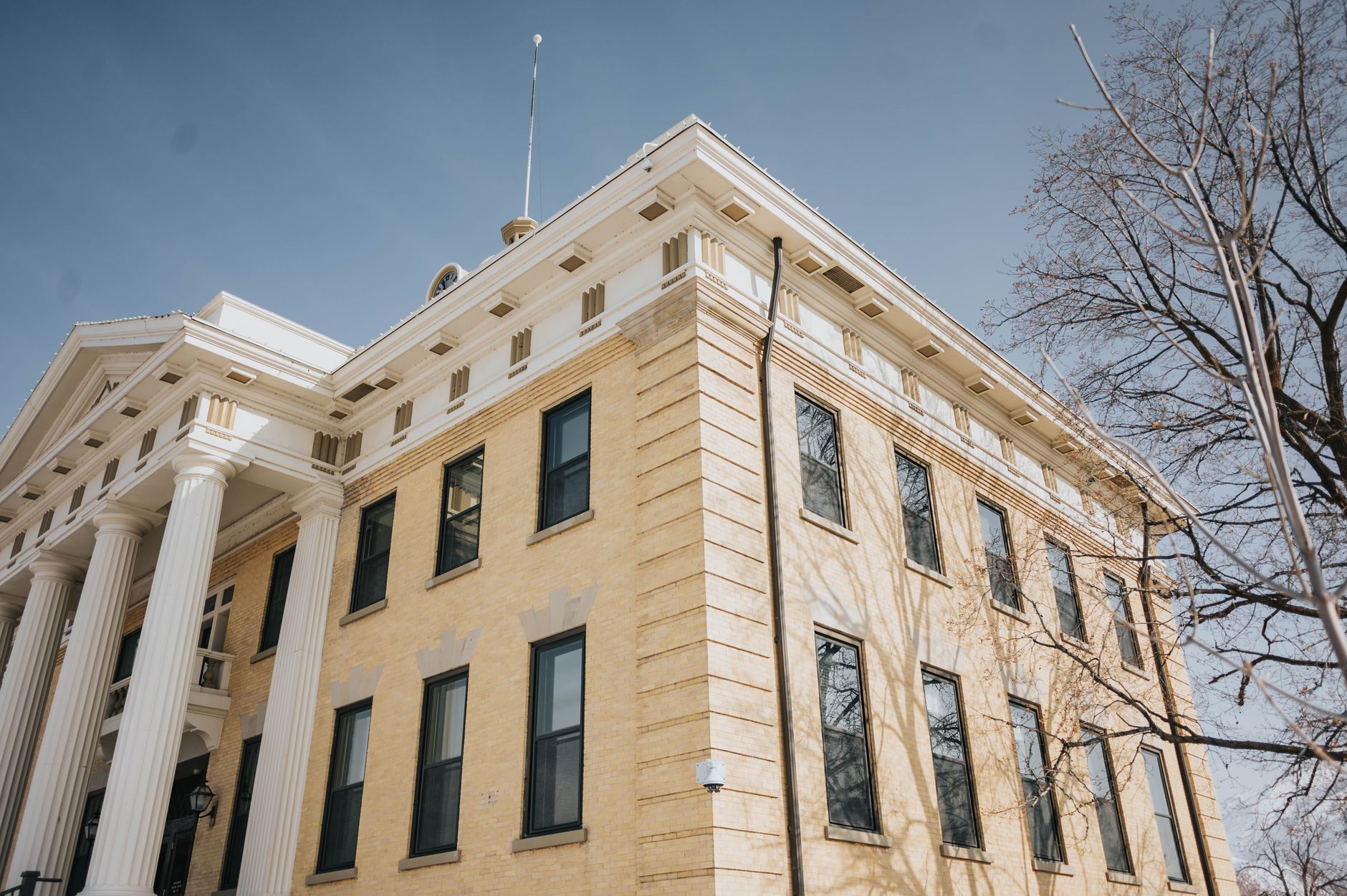
She came down the steps and took it. I walked on his right, with the folder, and Rhonda walked on his left. The three of us went down the courthouse steps one at a time, with the tower bell above us striking noon.
At the bottom, he patted her hand twice and let go.
“I held them, Uncle Eldon,” she said, low enough that only the three of us heard. “That’s all I can say today.”
“It’ll do for today,” my father said. “Come Sunday. Leona’s roast recipe. I never learned it. Maybe you did.”
“I’m not sure I’m welcome.”
“You’re Lyle’s girl,” my father said. “You are the only one I’ve got on that side.”
Her letter reached the board the next Wednesday, certified, with a green card, and Shirley Dostal made me a copy. It was one page. Rhonda wrote that she had kept my father’s three forms in the pending box, that she had told herself it was about the rules and it had not been, and that her father had told her all her life that Uncle Eldon cheated him out of the home place and she had believed him. She resigned as county assessor, effective the end of the month. She asked that the minutes say she had held the forms. She did not ask for anything. She had signed it in the round, loopy hand I knew from the sympathy card.
The board named Deb Lutz interim assessor until the voters could decide in November. She said, “I don’t want it,” and Merle said, “I know. That’s why.”
The state’s review found six more exemptions that had never been forwarded: two veterans, a widow in her 90s, and three older farmers. Deb told me later that the pending box had been nearly empty until my father’s first form went into it, and that once one thing sat in there, everything hard to look at had begun to join it. Rhonda had stopped reading her tray after her mother’s stroke in 2022, and nobody was checking. Every one was fixed that spring. Shirley Dostal told me one of them cried on the phone.
Rhonda came to Fourth Street that first Sunday in a car I had not seen before, with a roast wrapped in foil on the passenger seat. She burned it, a little, because she had never made it, and my father ate it with great ceremony and told her it was better than Leona’s, which is the biggest lie he ever told and the kindest.
After the dishes, he asked her to sit back down.
“I want to tell you something about your father,” he said. “I’m telling it because he never would, and because Merle Keller came by Friday night with his hat in his hands and asked if he could say it, and I told him it was mine.”
I stood in the kitchen doorway with the dish towel. I had never heard it either.