The Folder My Cousin Could Not Lose
The radiator banged and settled.
“Would you tell the board?” I asked.
“I’d rather show them,” Deb said.
She went down the stairs and was gone a good while. When she came back up she was carrying a gray cardboard file box against her chest, and I walked into the commissioners’ room behind her.
She did not go to the raised table. She set the box on Shirley Dostal’s desk at the side, took out a bundle of forms held with one paper clip, and picked out three. Nothing was written on them, no note, no mark. They had been laid in a box among other papers and left there, and that was all.
“Mr. Chairman, these came over my counter,” Deb said. “I stamped them. They were in the pending box.”
Shirley carried them to Merle. They were the three I had filled out at my mother’s kitchen table. Each had a purple RECEIVED stamp in the corner, and the dates matched the green cards.
Merle read the stamp on each one. He laid the dates against the cards. Then he said, “Rhonda?”
Rhonda stood and took the forms from him, and I will say this for her: she read every line, as if she had never seen them. Her hand was steady. When she finished she squared the corners on the table.
“I’d like until Monday to answer that, Mr. Chairman,” she said. Her voice was lower than it had been. “I won’t ask the board to wait on anything else.”
“Take the time,” Merle said, and he did not say it unkindly.
My father had not moved. He sat in the front row with both hands on the head of his cane. Then he turned a little in his chair toward the side desk.
“Mrs. Lutz,” he said. “You signed for them every time. That’s more than some would.”
Deb nodded once and went back to her chair by the door.
The rest took 12 minutes. Monte Bauer moved to correct the roll, which made the 2025 bill $857, and to refund the $3,290 overpaid for 2023 and 2024, with the interest the county owed. Sherry Kopecky seconded, and it carried 5 to 0. Abner Dvorak moved that every exemption application mailed to the courthouse be logged at the county clerk’s window the day it arrived, with a copy to the treasurer, so no single desk would be the only place a paper went. Shirley wrote that one down with a very straight back. It carried 5 to 0. Merle said he would write the state auditor himself and ask for a review of the assessor’s files going back five years.
Rhonda did not stay for the culvert bid. She picked up her briefcase and went out the side door by the flag, and it closed behind her on its slow hinge. She did not look at us. My father did not look away from her.
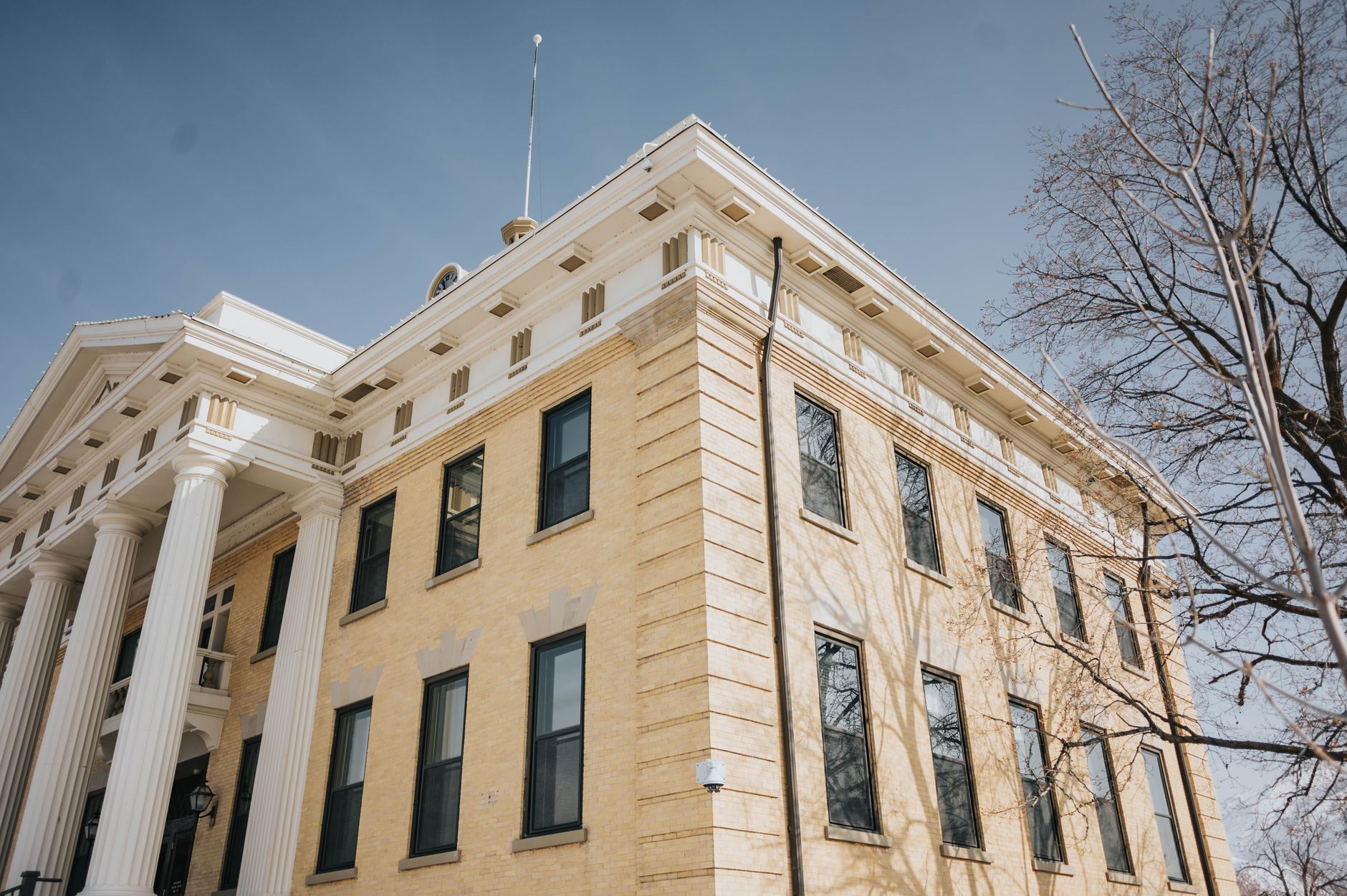
It was nearly noon when we came out. The sun was high on the courthouse steps, and the snow was melting off the stone. My father stopped in the doorway to let his eyes adjust.
“Fourteen steps,” he said.
“Yes, sir.”
“They’re easier going down.”
We started. Bernie and the others fell back to give us room.
We had gone about four steps when I heard footsteps behind us. Rhonda had been waiting in the stairwell, I think. She came through the doors without her coat and stood on the top step in her red cardigan with her arms wrapped around herself.